
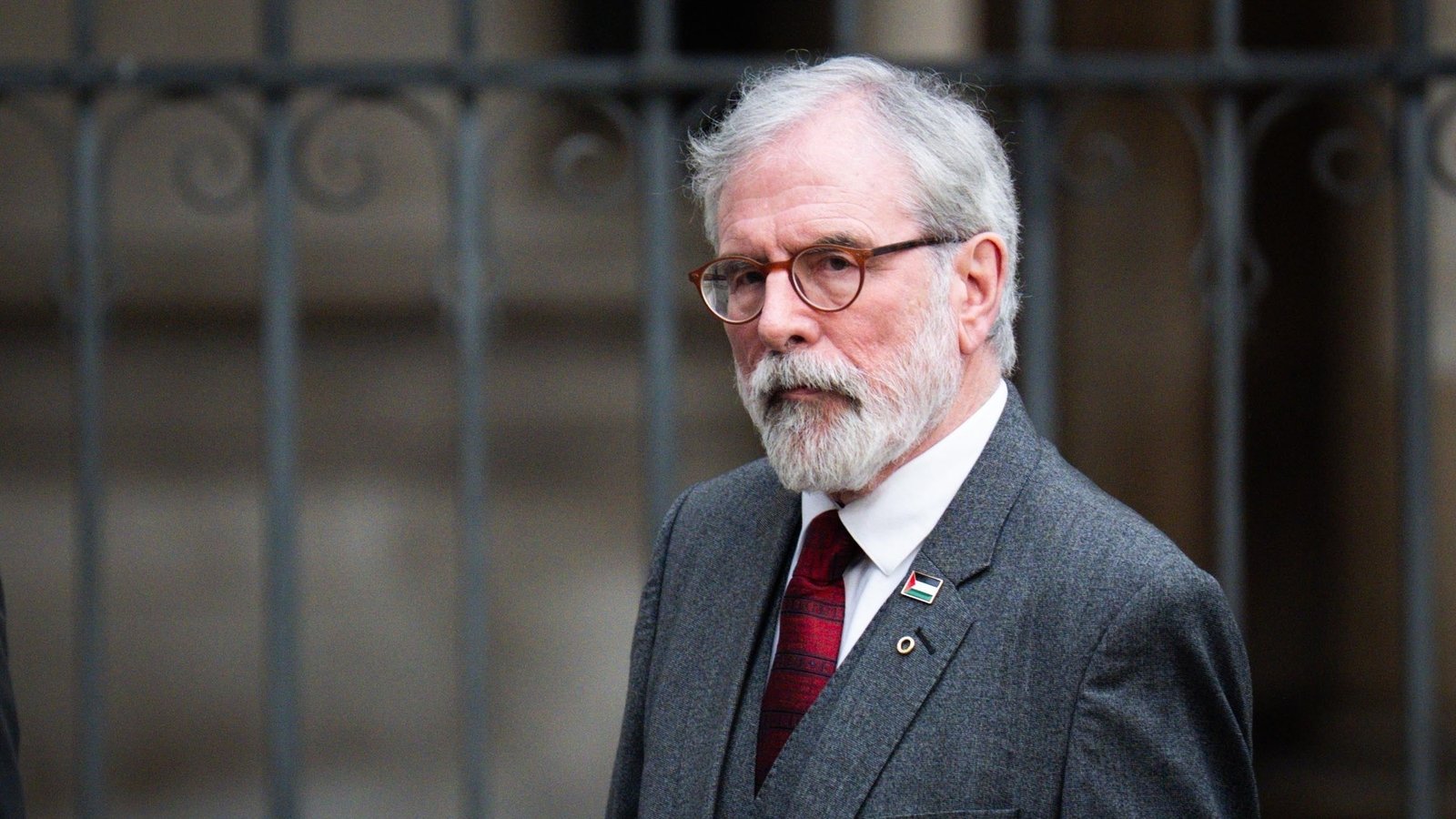
The leader of the DUP has said it will be seismic if a British court rules that Gerry Adams was a member of the IRA.
The former Sinn Féin leader is being sued in a civil action in the High Court in London by three victims of IRA bomb attacks who claim he was directly responsible for what happened.
It is the first time a court has been asked to adjudicate on claims that Mr Adams was a member of the IRA, which he has always denied.
The action is being brought by John Clark, a victim of the Old Bailey attack in 1973, and Jonathan Ganesh and Barry Laycock, who were injured in bomb attacks at London’s Docklands and Manchester’s Arndale Shopping Centre in 1996.
In documents submitted to the High Court, the claimants allege that Mr Adams was “directly responsible for and complicit in the decisions made” to detonate the bombs because of what they say was his role within the IRA.
Lawyers for the former Louth TD and MP for West Belfast told the hearing yesterday that he “categorically and emphatically” denies the allegation and that the case was built on hearsay evidence.
Speaking on his way into the court for the second day of the hearing, DUP leader Gavin Robinson said it was important for his party to support those taking the case and that the outcome could be “seismic”.
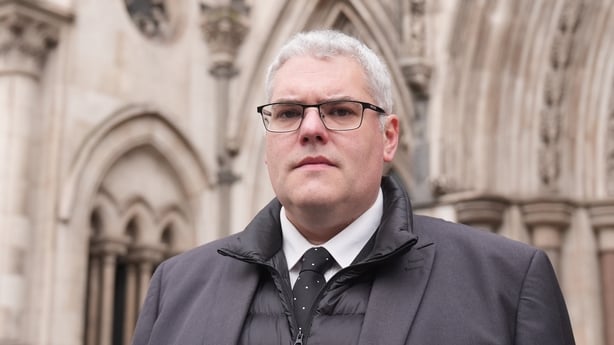
Gavin Robinson said the case is an opportunity for justice
“I think it’s important for us and the experience that we have had in Northern Ireland to stand here with victims who experienced the trauma of the troubles right across the United Kingdom,” he said.
“We have met Jonathan Ganesh on a number of occasions, and we think this is an important case. I believe that Gerry Adams was in the IRA. That won’t change through this case, but if our system establishes that he was, and that liability rests with him, then that will be seismic.
“It is true that he was the leader of a Republican movement that was responsible for breaking hearts and homes and scarring our nation and today, in this case, is an opportunity for justice for victims and that’s why we’re here in support of them.”
The DUP leader and his party colleague Gregory Campbell MP then went into the courtroom and sat three rows behind Mr Adams as the trial continued.
IRA bomb victim says seeking ‘some form of justice’
An IRA bomb victim told the hearing that he is suing Mr Adams to seek justice for all victims of the IRA.
Jonathan Ganesh was working as a security guard when he was injured in the Docklands bombing in February 1996, which killed two of his friends.
He told the court that he has suffered from significant post-traumatic stress disorder since the explosion.
Asked why he was suing Mr Adams for symbolic damages of £1, Mr Ganesh said he was seeking “some form of justice” for all IRA victims and he wanted to be able to say that Mr Adams was the man responsible for the bombing.
“The IRA’s victims have never had justice. All I want is the truth. He’s the man responsible,” he told the court.
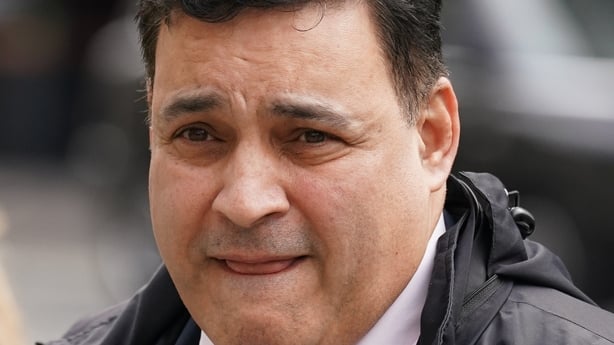
Jonathan Ganesh was injured in an IRA bomb at London’s Docklands
He added: “I don’t suggest for one minute that he drove the lorry or planted the bomb, I do believe he played a major part in the IRA, and I believe he had some involvement in the attack.”
Mr Ganesh told the court that he had not initiated legal proceedings at an earlier stage because of the trauma he suffered, including mental health problems.
“I was in a very dark place. I wasn’t eating, I wasn’t functioning at all, I wasn’t eating, I wasn’t sleeping, the last thing on my mind was taking any kind of legal action,” he added.
He said he was also afraid of possible consequences from the IRA.
Mr Ganesh said the catalyst for his legal action was a decision by Mr Adams to take legal action against the British government for seeking to prevent the payment of damages to those who were interned without trial in the 1970s.
Mr Adams was charged with IRA membership in 1978, but the case was dropped due to insufficient evidence.
Speaking outside the court yesterday, after the first day of evidence, Mr Adams said: “The only thing that I’m guilty of is being an Irish republican, is believing in an end to British rule”.