

Bengaluru: Heightened tensions in West Asia and uncertainty in the US economy could temporarily prompt wealthy Indians, startup founders and non-resident Indians to pause investing in overseas properties and redirect investments towards the domestic housing market, developers and brokers said.
Many such individuals diversified into overseas property markets such as Dubai, London and parts of Europe over the past four years, driven by liquidity events and lifestyle aspirations, but the Iran war and signs of weakness in the US economy are expected to make them rethink their strategies.
“With global uncertainties rising, a portion of this capital is likely to return to India’s mid and luxury housing segments,” said Vyoma Pandit, cofounder of Flow Realty India, a real estate sales and marketing firm. While the overseas destinations remain attractive for lifestyle and tax advantages, experts said India is increasingly being viewed as a relatively stable long-term real estate investment.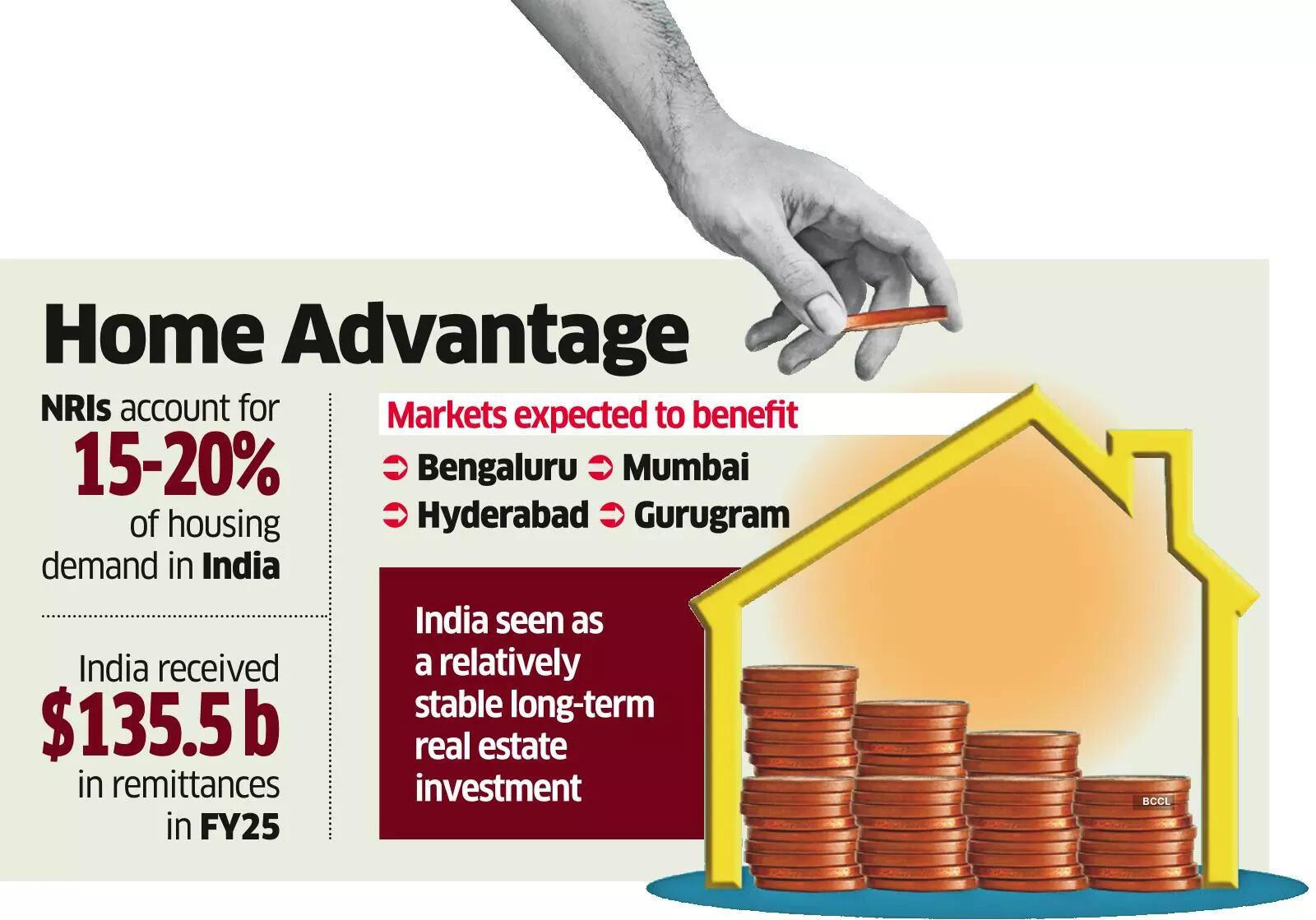
“We are already seeing enquiries from NRI buyers looking to diversify back into Indian residential markets, particularly in Bengaluru, Mumbai and Gurugram where demand for premium homes remains strong,” said Bhavesh Kothare, chief executive of property advisory firm PropertyFirst.
NRIs already account for 15-20% of housing demand in India, with roughly 60% of it coming from West Asia, supporting mid and premium housing across major cities. India continues to remain the world’s largest recipient of remittances, receiving a record $135.5 billion in FY25, according to Reserve Bank of India data.
The surge in overseas property purchases by Indians in recent years was partly fuelled by strong wealth creation in the startup ecosystem, with founders and early employees deploying capital into international real estate following exits, IPOs and secondary share sales as part of a diversification strategy.
Dubai in particular has emerged as a major destination for Indian investors, drawn by its relatively transparent property market, favourable tax regime and strong rental yields.