
The energy crisis triggered by the conflict in the Middle East carries a strong sense of deja vu.
United States–Israeli attacks on Iran and subsequent counterattacks across the Gulf have sent energy prices soaring. Shipping through the Strait of Hormuz, a stretch of water through which about one fifth of the world’s oil supply typically transits, has almost ground to a halt. Qatar shut off production at a big liquefied natural gas (LNG) refinery, and toxic rain fell on Tehran after the bombing of its oil reserves.
The price of oil rose above $100 a barrel for a time this week, and gas prices jumped sharply. This is already causing hardship for households reliant on heating oil, petrol and diesel. Inflation will almost certainly follow.
A conflict thousands of kilometres away is once again being felt in household fuel bills. Countries like Ireland that are heavily reliant on fossil fuels will bear the greatest burden.
The situation echoes Russia’s invasion of Ukraine, which triggered an energy crisis and inflation that has been rippling through Europe’s economy since.
These recurring crises should raise a deep question: why do these geopolitical conflicts turn into energy crises? The answer is straightforward: because the global energy system is still built around fossil fuels.
Oil and gas are traded globally in commodity markets. Production and refineries are concentrated in a few key regions. Transport is dependent on a limited set of pipelines and shipping routes. As a result, disruptions in one part of the system can quickly spread everywhere else.
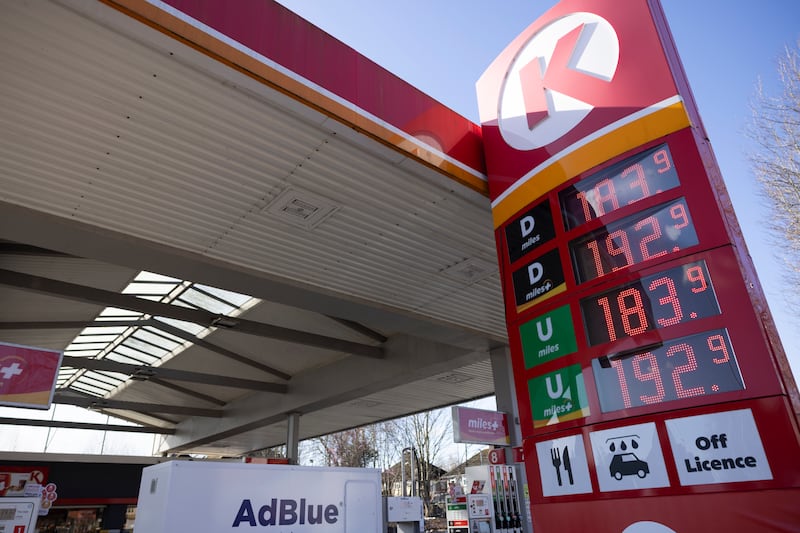 Consumers have already seen prices rise at the pump this week. Photograph: Chris Maddaloni
Countries reliant on imported fuels are exposed not only to this market volatility, but also to the strategic decisions of fossil fuel producers. Europe learned this lesson painfully when Russia restricted gas exports after invading Ukraine.
In rushing to fill the deficit with alternative gas suppliers, Europe built LNG import infrastructure, in effect swapping dependence on Russian gas with LNG from the United States. But now the United States has openly adopted a strategy of “energy dominance”, using its position as the world’s largest fossil fuel exporter as a tool of geopolitical power.
Fossil fuels do not just make energy systems vulnerable to conflict, they are also often part of the geopolitical forces that drive those conflicts.
The history of Iran provides another timely example. In 1953, the United States and the United Kingdom backed a coup that removed Iran’s democratically elected prime minister, Mohammad Mosaddegh, after he nationalised the country’s oil industry, which had been controlled by the Anglo-Iranian Oil Company, now BP. The coup restored the rule of the Shah and reshaped Iran’s political trajectory for decades.
The increasingly authoritarian monarchy that followed eventually collapsed in the Iranian Revolution of 1979, ushering the Islamic Republic, replacing one autocratic system with another. The state has been a central actor in the geopolitics of the Middle East since.
Fossil-fuel dependence threatens our safety and security across multiple dimensions, not least because it is the main cause of climate change. Despite this, there is a growing narrative that there needs to be a “rebalancing” of energy policy and that climate action and the energy transition should take a back seat to other priorities – energy affordability, security and economic competitiveness – given the turbulence of this moment.
But looking at these issues systemically shows that energy security, affordability and climate action are not competing priorities. They point to the same solution: urgently reducing dependence on fossil fuels.
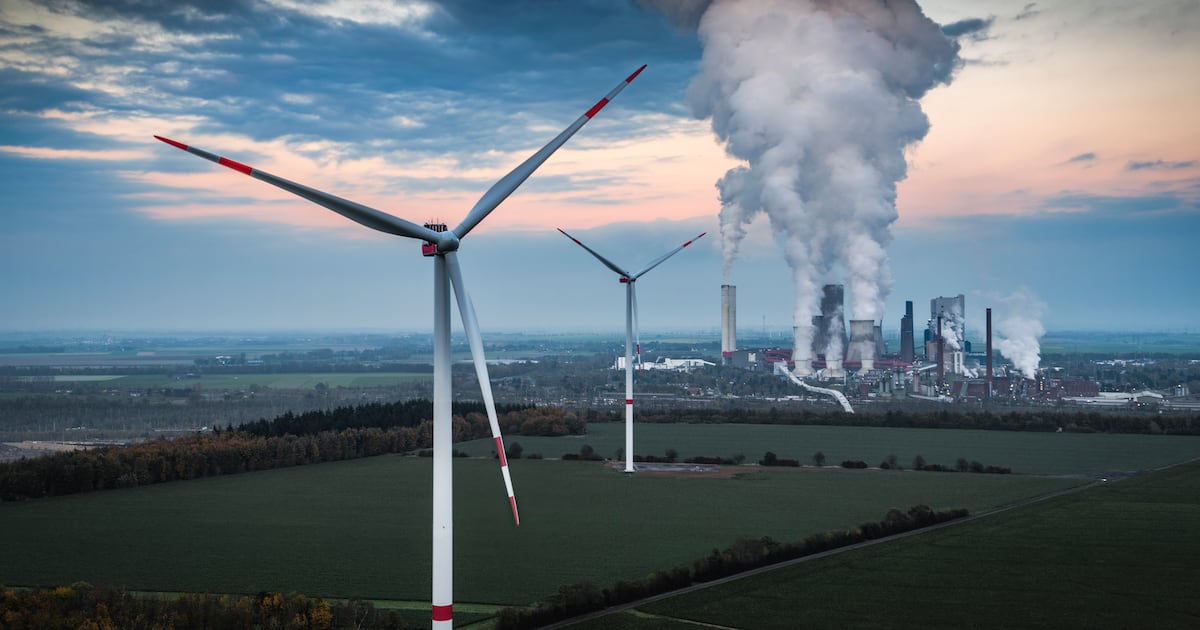
Wind and solar energy have no fuel cost and rely on domestic resources that will never run out and can’t be cut off as an act of aggression. Similarly, powering transport, buildings and industry with renewable electricity removes exposure to volatile oil and gas markets. Reducing wasteful demand – a crucial pillar of the energy transition – reduces the amount of energy needed in the first place.
Imagine how different the impact of the current war would be if Ireland had accelerated climate action, were already powered by domestic renewable electricity and had fully electrified transport and heating.
Imagine if all homes were well insulated and public transport were reliable and widespread. There would be no financial pain at the fuel pumps or from receiving heating bills, no scramble to build LNG infrastructure to shore up gas supplies and inflation would be moderate. In short, there would be far less exposure to geopolitical disruption.
Some sceptics point out that clean energy technologies depend on global supply chains, but the energy security context is fundamentally different. Once installed, renewables generate energy for decades.
A foreign government cannot switch off the sun as an act of geopolitical aggression; an attack on a factory producing wind turbines doesn’t affect the operation of wind farms in operation. The price we pay for renewable electricity is the repayment of the upfront investment, and so is stable.
Fossil fuels, by contrast, must be continuously extracted, shipped and bought on global markets. The dependence never ends and the price is always volatile.
Ireland’s energy security debate, however, often remains rooted in 20th-century thinking and focuses on curing the symptoms rather than the root cause of insecurity. Predictable responses to energy shocks include calls to drill for oil and gas in our own waters, invest in infrastructure to import more LNG and cut taxes on fossil fuels.
But these measures do nothing to reduce our exposure to volatile global fuel markets. A proposed LNG terminal costing close to a billion euros would not shield Ireland from gas price spikes or shortages on the global market. It would simply lock the country deeper into dependence on imported fossil fuels.
This is why the current moment should be seen as a fossil fuel crisis, not an energy crisis. The real strategic objective should be to get off gas and oil altogether.
Unlike past energy crises, we now have viable and affordable alternatives to fossil fuels. Renewable electricity, battery storage and electrification technologies have fallen dramatically in cost and are widely available. Our climate policy offers the strongest framework we have to deploy these quickly and at scale.
Treating the symptoms with financial supports may be necessary in the short term, but unless we tackle the root cause of the problem – ongoing dependence on fossil fuels – we will remain exposed and vulnerable to the next energy crisis.
Hannah Daly is professor of sustainable energy at University College Cork’s Sustainability Institute