
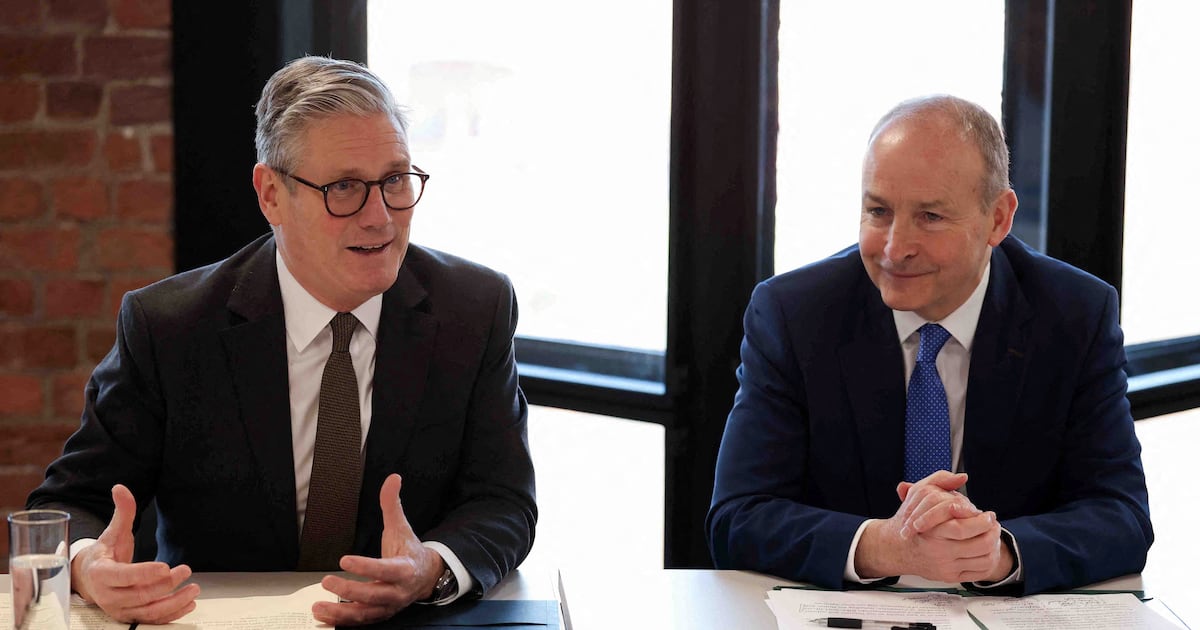
When Keir Starmer arrives in Cork on Thursday in advance of Friday’s summit with Taoiseach Micheál Martin, there will inevitably be a sense that someone is missing. Only a month ago, Macroom-born Morgan McSweeney was regarded as one of the most powerful men in British politics. McSweeney, Starmer’s chief strategist and the principal architect of Labour’s thumping majority in the House of Commons in the summer of 2024, resigned in February over his role in the disastrous appointment of Peter Mandelson as UK ambassador to Washington. There will be no homecoming for the Corkman this week.
Starmer arrives in Ireland at a moment of considerable political fragility. Dissent in Labour’s parliamentary ranks has quietened in the weeks since the Mandelson crisis, but the lull is temporary. The expectation in Westminster is that if Scottish, Welsh and local elections in May prove as damaging as predicted, the question of his leadership will return with renewed intensity.
There is nonetheless substantive business to be done. Relations between the two countries have been on a sustained upswing since Starmer took office, and the annual leaders’ summit, inaugurated last year in Liverpool, is a symbol of that improvement. That Starmer will be accompanied by several ministers underscores the seriousness with which London regards the bilateral agenda.
The common ground is substantial. The perceived direction of travel in Downing Street toward a more frictionless economic and trading relationship with the EU is music to Irish ears, both for its implications for businesses on both sides of the Border and for easing tensions over the implementation of the Windsor Framework. The UK, for its part, will view Ireland as a valuable interlocutor in seeking the most favourable terms for a closer future relationship with the EU.
Scope for deepened cooperation is also evident in the security sphere. Both islands share serious concerns about the vulnerability of strategic assets, notably the undersea cables that carry transatlantic data traffic and have attracted sustained Russian attention. Both share a common interest in the integrity of their airspace. A revised memorandum of understanding between London and Dublin on these matters, under negotiation for the past year, is expected to feature on tomorrow’s agenda.
The shadow hanging over these proceedings is the longer-term question of the UK’s political future. From an Irish perspective, a change of Labour leadership would be manageable; any successor is unlikely to reverse course significantly on relations with Ireland or the EU. What this country’s interests emphatically do not require is a British government led by Nigel Farage. That prospect, still some years distant, should concentrate minds on both sides of the Irish Sea.