
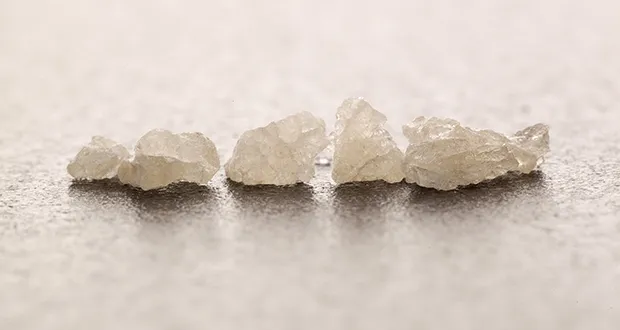
Health officials warn against adding powders or crystals to drinks as they may be more potent than thought
Powder and crystal forms of MDMA are now more common than pills among young people, with lab results showing their availability at high potency in Ireland, health officials have said.
The HSE issued the warning ahead of St Patrick’s Day celebrations set to begin this weekend. The health service previously issued alerts for high strength MDMA pills, containing dangerously high amounts of MDMA (over 300mg), which is typically over three times the average adult dose.
Officials from the HSE’s Emerging Drug Trend Laboratory have seen shifts in drug use. This includes users putting powders and crystals into drinks, which can greatly increase the risks as they are more likely to not realise how much of the substance they are taking.
If the powders or crystals do not fully dissolve in the drink, MDMA can collect at the bottom of the glass meaning a large amount may be consumed at once. For this reason, health officials are advising young people to avoid adding MDMA to drinks.
Dr David Weir, HSE consultant psychiatrist specialising in addiction said; “Our core message is that it is safer not to use drugs at all as there will always be risks. However, our analysis shows that there is currently extra risk for those who use drugs in nightlife. We need young people to understand that high strength MDMA and pink powders can also lead to a drug emergency for you or your friends.”
The HSE also has concerns about batches of pink powder which can vary in contents. One powder was analysed and found to contain six substances, with other samples containing a drug never identified before in Ireland (2-FMA).
Each batch of pink powder can differ in contents, meaning those purchasing are unaware of the contents, potency and risks. The HSE also warns that what is sold as ‘pink cocaine’ most often does not contain any cocaine, but a ketamine mixture.
HSE emerging drug trends manager Nicki Killeen added; “We want to help protect the health and wellbeing of young people. Substance analysis is an important public health tool that can help us identify emerging drug trends and provide harm reduction advice to people who use drugs in new ways.’’
In response to these latest dangerous drugs trends, the HSE has issued new harm reduction resources ahead of the weekend and has committed to engaging with nightlife stakeholders throughout 2026 to help reduce harms for people who use drugs in these settings.
“Not everyone who goes out uses substances, but it’s important that we help reduce the harms for those who do,” said DJ and youth worker Shauna Dee.
“Across the nightlife community we all share the same priority, keeping people safe. I’m working with the HSE to share harm reduction advice: start low and go slow, be aware of the new risks and know the signs of a drug emergency. Mind your community, look out for yourself and care for others if something doesn’t seem right,” Shauna added.