
George Bernard ShawAdapted screenplay, 1939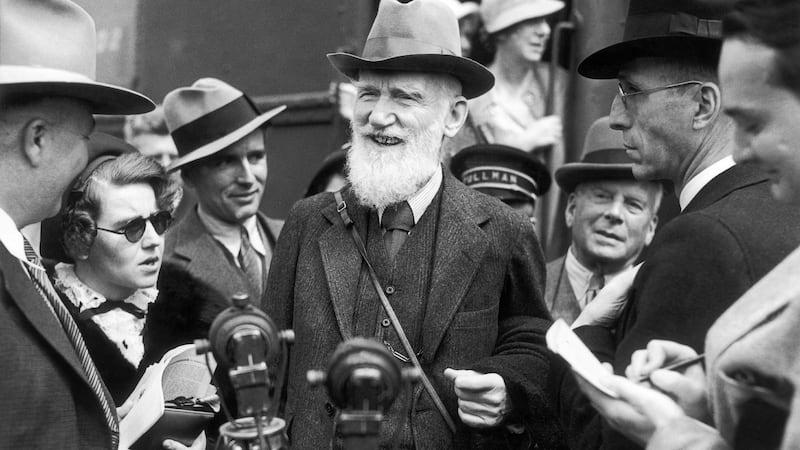 George Bernard Shaw on a visit in Los Angeles answering questions from the American journalists around him. Photograph: Keystone-France/Gamma-Keystone via Getty Images
Yes, yes, George Bernard Shaw and Bob Dylan are the only people to have won both an Oscar and Nobel Prize for Literature. Shaw, also the first Irishman to win, received his statuette for an excellent adaptation of Pygmalion with Wendy Hiller. “It’s an insult for them to offer me any honour, as if they had never heard of me before,” he said, somewhat ungratefully.
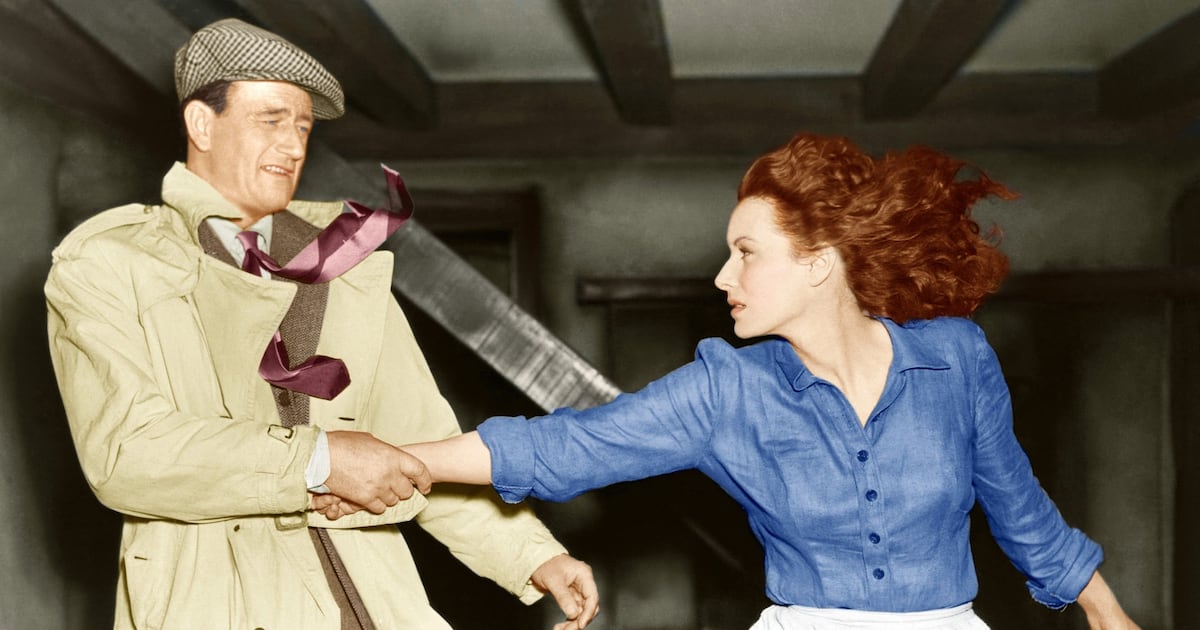
Barry FitzgeraldActor in a supporting role, 1945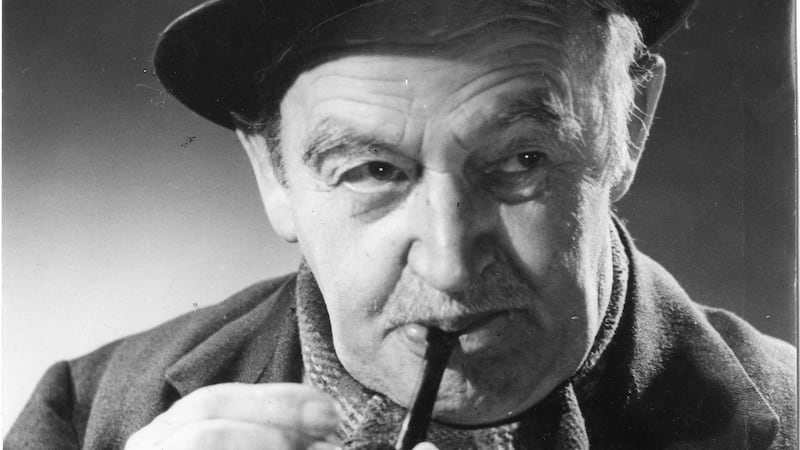 Actor Barry Fitzgerald taken on the set of John Ford’s film The Quiet Man in Co Mayo around 1951
Two famous snippets of trivia here. The Abbey Theatre stalwart Barry Fitzgerald, up for the twinkly musical Going My Way, became, of course, the first Irish actor to win an Oscar. He also was the first – and, following an immediate rule change, the only – person to be nominated for best actor and best supporting actor for the same role in the same year.
Michèle BurkeMake-up and hairstyling, 1983, 1993
Michèle Burke, from Kildare, who died in 2025, is the only Irish woman to have won two Academy Awards. The prizes came for her work on Quest for Fire, in 1982, and Bram Stoker’s Dracula, in 1992. She received the first by mail. “Everyone in the post office crowded around and applauded,” she later said. “I thought, this is perfect.”
Josie MacAvinProduction design, 1986
Born in Monkstown, Co Dublin, Josie MacAvin had a hugely distinguished career – she was previously nominated for Tom Jones and The Spy Who Came in from the Cold – before winning, then in her 60s, for lavish work on Out of Africa. You can see her Oscar on display in the foyer of the Irish Film Institute.
Brenda FrickerActress in a supporting role, 1990
In retrospect, Brenda Fricker’s famous win for playing Christy Brown’s mother in the Jim Sheridan film My Left Foot felt like the first shot in a cultural upheaval that would transform Ireland through the 1990s. “Anybody who gives birth 22 times deserves one of these,” she said, from the podium, of Mrs Brown.
Daniel Day-LewisActor in a leading role, 1990, 2008, 2013
The great man got his Irish passport in 1993, but only the most tedious pedant would suggest that his first win, for My Left Foot (see above), does not count as an Irish triumph. With subsequent leading-actor wins for There Will Be Blood and Lincoln, Daniel Day-Lewis became the first man to claim that prize three times.
Neil JordanOriginal screenplay, 1993
Neil Jordan’s win for The Crying Game – and the film’s five other nominations – would have seemed a pipe dream immediately following its quiet opening in Britain and Ireland. But the offbeat thriller subsequently became a sleeper hit in the United States. “I didn’t know these nominations were coming up,” he began, characteristically befuddled. “I was in the bathroom when I heard it.”
Tyron MontgomeryAnimated short, 1997
Born in Limerick, Tyron Montgomery shared the prize with Thomas Stellmach for his work on Quest, a German stop-motion animation that won more than 40 international awards. “I’m very, very happy that Billy Crystal is doing this night,” he said on the evening. “He was always my very favourite show host.”
Martin McDonaghLive-action short, 2006
Martin McDonagh’s first Oscar came for the characteristically bleak Six Shooter, in which Brendan Gleeson and Rúaidhrí Conroy glower menacingly throughout a tense train journey. The London-born Irishman went on to receive another six nominations from the Academy of Motion Picture Arts and Sciences, but he has yet to collect another statuette.
Corinne MarrinanDocumentary short, 2006
Corinne Marrinan, a New Yorker with Irish citizenship, won for A Note of Triumph: The Golden Age of Norman Corwin, the study of a writer from the great days of radio. “I’d like to thank the academy for seating me next to George Clooney at the nominees’ luncheon,” she said from the podium.
Glen Hansard, Markéta IrglováOriginal song, 2008
A classic moment. Markéta Irglová, who wrote the song Falling Slowly, from John Carney’s film Once, with Glen Hansard, was cut off before her speech got going, but Jon Stewart, host of the evening, brought her back on. “[This] is just proof that, no matter how far out your dreams are, it’s possible,” she said. “Fair play to those who dare to dream, and don’t give up.”
Richard BanehamVisual effects, 2010, 2023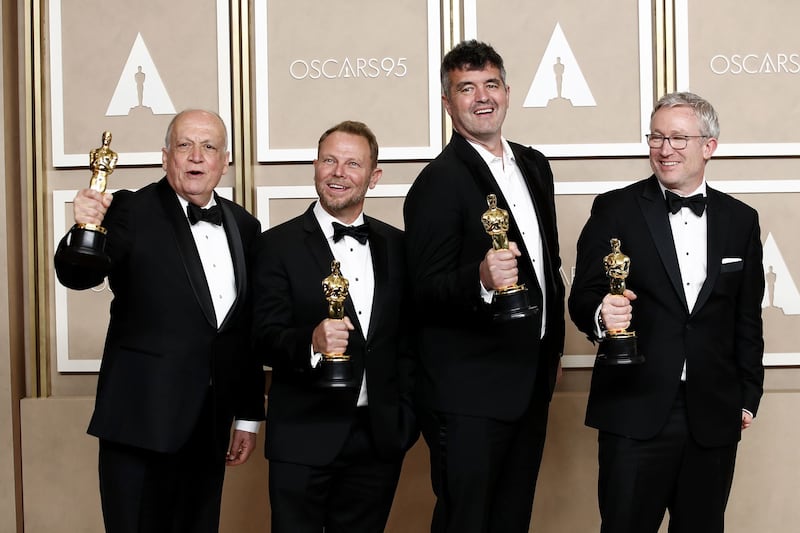 Joe Letteri, Richard Baneham, Eric Saindon, and Daniel Barrett at the 95th Academy Awards in 2023. Photograph: Caroline Brehman/EPA-EFE
Raised in Tallaght, Dublin, Baneham, winner for the first two Avatar films, is something of a giant in the special-effects community. Nominated, this weekend, for Avatar: Fire and Ash, he is odds-on to become (after Day-Lewis, no less) only the second Irish person to win three Oscars. Expect a few words as Gaeilge if he makes it to the stage.
Oorlagh George and Terry GeorgeLive-action short, 2012
Terry George, also nominated for writing In the Name of the Father and Hotel Rwanda, and Oorlagh George, his daughter, beat another Irish film, Peter McDonald and Eimear O’Kane’s Pentecost, to the 2011 prize with the touching The Shore. Ciarán Hinds and Conleth Hill star as two men reuniting after 25 years of unnecessary estrangement.
Benjamin ClearyLive-action short, 2016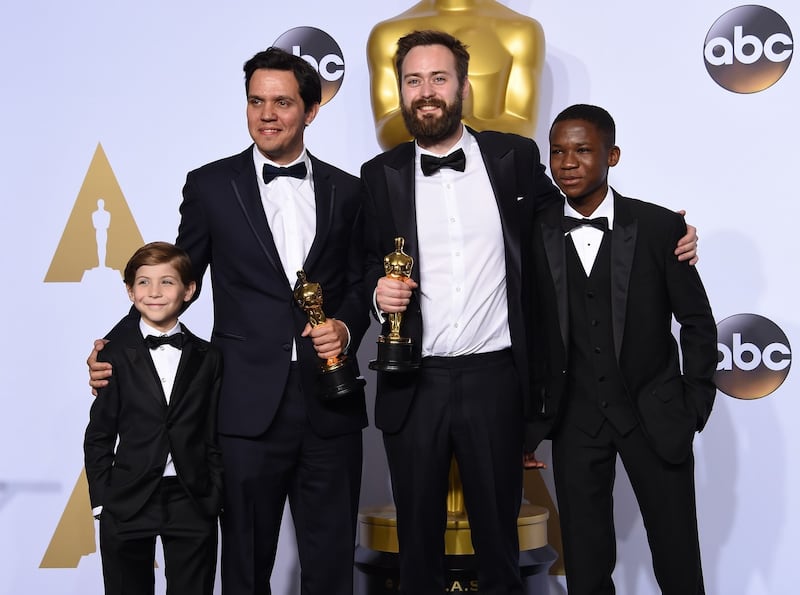 OSCARS CEREMONY: Jacob Tremblay, Shan Christopher Ogilvie, Benjamin Cleary and Abraham Attah at the 88th Oscars in Hollywood, US. Photograph: Frederic J Brown/AFP/Getty Images
A famous year for the Irish at the Oscars, with Lenny Abrahamson’s Room and John Crowley’s Brooklyn bossing the nominations. The only Irish-born winner, however, turned out to be Benjamin Cleary for Sutterer, his clever short about a man dealing with a speech impediment. “Every day is a proud day to be Irish, but today even more so,” Cleary said from the stage.
Kenneth BranaghBest original screenplay, 2022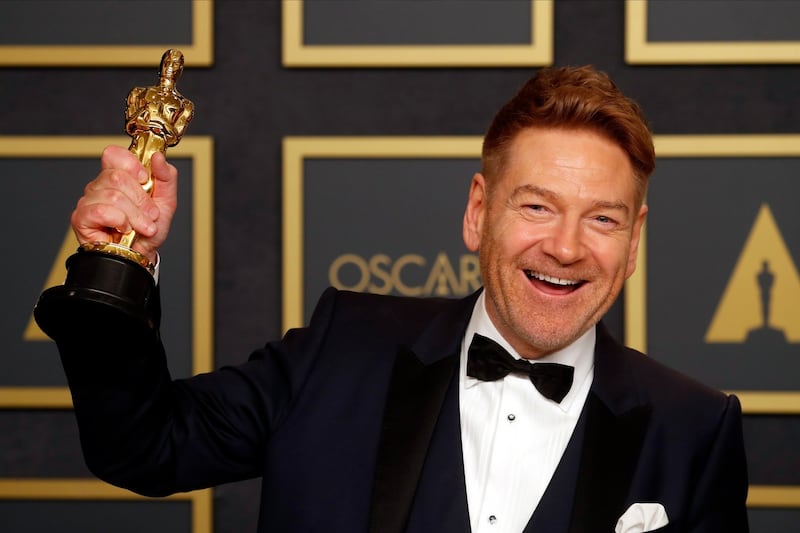 Kenneth Branagh, winner of the Academy Award for Best Original Screenplay for Belfast in 2022. Photograph: David Swanson/EPA
Kenneth Branagh is the only person to have been nominated in seven categories at the Oscars: picture, actor, director, supporting actor, adapted screenplay, live-action short and original screenplay. Best known as an actor and director, he may have been surprised that his first win – for the autobiographical Belfast – came in a writing category.
Tom Berkeley and Ross WhiteLive-action short, 2023There were two Irish winners at the Oscars, Ross White and Tom Berkeley’s An Irish Goodbye and Richard Baneham for visual effects on Avatar: The Way Of Water.
Another classic moment for the Irish at the Oscars. Tom Berkeley and Ross White, winners for the charming An Irish Goodbye, brought the film’s star, James Martin, who has Down syndrome, to the stage and led the audience in a rendition of Happy Birthday. The young man subsequently received an MBE.
[ Oscar pioneer James Martin: ‘When I was growing up I was bullied. Big time’Opens in new window ]
Cillian MurphyActor in a leading role, 2024Cillian Murphy has earned his first Academy Award, taking home the best actor Oscar for Oppenheimer. Video: Reuters
The Cork man, famously uneasy with the business of fame, progressed through that year’s awards season with a somewhat bashful demeanour, but, by Oscar night, his win for playing the father of the atomic bomb in Christopher Nolan’s film Oppenheimer seemed nailed down. “I would really like to dedicate this to the peacemakers everywhere,” he said.
And…Peter O’TooleHonorary Academy Award, 2002
Peter O’Toole, with eight nominations, shares the record with Glenn Close for the most acting nods without a win. When the offer of an honorary statuette arrived in 2002, he was a little sceptical, saying he still hoped to “win the lovely bugger outright”, but, told they would award it whether he turned up or not, he pottered along and charmed the audience. Most sources, after some dispute, now accept O’Toole was born in Leeds, but he travelled under an Irish passport, and he certainly always identified as Irish.
Maureen O’HaraHonorary Academy Award, 2014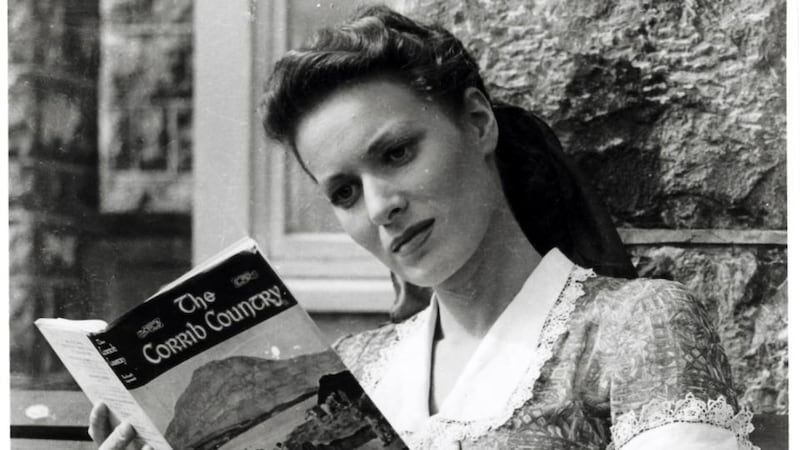 Maureen O’Hara reading Richard Hayward’s book The Corrib Country while taking a break from her role as Mary Kate Danaher in The Quiet Man.
The greatest movie star Ireland has yet produced somehow never got nominated for a competitive Oscar. She must surely have been close for The Quiet Man, The Hunchback of Notre Dame and How Green Was My Valley. O’Hara eventually received an honorary statuette at the Governors Awards in November 2014. “It’s just absolutely wonderful,” she said after hearing about the honour. “I keep thinking, Oh, this is a league of baloney. They’re not telling me the truth’.”