
Astronomers have for the first time observed the birth of a magnetar, a highly magnetized, rapidly spinning neutron star, directly linked to some of the universe’s brightest exploding stars. This discovery, published in Nature, confirms a long-held theory and sheds new light on the mysterious origins of superluminous supernovae (SLSNe-I). The study, led by graduate student Joseph Farah from UC Santa Barbara, provides compelling evidence that these extraordinarily bright supernovae are powered by the formation of a magnetar at their core. This breakthrough also introduces a new phenomenon in astrophysics, an oscillating light curve caused by general relativity, revealing the mechanics behind these cosmic explosions.
Understanding Superluminous Supernovae and Their Brightness
Superluminous supernovae have long puzzled astronomers due to their unusual and prolonged brightness. These stellar explosions, which can be up to 10 times brighter than typical supernovae, are thought to be the result of the collapse of massive stars, possibly up to 25 times the mass of the Sun. However, their prolonged glow, lasting far longer than expected, has remained a mystery since their discovery in the early 2000s. Initially, it was theorized that the extreme brightness might be the result of a star’s iron core collapsing and expelling its outer layers in a massive explosion.
In 2010, a groundbreaking theory was proposed by UC Berkeley astrophysicist Dan Kasen. He suggested that a magnetar, a type of neutron star with an extremely strong magnetic field, could be responsible for the ongoing brightness of these supernovae. According to Kasen’s model, the collapse of a massive star would lead to the formation of a neutron star with a magnetic field so strong that it could accelerate charged particles, further enhancing the brightness of the explosion. However, until now, there was no direct evidence to confirm that a magnetar formed within these supernovae. This new study, led by Joseph Farah, andpublished in Nature, provides that missing evidence.
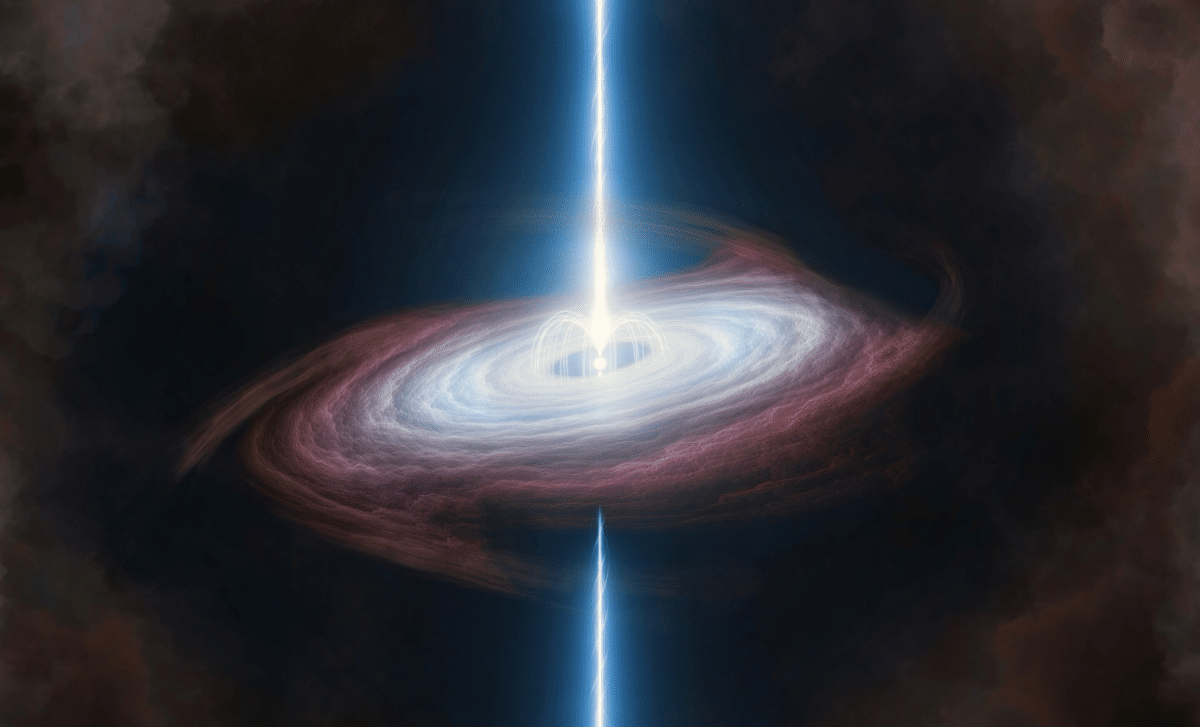
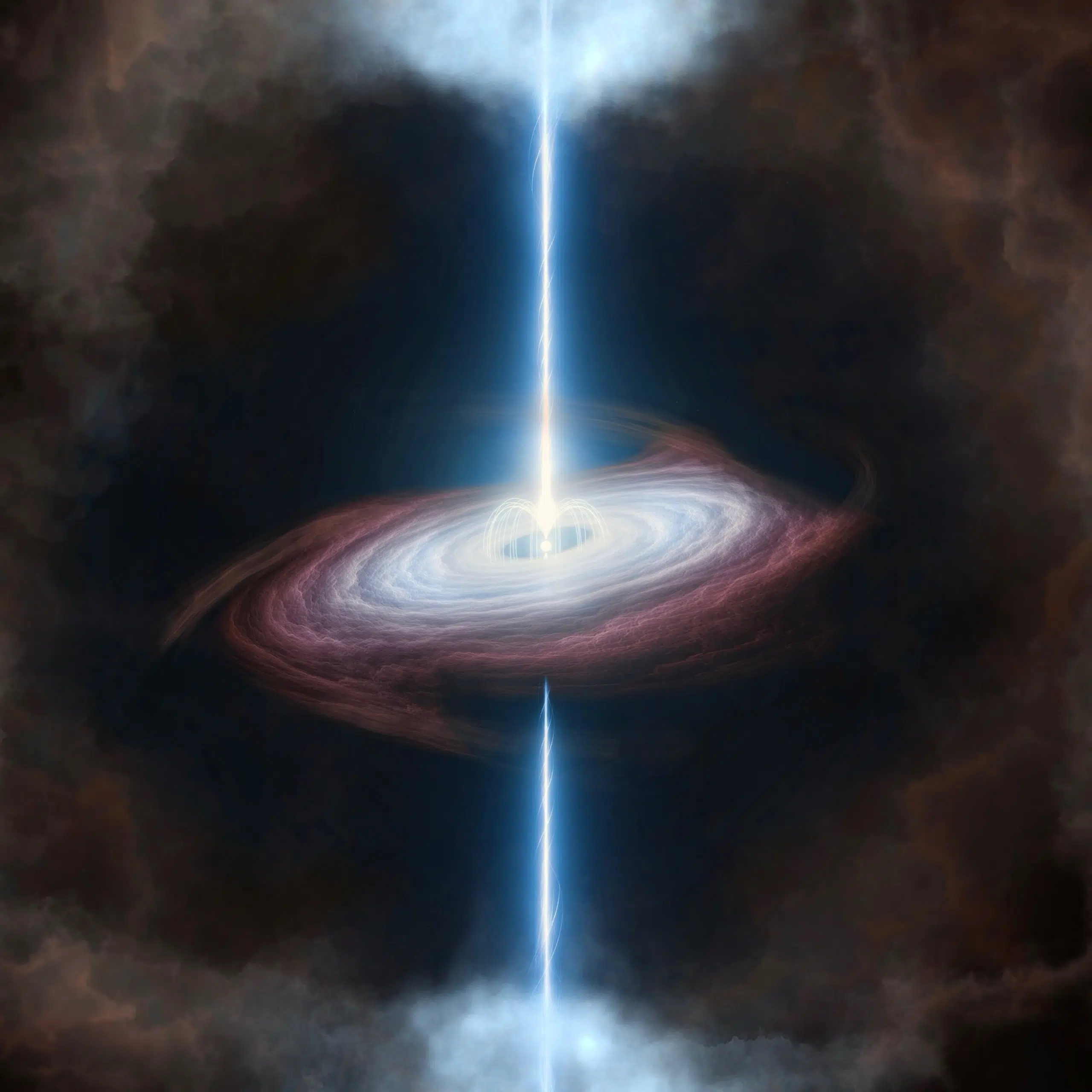 Artist’s conception of a magnetar surrounded by an accretion disk that is wobbling, or precessing, because of the effects of general relativity. Some models of magnetars suggest that high-speed jets of charged particles emanate from the magnetar along its rotation axis.
Credit: Joseph Farah and Curtis McCully, Las Cumbres Observatory
The Discovery of a Magnetar in SN 2024afav
The breakthrough came with the observation of supernova SN 2024afav, which was discovered in December 2024. Using the vast network of telescopes at Las Cumbres Observatory, which spans across the globe, Farah and his team were able to track the explosion for over 200 days. They noticed something unusual about the light curve of SN 2024afav. After the brightness peaked about 50 days after the explosion, instead of gradually dimming, the brightness oscillated in a series of four distinct bumps. This oscillation, similar to the sound of a chirping bird, was an unprecedented feature in supernovae light curves.
The oscillations were unlike anything seen in previous superluminous supernovae, which typically show only a few bumps in their decay phase. Farah, working with UCSB astronomer Andy Howell, proposed that these oscillations were caused by the formation of an accretion disk around the newly formed magnetar. As material from the explosion fell back toward the neutron star, the asymmetrical nature of the accretion disk caused the magnetar to wobble in a way that led to periodic changes in the light seen from Earth. This discovery was a direct link between the formation of a magnetar and the extraordinary brightness of the supernova, providing conclusive evidence for the theory.
General Relativity and the “Chirp” in the Light Curve
One of the most exciting aspects of this discovery is the role of general relativity in explaining the “chirp” seen in the light curve of SN 2024afav. Farah’s analysis showed that the misalignment between the magnetar’s spin axis and the accretion disk caused the disk to wobble, a phenomenon known as Lense-Thirring precession. This effect, predicted by Einstein’s theory of general relativity, caused the light emitted by the magnetar to be periodically blocked and reflected by the wobbling disk. The result was the series of oscillations observed in the supernova’s brightness.
“We tested several ideas, including purely Newtonian effects and precession driven by the magnetar’s magnetic fields, but only Lense-Thirring precession matched the timing perfectly,” said Farah. “It is the first time general relativity has been needed to describe the mechanics of a supernova.”
This finding represents the first clear demonstration of general relativity’s influence on the dynamics of a supernova, adding a new layer of understanding to the study of these cosmic explosions.
The Implications of the Study for Astrophysics
The study’s findings are not just important for understanding superluminous supernovae; they also confirm the long-suspected role of magnetars in powering these explosions. As UC Berkeley professor Alex Filippenko, a co-author of the paper, explains: “What’s really exciting is that this is definitive evidence for a magnetar forming as the result of a superluminous supernova core collapse.” The study supports the theory proposed by Kasen and his colleagues, which suggested that the energy from the magnetar’s formation could explain the prolonged brightness of superluminous supernovae. “The basis of Dan Kasen and Stan Woosley’s model is that all you need is the energy of the magnetar deep within and a good fraction of it will get absorbed, and that’ll explain why the thing is superluminous. What had not been demonstrated was that a magnetar did, in fact, form in the middle of the supernova, and that’s what Joseph’s paper shows.”
The implications for future supernova research are profound. As Filippenko notes, “We don’t know what fraction of Type I superluminous supernovae might be powered by circumstellar material, but it’s definitely a smaller fraction than we previously thought, because this discovery clearly accounts for some of them.” With new telescopes like the Vera C. Rubin Observatory coming online, researchers are expected to find dozens more supernovae with similar “chirping” light curves, deepening our understanding of the universe’s most powerful explosions.