
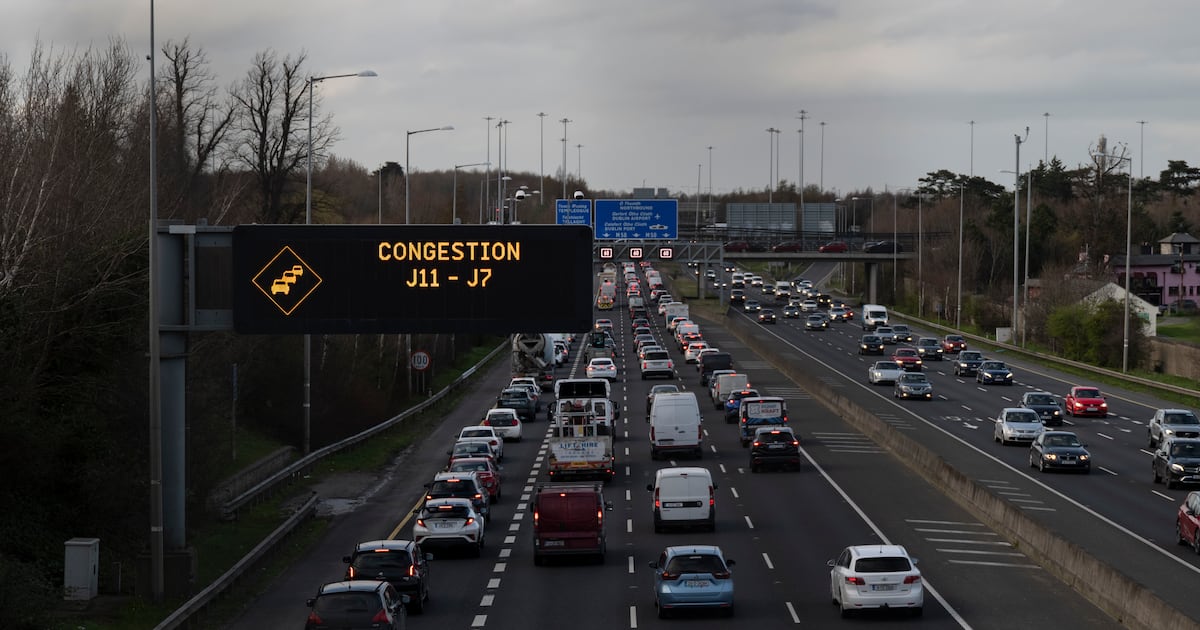
Secondary school teacher Seán O’Neill, who has been commuting on the M50 for more than 25 years, describes the motorway as “at breaking point”.
O’Neill (57), who commutes from his home in Finglas, north Dublin, to St Laurence College in Loughlinstown, south Dublin, says the 35km journey usually takes around an hour and 20 minutes, but sometimes, when there has been a crash, up to three hours.
He has been working at the school as an English and history teacher since 2000, recently taking up a new role as home-school liaison.
“It’s very noticeable just how heavy traffic has become over the last couple of years,” he says. “It’s getting progressively worse. I don’t think the M50 is able to take any more.”
O’Neill says delays on the motorway have resulted in him being late to work some mornings.
“When I was in the classroom, I had to ring up the principal to step into my class for a few minutes if I was late. That has happened on a number of occasions,” he says.
Sarah Burns looks at the problems facing the M50 and what, if anything, can be done to alleviate traffic.
“It’s something that you feel very bad about. You want to be in on time, you want to be ready to teach. You don’t feel good about being late at all. You feel you’re letting everyone down, including your colleagues.”
Although bus services in his area have improved, O’Neill says he would have to walk a “sizeable distance” to get a bus to school.
“The bus is stuck in town for quite an amount of time as well,” he adds. “So it would be an awful lot of a slower journey, even compared to the M50. A whole massive rethink is needed about how we’re going to have traffic development in this city.”
The M50 is “at capacity”, according to Transport Infrastructure Ireland (TII), the State agency responsible for the national roads network, with traffic levels now “higher than ever” and “beyond Celtic Tiger numbers”.
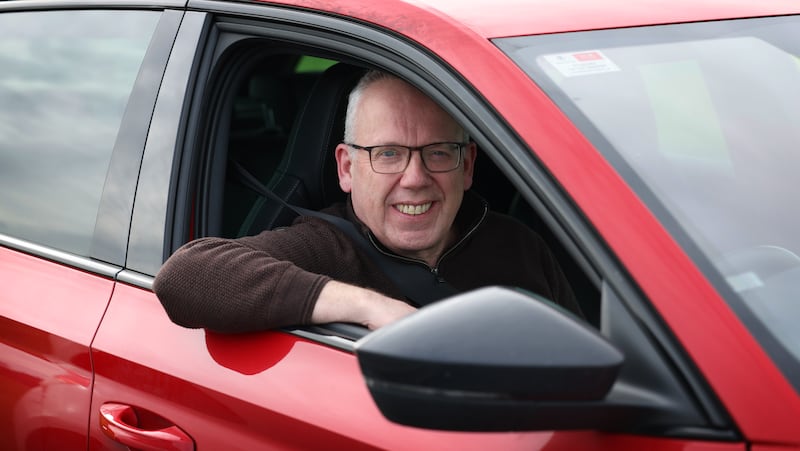 Teacher Seán O’Neill crosses the city on the M50 every day. Photograph: Bryan O’Brien
[ ‘It’s just stressful’: Workers facing two and three hour commutes into DublinOpens in new window ]
It is “by far the busiest road in the country”, with the section between junction 5 (the Derry-Ashbourne exit) and junction 6 (the Cavan-Blanchardstown exit) experiencing a 40 per cent rise in traffic volumes in the past 10 years. About 166,000 vehicles use the road daily; the junction 5 to 6 section is the busiest.
Thursday is the busiest day on the M50, with peak traffic times between 7am and 9am and 4pm and 6pm. A record 145 million kilometres were travelled on the motorway last September.
Recent data from fleet management company Geotab found that increased tolls on the M50, introduced in January, did nothing to reduce congestion, with average travel times actually having risen since the new toll regime began.
The company analysed data from thousands of anonymised commercial journeys and found that average journey times were at least 3.5 minutes slower than in January 2025.
TII says the M50 hit capacity in 2019 but the Covid pandemic provided “a bit of respite”. Variable speed limits were fully rolled out by 2023, which increased capacity at peak hours, but since then rising traffic growth has meant “capacity is being exceeded more and more each year”.
The agency continues to emphasise it has “maximised” engineering elements including widening, removal of the West Link toll barriers to switch to electronic tolling, upgrading the interchanges to make them free flowing, putting in an intelligent transportation system that can regulate traffic speeds during incidents and having dedicated crews located on the M50 to deal with collisions as they arise.
[ Increased tolls on M50 did nothing to reduce congestion, new data findsOpens in new window ]
Sean O’Neill, TII’s director of corporate communications, says more public transport options would “assist” the motorway.
“When public transport offerings increase and they become a choice for people, they will take it,” he says. “Whether it’s more Luas services [or] more Dart corridors. MetroLink is further down the road. It’s just giving people those options and having more of them.
“This is a common issue in thriving metropolitan areas around the world … When you have a growing population, economic activity that’s prosperous, this is one of the ancillary elements that happens. Transport infrastructure is under pressure and it’s not just the M50.”
Minister for Transport Darragh O’Brien will chair a forum of stakeholders this month focused on addressing congestion in the Greater Dublin Area.
Attendees are due to include the National Transport Authority (NTA), TII, Dublin Bus, GoAhead Ireland, Bus Éireann, Irish Rail, An Garda Síochána, the four Dublin local authorities, the Department of Transport and Department of Justice.
Two memos – the Moving Together strategy and Sustainable Mobility Policy Action Plan – were also brought to Cabinet last week, aimed at tackling congestion and transport-related air pollution in urban areas and supporting the delivery of more than 40 transport-related commitments in the programme for government.
O’Brien says congestion is a “real and pressing issue”, particularly in the capital, and recognises the “frustration people are feeling when they’re stuck in traffic day after day”.
The Minister acknowledges there needs to be a “fresh look” at what more can be done to ease the pressure on roads.
“I’ve asked State agencies to work with us in identifying practical, deliverable solutions to tackle traffic congestion in Dublin,” he says.
“Nothing should be off the table – we have to examine all viable options to improve traffic flow, support public transport and ensure our city can function effectively for commuters, businesses and families alike.
“We are also investing unprecedented levels in public transport and in our road network to improve connectivity and reduce pressure across the system.”
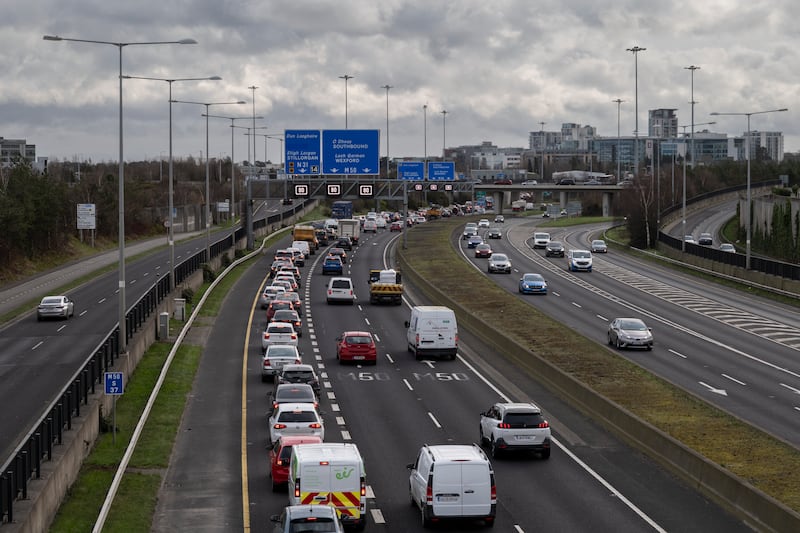 Heavy northbound traffic on the M50 during rush hour on Thursday of this week. Photograph: Paulo Nunes dos Santos
The Labour Party introduced legislation in the Dáil earlier this year calling for the right to remote and flexible working. It said the lack of a right to flexible and remote work, and the failure to provide reliable and accessible active-travel alternatives and public transport was forcing “more and more workers” to rely on private vehicles leading to increased congestion and unnecessary carbon emissions. The Bill was opposed by the Government.
The Irish Road Haulage Association (IRHA) says the situation on the M50 is “getting worse on a monthly basis”. It says it costs nearly €100 more per journey from Naas to Dublin Port compared with three years ago, for example.
There are drivers who don’t want to go “anywhere near Dublin Port” at certain times now, says IRHA president Ger Hyland.
“We were able to get to Dublin Port from Naas in roughly 40 minutes a number of years ago. It’s taking us two hours-plus today,” he says. “If it’s costing the hauliers more, it’s going to cost the consumer more. It’s all leading to inflation.”
Hyland points to previous proposals such as the Eastern Bypass or outer ring road as possible solutions.
The Eastern Bypass scheme would comprise an extension of the M50 from the Dublin Tunnel to Sandyford, completing a full orbital motorway around Dublin.
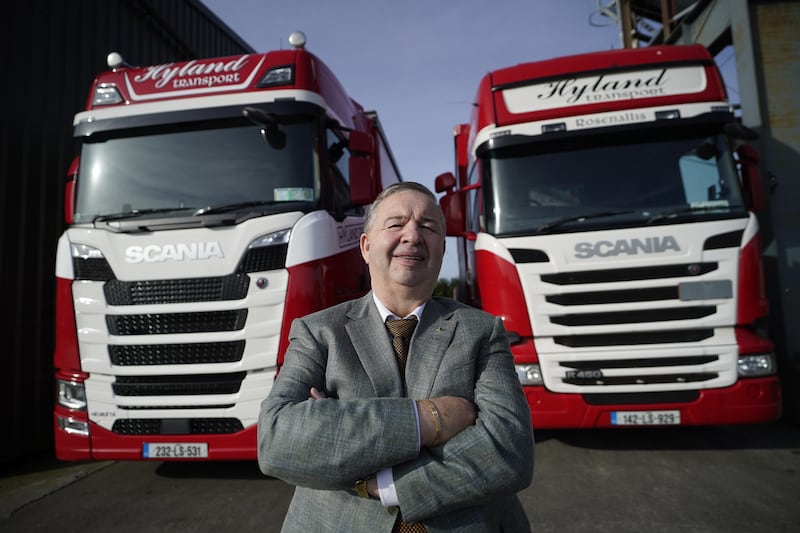 Ger Hyland, president of the Irish Road Haulage Association. Photograph: Niall Carson/PA
However, the NTA’s Greater Dublin Area Transport Strategy 2022-2042 says that, based on updated assessment work and taking account of current transport policies, the bypass is “no longer required to be developed”.
The NTA will collaborate with Dún Laoghaire-Rathdown County Council in undertaking an assessment of the potential for the southern section of the former Eastern Bypass corridor reservation to accommodate a “sustainable transport link”, the plan says.
The Leinster Orbital Route, which was a proposed motorway extending from Drogheda to Naas/Newbridge, with links to Navan and other towns, will also not be progressed in “its existing form”, according to the strategy.
The NTA again cites Government policy to reduce transport’s contribution to emissions and proposes improving existing road networks to “cater for orbital demand along these corridors”.
Brian Caulfield, professor in transportation at the Centre for Transport Research in Trinity College Dublin, says enhancing the connectivity of other motorways could “take some of the stress off the M50”.
Greater public transport reliability and more park and ride facilities, as well as moving the focus of activity away from Dublin, are also cited by Caulfield, along with multiple-point tolling.
Such a system would involve tolling along the M50 on a junction-by-junction basis, with potentially different rates at peak times, instead of having a single toll point that only a proportion of the road’s users pass through.
 Brian Caulfield, professor in transportation at the Centre for Transport Research, TCD. Photograph: Tom Honan
Caulfield points to an M50 traffic management report published by TII in 2014 that explored the possibility and found multiple tolls would provide “significant benefits in terms of demand management”.
“The price of driving has to go up a huge amount before people stop doing it,” he says. “It has to go up substantially.
He says that despite the spike in oil prices caused by the conflict in the Middle East, “we won’t see a decrease in the number of people travelling around the country. It’s [a matter of] people’s elasticity to travel.”
Multiple-point tolling is a policy decision that would “have to be made by Government”, says TII.
There’s a huge amount of pain in delivering public transport infrastructure
— Prof Brian Caulfield
The Department of Transport says there has been “no decision” to change current tolling arrangements on the M50.
Caulfield adds that public infrastructure projects, such as MetroLink, Luas Finglas and Dart+ South West, are not being delivered “quick enough”.
“We’ve known what 100 years of building roads and motorways and underinvesting in public transport has done in Ireland. It has led us to the situation we are currently in,” he says.
“Our population is increasing, the size and space in our cities isn’t increasing so it has to be collective; it has to be public transport.
“There’s a huge amount of pain in delivering public transport infrastructure in that not everybody is for it … but we’ve never regretted investing in public transport in Ireland and I do think we need to do it in a much faster way.”
Lorraine D’Arcy, TU Dublin’s sustainability action research and innovation lead and senior lecturer in sustainable transport and mobility, agrees that public transport should be the priority for decision makers.
“That doesn’t always sit well with people, but the simple fact of the matter is that we need more public transport because that is how we move more people more often and we need people out of cars,” she says.
 Lorraine D’Arcy, TU Dublin: ‘Our students are more sedentary than our adult lecturing staff because they’re travelling such long distances.’ Photograph: Bryan O’Brien
D’Arcy says while higher car dependency has environmental impacts, there are also health implications.
“People are now spending a longer time in cars, driving long distances, sitting at their desks, not moving that often. Even among our students, they are more sedentary than our adult lecturing staff here and it’s because they’re travelling such long distances,” she says.
“I call them Celtic Tiger cubs because their parents bought houses during that time in commuter towns. Those students are travelling with their parents, driving up and down to the city. Therefore they’re not getting involved in student life, on the social side of things, and it’s having an impact on them.”
Dublin Chamber says congestion has been a “major issue” for its members, with almost half saying they were negatively affected by the issue in a survey last year.
“The M50 continues to be a major transport artery for Dublin but we have been told that it is at its max expansion,” it says.
“What we need now to get people moving around Dublin effectively is continued investment in public transport including the Dart+ projects to Maynooth and Naas which have been long-fingered by government for too long.”
Dublin Commuter Coalition is an advocacy group devoted to improving the provision of sustainable mobility in the Greater Dublin Area.
“From our perspective and our understanding from the experts, there are no quick fixes to make the M50 flow better from a purely car/road point of view; nothing can be extended,” it says.
“It might sound biased, but we feel it just confirms our general perspective that the only way to improve flow and congestion on the M50 is to get people out of their cars and give them other options.”