
If you were around in the 1980s — and have the mercury fillings to prove it — then you surely remember Barbara Taylor Bradford’s A Woman of Substance. It was a TV series starring Jenny Seagrove and Deborah Kerr that drew Channel 4’s biggest audience in its history, and also a doorstopper of a bestselling novel that everyone’s mum seemed to have plopped on their bedside table.
I loved the TV series almost as much as that other 1980s saga The Thorn Birds, but not quite. Nothing made young bosoms heave like the priest Ralph de Bricassart and Meggie having forbidden sex on the beach, not caring that sand causes terrible chafing. Although, to be fair, A Woman of Substance puts in its shift on the breathless sex-to-violins front.
TV newsletter
What to watch or stream, plus news and reviews from our small-screen experts.
Sign up with one click
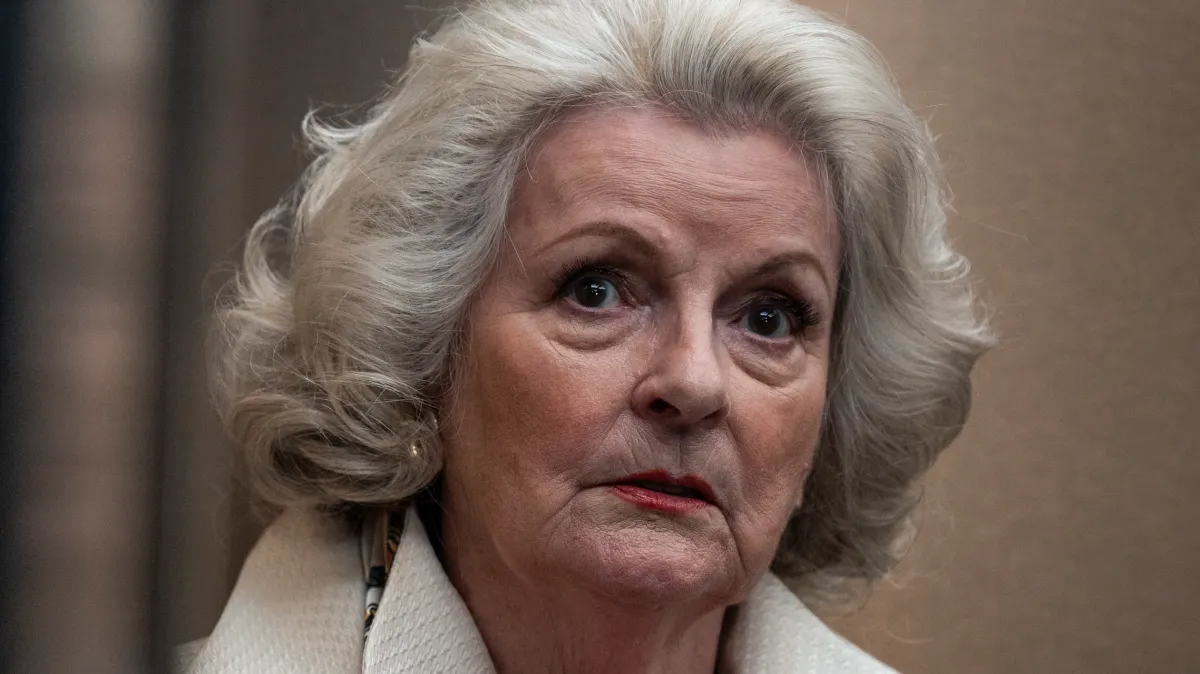
So I was slightly dreading Channel 4’s remake four decades later, even though it stars the wonderful Brenda Blethyn as the older Emma Harte, swapping Vera’s tatty old raincoat and fishing hat for a Chanel two-piece and bouffant hairdo.
I didn’t want a clever, slick, “progressive” fourth-wall-breaking version in which they made rags-to-riches Emma, say, a lesbian with a lucrative side-hustle as a spanky dominatrix. You think I exaggerate? They made Pip’s sister, Sara Gargery, give Mr Pumblechook a sexual thrashing in Steven Knight’s meddling adaptation of Great Expectations, which was a dark day indeed. Not everything needs to be modernised. Sometimes things are fine as they are.
Thankfully, they haven’t messed much with A Woman of Substance. Jessica Reynolds is inspired casting for the younger Emma, harnessing the same doe-eyed but feisty resilience that Seagrove did as the poor, abused housemaid treated like a rubbing rag by the rich Fairley family, one of whom leaves her alone, teenage and pregnant. She dedicates her life to wreaking revenge — a tiny human whirlwind who is 20 times cleverer than anyone at the big mansion — and taking everything they have from them.
I loved it back then and — despite a clunky opening in 1970s New York when my heart sank — ended up loving this version too. Maybe it is the nostalgia fix, but I’ve binged the lot and, yes, of course it’s unrealistic and OTT, but it is still a terrific ride. And, praise be, there are no gratuitous full-frontal penises. Given that this is a TV drama vogue, be grateful for small mercies.
Emma rises from half-starved servant to the wealthiest woman in the world, with a retail empire that stretches to America, all because of her determination, work ethic, talent (dressmaking) and a monumental grudge. Blethyn plays the older Emma with restrained rage, mistress of all she surveys at nearly 80, but with ingrate, grasping, useless offspring who have never wanted for anything taking all her sacrifices for granted and plotting to oust her from her own business, griping that she won’t retire.
It takes something to outperform the star of Vera, but I think Reynolds just about manages it. She provides the main, industrious energy, making the young Emma’s fortitude and strength of character suggest that anything is achievable if you want it enough.
When she falls in love with rich Master Edwin, she has sex with him in the Yorkshire wilds (no blanket), with neither seeming to notice that northern winds are awfully nippy. Throughout we constantly swap between timelines: older, rich Emma and young, struggling but upwardly mobile Emma. There are also great performances from Leanne Best as the wealthy beauty Adele Fairley, who is a bird in a gilded cage, an alcoholic depressive hiding in her room and watching from behind the curtains as her husband (Emmett J Scanlan) seduces her very willing sister.
Then there’s Lenny Rush as Emma’s younger brother, orphaned after their parents die tragically (no guessing who is to blame). When, years later, Emma is cornered and raped by Edwin’s vile older brother, she has to wipe down her plaid skirt, brush away her tears and put on a full Christmas dinner for her children, husband and friends as if nothing has happened.
Of course it’s simplistic and more than a bit clichéd. The rich people are mostly hideous, selfish caricatures while the poor are noble and kind. But as an escapist tale of a rise from poverty to great wealth, showing how entitlement makes people lazy and necessity is the mother of invention, it still does the business for me.
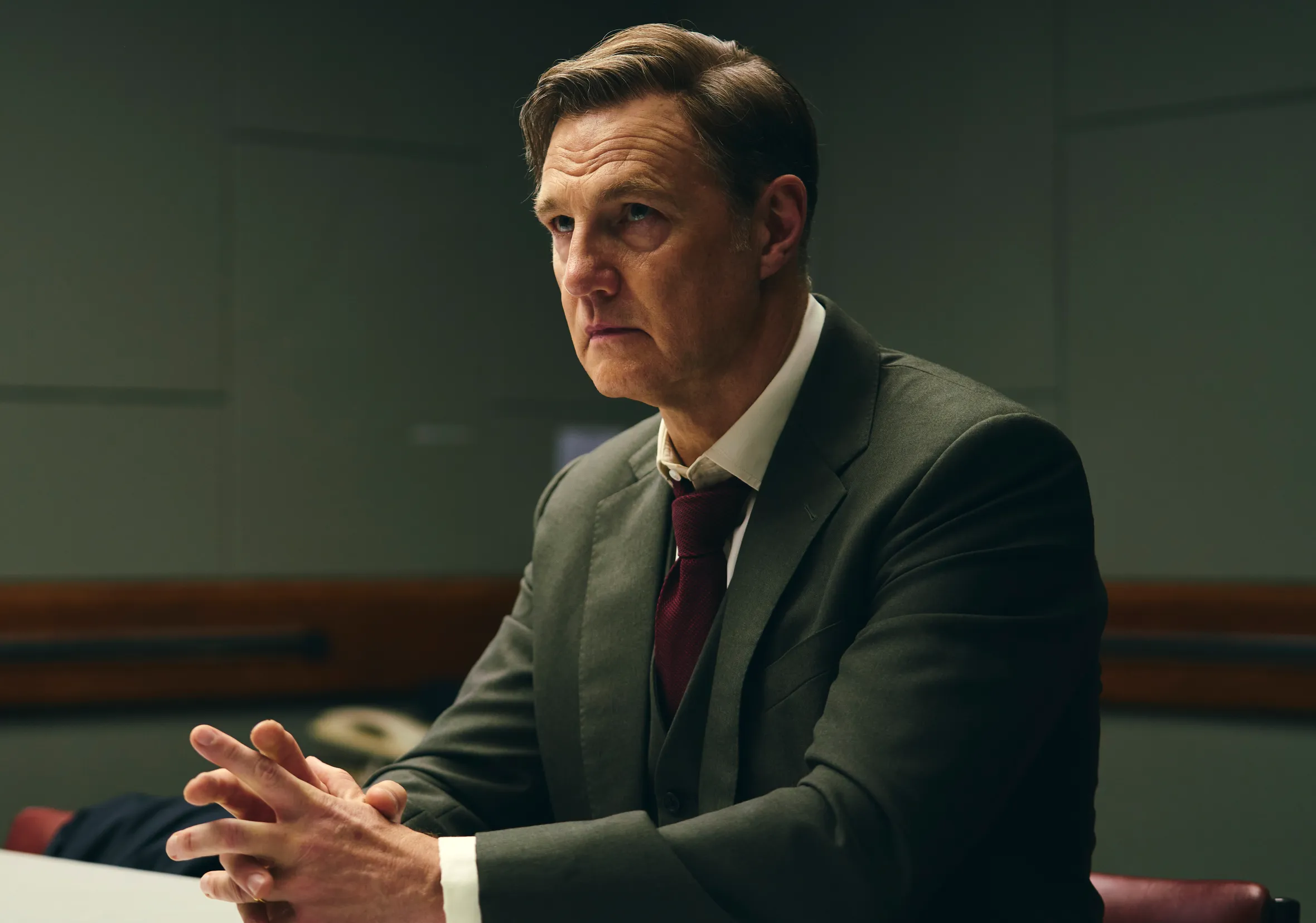 David Morrissey stars in Gone on ITV1 and ITVXITV
Have you watched all six episodes of Gone yet? It’s the ITV drama in which David Morrissey played Michael Polly, the stony-faced headmaster of a public school with not just one stick up his backside but an entire forest, a man who failed to show any emotion even when his wife, Sarah, was found murdered because that wouldn’t do and there were timetables to plan.
If you haven’t watched it all, look away now. Shield your eyes as if from a passing streaker because I’m going to talk about the end. Which I found a touch disappointing, mainly because I had already guessed the killer long before, but also because I found that confession to the detective Annie (Eve Myles) rushed and somewhat unconvincing.
What I definitely did not find disappointing was Morrissey’s performance, which must be one of the best of his career. Or at least that amazing scene in the final episode when he told his daughter the truth, his brittle armoury cracking as the miasma of embarrassing private business — a failing marriage — oozed into the open. A marriage that might have been saved if he had been better at communicating like a normal human being. Just like he finally was doing now.
Some viewers apparently complained that this drama was too slow, which it possibly was. But it had all been leading up to this beautifully written speech of nearly three uninterrupted minutes, which Morrissey’s Polly made into a tiny one-man play. His throaty voice was rasping from when he had tried to hang himself at the spot in the woods where Sarah’s body had been found.
Until then Polly had presented like a dour tortoise, seething with flinty-eyed disapproval as he stalked the corridors of the grand school, poking his head out from his starched collar to bellow at some poor boy. Especially the boy whose father had been having sex with Polly’s (now dead) wife. This was another drama in which none of the male characters emerged well. Sarah’s bit on the side was an arrogant pig; Polly was cruel and vindictive to pupils and had all the human warmth of a freezer block; and Annie’s estranged husband, Craig (Peter McDonald), was an angry control freak who switched from charm to violent anger on a sixpence. And then there was the killer — a weirdo stalker. Wouldn’t someone at the school have noticed that a teacher was obsessed with Sarah?
This was nevertheless a great drama of misdirection — the two men with the biggest motives and most unlikeable natures were not guilty after all, but the one who seemed unremarkable was. Yes it was slow, but I don’t mind that in the age of attention deficit. It showed confidence: a vivid portrait of a man totally contained to the point that he had disappeared. He had become his job as headmaster, an extension of the school, his personality eclipsed. It made a nice change from guns and drugs, frankly.
Love TV? Discover the best shows on Netflix, the best Prime Video TV shows, the best Disney+ shows , the best Apple TV+ shows, the best shows on BBC iPlayer, the best shows on Sky and Now, the best shows on ITVX, the best shows on Channel 4 streaming, the best shows on Paramount+ and our favourite hidden gem TV shows. Don’t forget to check our critics’ choices to watch and browse our comprehensive TV guide