
THE Government has moved to strengthen nationwide enforcement against the leakage and smuggling of subsidised fuel following the surge in global oil prices triggered by the ongoing conflict in West Asia.
The government has activated a high-level inter-agency taskforce to coordinate operations targeting illegal activities involving controlled goods, particularly diesel and petrol.
The Cabinet decided on March 11, 2026 to immediately activate the Special High-Level Committee for Coordination Among Enforcement Agencies to Combat Leakages and Smuggling.
The committee will be chaired by Deputy Prime Minister II Datuk Seri Fadillah Yusof, while the Ministry of Domestic Trade and Cost of Living will serve as the secretariat.
The measure comes amid concerns that the escalation of conflict in West Asia has driven global crude prices sharply higher, increasing incentives for the diversion and smuggling of subsidised fuel in Malaysia.
Although domestic pump prices were adjusted for the period from March 12 to March 18, 2026, retail diesel and petrol prices in the country remain significantly lower than global market levels, creating opportunities for illegal profiteering.
Global Brent crude prices surged to between US$90 and more than US$100 per barrel in the previous week, compared with US$60 to US$70 before the conflict began. Authorities warned that the widening price gap has heightened the risk of leakages and cross-border smuggling.
The risk is particularly acute in Sabah and Sarawak, where bulk diesel subsidies remain in place. In the two states, diesel is sold at RM2.15 per litre at the pump, compared with RM3.92 per litre in Peninsular Malaysia, while the current market price under the Automatic Pricing Mechanism has reached about RM4.30 per litre.
As a result, consumers in Sabah and Sarawak pay less than half the actual market cost.
The government cautioned that the fiscal burden of subsidies could rise significantly if fuel diversion and smuggling are not addressed.
In 2025 alone, the bulk diesel subsidy for Sabah and Sarawak cost the government around RM2 billion, comprising RM924 million for Sabah and RM1.08 billion for Sarawak.
Based on similar consumption levels and prevailing market prices, the subsidy bill could climb to RM4.6 billion in 2026.
In response to the uncertainty surrounding the Middle East conflict and global oil prices, the Cabinet has identified stronger enforcement coordination across agencies as an immediate intervention measure.
Enforcement operations will focus not only on border areas and known smuggling hotspots nationwide but will prioritise Sabah and Sarawak, where the gap between subsidised prices, pump prices and market rates is widest.
Authorities will carry out operations under the Control of Supplies Act 1961 and the Anti-Money Laundering, Anti-Terrorism Financing and Proceeds of Unlawful Activities Act 2001.
Under the Control of Supplies Act, individuals convicted of offences may face fines of up to RM1 million for a first offence and up to RM3 million for repeat offences, or imprisonment of up to three years, or both.
Companies may be fined up to RM2 million for a first offence and up to RM5 million for subsequent offences.
Meanwhile, offences under the anti-money laundering legislation carry penalties of up to 15 years’ imprisonment and fines of no less than five times the value of the proceeds of illegal activity or RM5 million, whichever is higher.
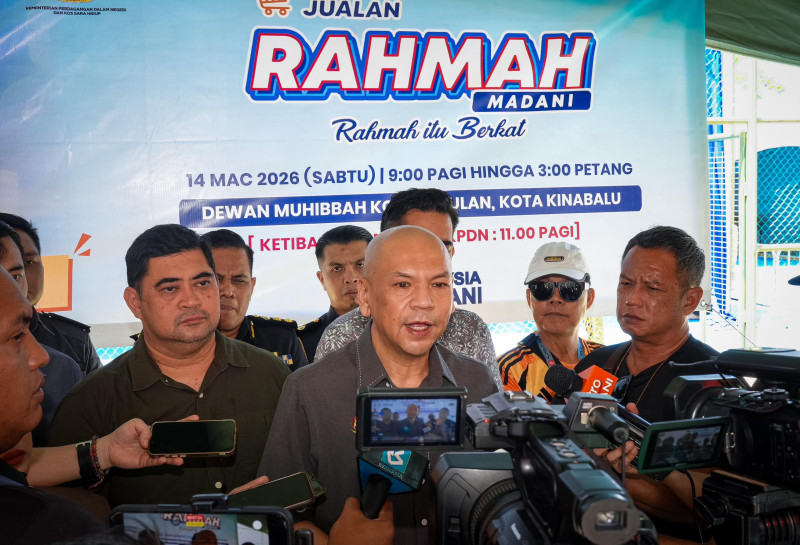
Domestic Trade and Cost of Living Minister Datuk Armizan Mohd Ali said the strengthened enforcement effort aims to safeguard government subsidies, curb illegal activities and protect national resources during a period of heightened global economic uncertainty. – March 14, 2026