
Raining. An alley near Broadway. We see the shadowy figure of the 48-year-old Lorenz Hart, wearing his topcoat like a cloak. His cigar glows and he’s talk-singing to himself. While his voice suggests he may have been drinking, he is not remotely incoherent. As he lurches among the garbage cans, he sings a fragment of the 1926 song Everything Happens to Me, to music heard only in his head.
These opening lines not only set the scene for Blue Moon, an Oscar-nominated screenplay about the tragic life of a once-great lyricist, but also posed a challenge for the film’s makers: can a movie that harks back to a golden era of Broadway, set in one of its most famous bars, be shot in Ireland?
It’s a task that Susie Cullen wrestles with increasingly regularly. As a production designer, it’s her job to choreograph the look and feel of everything audiences see on screen. When she came on board to shoot Blue Moon a couple of summers back, she got to work, making the Gaiety Theatre feel like Broadway and one dingy Dublin alleyway feel like the underbelly of the Big Apple.
“Doing a film that is set in a country quite different to ours is definitely a challenge,” she says. “It’s comparable to doing a period film. You need left-hand-drive vehicles to populate a busy street, all the street markings are wrong, all the signage is wrong and all the shop fronts have branding and architecture that we have to cover.”
It’s not the only project of its kind that Cullen has worked on recently. “I did a run of four films back to back that were all set in America,” she says, referring to Abigail, Drop, Blue Moon and Soulmate.
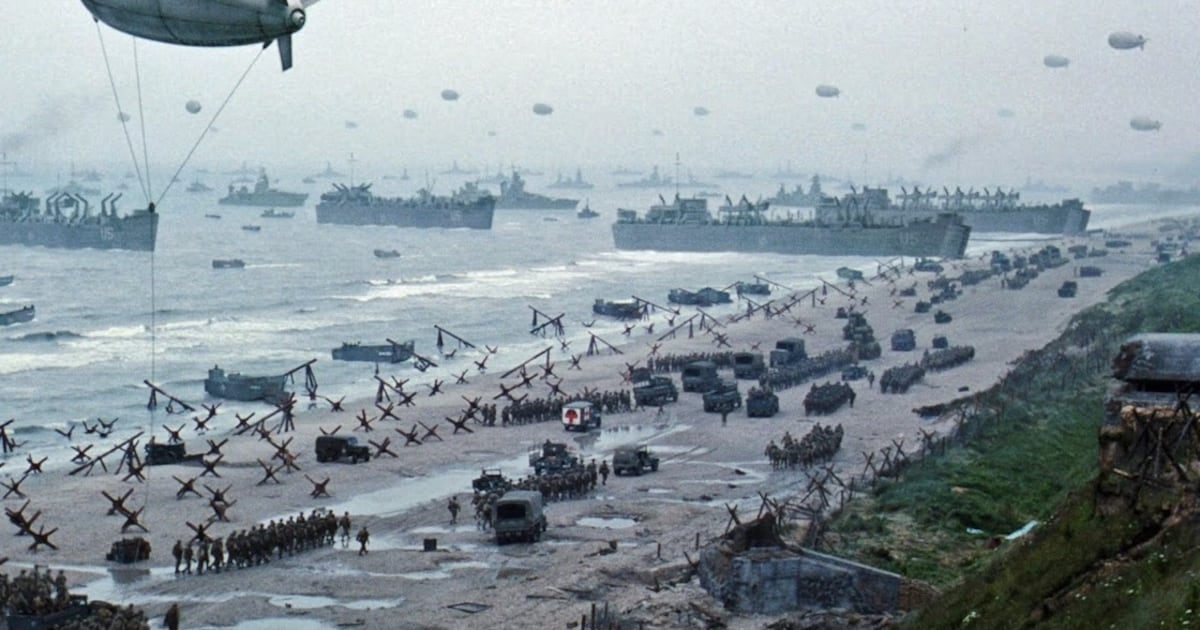
Ireland has come a long way since the national fanfare that came with re-creating D-Day in Co Wexford (for Saving Private Ryan, the Steven Spielberg film from 1998) and building Jedi temples on Skellig Michael (for that underwhelming Star Wars sequel trilogy).
West Cork has more recently served as a jazzed up New York, for Everybody Digs Bill Evans; Dublin has been a dystopian Washington, DC, for Anniversary; and Wicklow has become the bear-infested woods of Appalachia, for Cocaine Bear.
Even with the added cinematic acrobatics, a generous suite of financial incentives means that filming in Ireland often works out better value for American studios.
Ireland’s section 481 film tax credit is a huge draw. Productions can claim 32 per cent corporation tax relief on projects with budgets of up to €125 million (a huge saving when you get up to those figures), and small to medium-sized productions can claim as much as 40 per cent. In 2025, the incentives were further sweetened to include a 40 per cent relief for productions spending at least €1 million on visual effects.
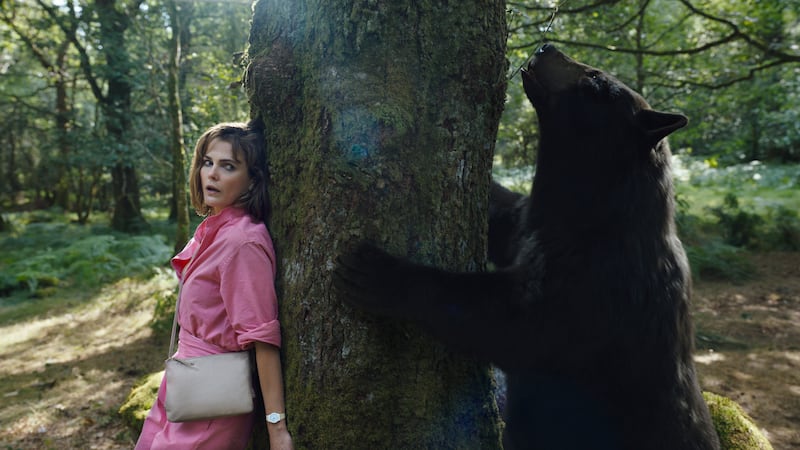 Keri Russell as Sari in Cocaine Bear. Photograph: Universal Pictures/Pat Redmond
For every €1 invested into section 481, the Irish economy receives €3.50 in return, according to one PwC report.
The industry now regularly comes close to hitting capacity during peak periods. “Ireland is going gangbusters,” as Cullen puts it.
On the other hand, a “new normal” has taken hold of the US film industry, according to research from ProdPro, an industry network. Its analysis of global production spending on projects with budgets of $40 million or more found that film-makers are leaving the US in droves: spending on these big-budget projects dropped by 20 per cent in the US in 2025, year on year. The figure for Ireland increased by 42 per cent, even if it clawed just $320 million from the global pie.
Two-thirds of executives surveyed said tax incentives were a key lever to combat pressure on budgets. In a game of numbers, high production costs in Los Angeles and uncertainty about union disputes are shifting studios’ outlook overseas.
“Ireland emerged as a stronger contender for both major productions and mid-budget films,” the report said, “breaking into ProdPro’s top five locations for studio budgeting” in 2026.
[ “It was magic”: Joanna Lumley on filming Wednesday in IrelandOpens in new window ]
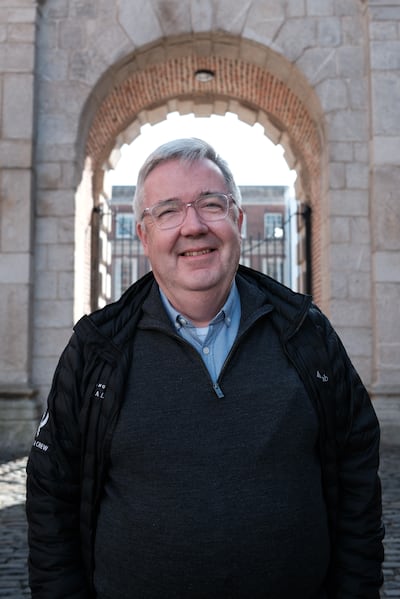 David McLoughlin, executive producer and co-chief executive of Metropolitan Pictures. Photograph: Conor Capplis/ The Irish Times
Hollywood’s struggle is Ireland’s gain. David McLoughlin, co-chief executive of Metropolitan Pictures, says stability is an important factor too.
“It’s no secret to say that in season one of Wednesday they were shooting in Romania, and at very short notice there was a change of government and the tax credit was withdrawn,” McLoughlin, who was an associate producer on the second season of the Netflix show, explains.
He says this was the primary reason the series left Romania; Ardmore Studios, in Co Wicklow, slotted in as an ideal place to relocate. “Numerous other countries wanted it,” he says, but Ireland beat stiff competition.
Romania eventually reinstated the tax incentives, but the disruption was enough to dissuade Wednesday from returning.
Plus, Cullen says, Americans find Dublin a nice, easy place to be. “You definitely get a sense that people leave feeling they really liked the city.”
The expertise and reputation of Irish crew increase with every project, he says. “Ten to 15 years ago, if Wednesday came to Ireland, I’d say half the heads of department would be Irish. Now you can see on a show of the scale of Wednesday, all but one head of department is Irish.”
McLoughlin was also an executive producer of Anniversary and Everybody Digs Bill Evans, both of which were screened at Dublin International Film Festival last month.
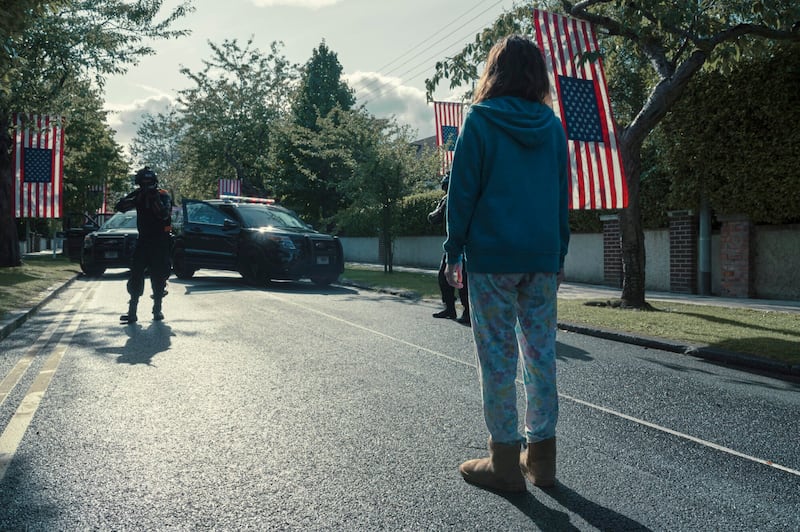 Anniversary: Zoey Deutch in the Netflix political thriller set in the US but filmed in Ireland. Photograph: Owen Behan/Lionsgate
 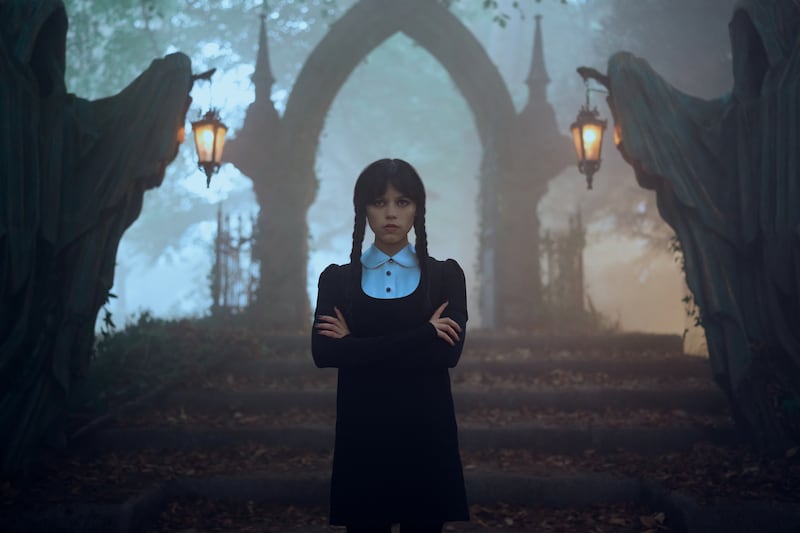 Jenna Ortega stars in Netflix’s hit series Wednesday. Photograph: Jonathan Hession/Netflix
“Anniversary could have shot anywhere,” he says. Set in a suburban American neighbourhood, the film, which rose to the top of Netflix in Ireland when it was released, portrays the way a radical pivot from partisan politics might unravel society.
[ Lisa McGee on her new Netflix mystery comedy: ‘A messed-up cousin of Derry Girls’Opens in new window ]
In many ways it’s a film that gets to the heart of contemporary American societal tensions. That it was convincingly filmed largely at a house in Mount Merrion, in south Dublin, is down to the team involved.
A scene in which a flag is unceremoniously ripped down was shot nearby, in Foxrock. Pollaphuca Reservoir, in Co Wicklow, doubles for a backyard lake; everything’s bigger in the US, after all. And – by far its most obvious location to Irish viewers – the Bord Gáis Energy Theatre serves as the snazzy headquarters of the film’s antagonist. (The venue also doubles as the home of RTÉ’s Late Late Show studio in How to Get to Heaven from Belfast.)
Everybody Digs Bill Evans, an insular biopic about the 20th century jazz pianist, was shot on location in west Cork and at West Cork Film Studios, near Skibbereen. “It’s a former furniture factory converted into a film studio,” McLoughlin says, “but it works”.
Dialogue-heavy films like this, with a lot of interior scenes, are easily adaptable for Ireland. “It shows very clearly, from a creative point of view, how you can set a film in 1960s New York and Florida and shoot it all in Ireland. The only time an audience knows about this is at the very end, when you see the credit saying, ‘Filmed on location in Ireland’.”
The volume of productions projected for 2026 is once again unprecedented. “Ten years ago the industry was somewhat seasonal,” he says. “Now they barely break for Christmas.”
More studio space is needed to keep up with demand. Though there’s a long planning and construction time for these facilities, the ambition of a facility such as Dublin Fields, off the M50, shows the push for Ireland to rival competitors such as Pinewood Studios, on the edge of London, which has hosted Star Wars, Marvel Studios and a slate of James Bond films, among others.
For Désirée Finnegan, chief executive of Screen Ireland, the record-breaking levels of production in recent years are partly down to the strong creative crew available.
“These are highly skilled professionals whose talent and craftsmanship bring stories to life on screen,” she says. “Creativity is central to the film industry, and the value that Ireland places on arts and culture also helps create an environment where film-makers can thrive.”
The opportunities for Ireland are such that for the past five years the State agency’s head of inward production, Steven Davenport, has been based in Hollywood.
“Screen Ireland’s Los Angeles office plays an important role in supporting our dual strategy,” says Finnegan, “which is to promote the extraordinary creative talent in Ireland and to attract international production to the country”.
“It’s little wonder why producers and studios are coming to do business,” Davenport adds.
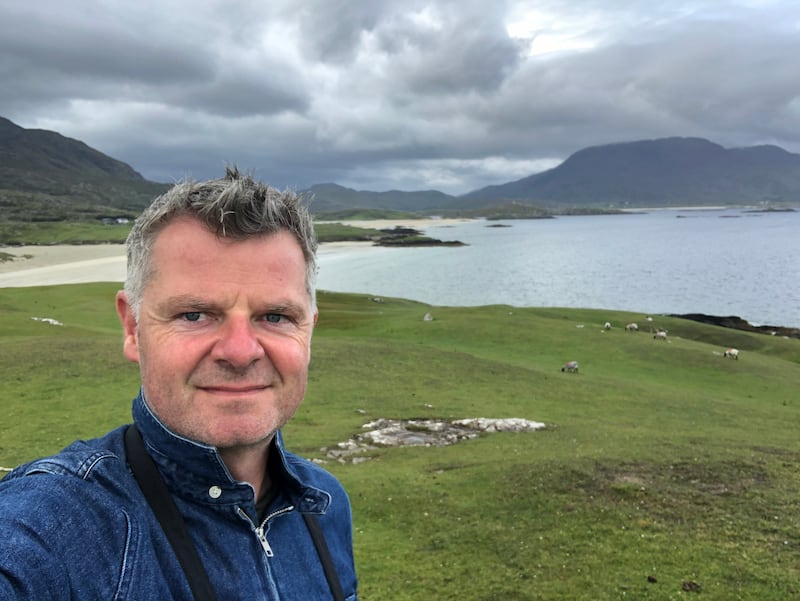 Eoin Holohan, locations manager on films such as Abigail, Blue Moon and Star Wars: The Last Jedi
With every deal made in LA, though, there’s a location team that must assemble a list of viable shooting spots in Ireland. “Steven would be the guy who’d be saying [to studio executives], ‘You can do downtown Boston in Dublin’,” says Eoin Holohan, a location manager who, like Cullen, also worked on Blue Moon, Abigail and Drop.
The location manager “is the poor fecker who has to go and figure it out. The downtown areas of American cities, they’re all very similar to what we have in Ireland and Europe,” he says. “It’s all glass, steel and concrete.”
[ Off to the Oscars: The Irish film that’s making a big splash worldwideOpens in new window ]
On Abigail, Holohan was drawn to Dublin’s docklands for a night shoot depicting Boston. “It’s kind of anonymous-looking. I knew that, at night-time, Sir John Rogerson’s Quay is a bit of a gift, because it’s a dead end, so we can flip the traffic so it looks like America.”
Cullen then transformed the scene into a convincing US streetscape.
An industry agreement with Siptu means crew must be paid travel expenses and possibly overnight accommodation fees for shoots more than 40km from Dublin city centre. So, naturally, most filming happens within this radius, where there’s a surprising variety of environments. (Screen Producers Ireland, of which David McLoughlin is a board member, again called in its most recent pre-budget submission for an enhanced “regional rate” to be introduced.)
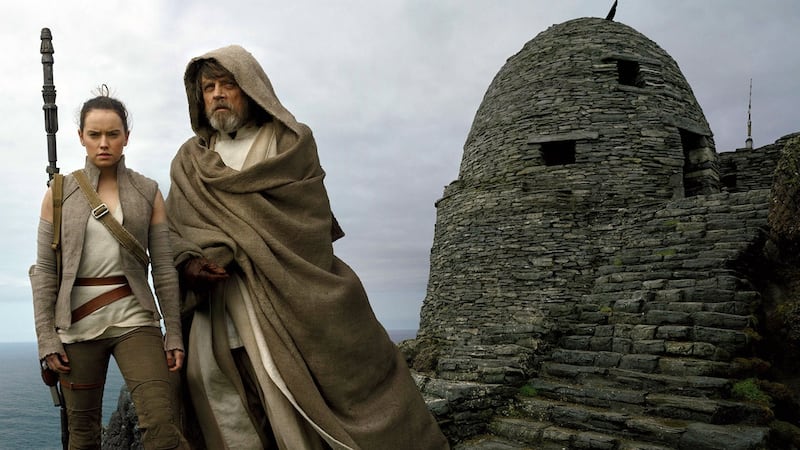 Daisy Ridley and Mark Hamill on Skellig Michael in a scene from Star Wars: The Last Jedi
Last year was particularly busy for the city council’s film office: the city hosted 294 productions in 2025, including 33 films, 70 TV shows and 23 documentaries. The productions resulted in 18,610 days of employment and spending of more than €118 million in the area.
“The local spend of productions is of particular note due to the multiplier effect,” a council spokesman says. “This provides cash directly to local businesses and establishments who provide accommodation, catering, transport, construction, costume, props, security, locations, post-production and more. Suppliers then spend that income locally through wages, taxes, business upgrades, etc.”
Getting a permit from a local authority is the easy part, though: nearby businesses must be on board too. “We depend on the goodwill of the people that live in the city as much as the local authorities that look after it,” Holohan says.
“We will always find a way. ‘No’ is never really an option for a locations manager. We are problem solvers and solutions driven – head melters.”