
Europe faces a housing crisis, and Ireland is among the countries experiencing it most intensely. Nowhere is the pressure greater than in Dublin.
Our capital city occupies just 1.3 per cent of the country’s land yet contains roughly 27 per cent of its population. If the city is to retain its young people and attract more back from abroad, new thinking about land use and housing supply is required.
Part of Dublin’s difficulty stems from decades of failure to recognise its restrictive geography and being unimaginative about land use and zoning.
As an entire county, Dublin comprises 228,000 acres, similar to Co Carlow, which can expand in multiple directions.
Dublin, however, is hemmed in by nature: the Irish Sea to the east and the Dublin and Wicklow Mountains to the south. The Phoenix Park and surrounding State lands, along with Dublin Airport, occupy a combined 5,000 acres , limiting land for housing.
We are beginning to create momentum in housing supply, but the challenge is not just about numbers. Ensuring rents are affordable for modest and middle incomes is equally important. Meeting this objective requires an emphasis on social and cost-rental housing, alongside determined action to tackle dereliction and underused property in the city centre.
[ The Irish Times view on the housing crisis: a decisive year for the CoalitionOpens in new window ]
Compared with other European capitals, Dublin needs to catch up. Dublin’s housing stock is 13 per cent social housing but Copenhagen has 20 per cent, while Amsterdam and Vienna have more than 40 per cent. Achieving a more balanced system, with Dublin reaching 20 per cent, requires particular focus.
The first priority must be scrutinising expenditure on major projects that do not deliver infrastructure or housing. We can also no longer ignore the small size and poor condition of corporation flats, many of which require major upgrades or redevelopment.
The plan to spend €200 million to €500 million upgrading the GPO is difficult to fathom amid an acute housing shortage. While it is a historic building, providing housing with affordable rents should take precedence.
Undeveloped land scarce is patently scarce, and serious questions should arise about the long-term future of Dublin Port. It occupies about 640 acres , nearly the combined size of Sandymount, Ranelagh, and Harold’s Cross.
Looking 80 to 100 years ahead, gradual relocation of the port could free significant land while reducing heavy freight traffic on the M50 motorway. In this context, the proposed €2 billion Dublin Port 2040 Masterplan should be independently scrutinised against the city’s housing priorities.
Dublin City Council’s purchase of Camden Yard, the former Dublin Institute of Technology campus on Kevin Street, at one level is a good real estate deal and the latest breakdown of the €581 million investment provides additional logic for the decision.
It is, however, hard to justify this deal without first having a comprehensive plan to upgrade the city’s older corporation flats.
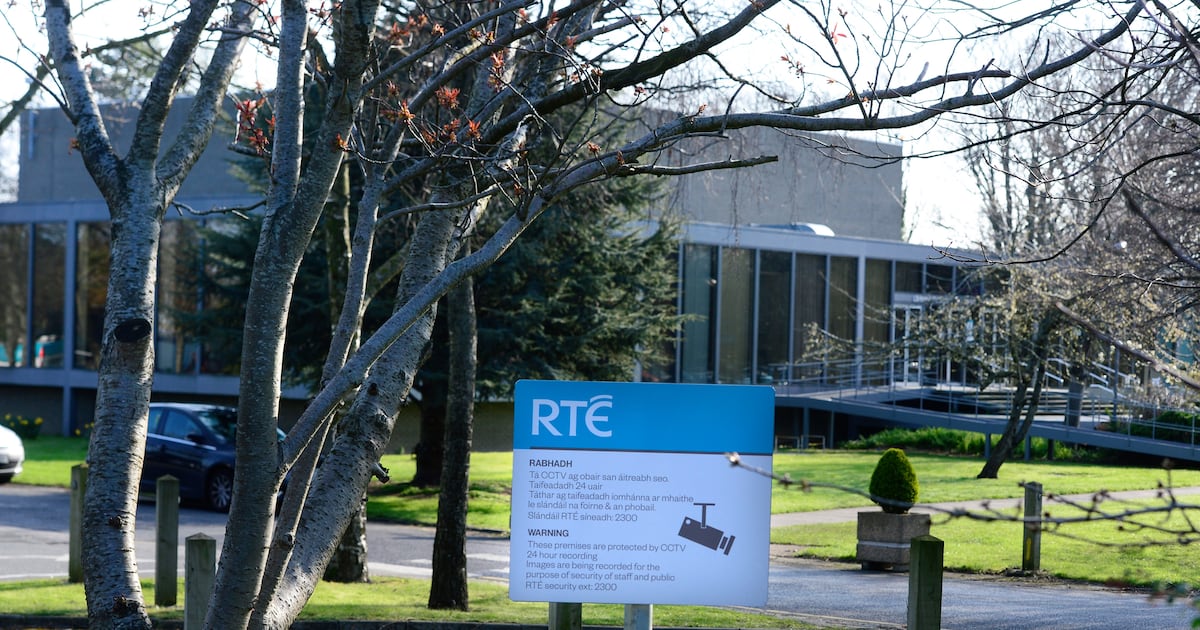
The RTÉ campus presents a dilemma. Designed by Ronnie Tallon of Scott Tallon Walker, the complex is a landmark. Yet its preservation order hampers construction of more than 1,500 cost-rental apartments. Given its proximity to St Vincent’s hospital, the site could partly provide affordable accommodation for healthcare workers if transferred to the Land Development Authority (LDA).
The choice appears to be between preserving the complex at an estimated €300 million cost or delivering badly needed housing.
Moreover, two army barracks occupying about 90 acres close to the city centre also require reconsideration.
Previously, Dublin could avoid difficult land-use decisions but today it cannot. We must think creatively and see the city through the eyes of 25- to 30-year-olds, many of whom already face a “rainy day” scenario. Government support for first-time buyers is welcome, but more must be done.
[ Back home as an adult: ‘I’m 37 and waking up in my husband’s childhood 4ft bed’Opens in new window ]
Another factor constraining supply is increasing life expectancy. Advances in medicine mean many homeowners remain in their houses longer, maintaining spare rooms for children and grandchildren who often live abroad, reducing housing turnover and tightening supply.
This reality makes the “15-minute city” concept increasingly relevant. Dublin must use land efficiently and support higher-density development along major public transport corridors. Projects such as MetroLink and extending the Luas to Poolbeg are critical components to making the city work.
Housing policy cannot focus only on numbers. It must prioritise design that fosters integrated communities, reduces social isolation, and addresses child poverty. Higher density does not have to mean compromised living standards. With world-class architecture, good transport links, access to open space, and public parks, we can create denser neighbourhoods using scarce land wisely.
A dynamic housing system should offer options for students, graduates, renters, first-time buyers, people with disabilities, growing families and those downsizing later in life, enabling movement as circumstances change.
Dublin must retain its young people, welcome returning talent, and provide suitable housing for retirees wishing to downsize while staying connected to their communities.
Solving Dublin’s housing challenge will require difficult but unavoidable choices about public investment and land use, including building on brownfield sites and underused green spaces. Capital spending must be redirected from non-priorities to infrastructure and housing delivery while continuing to attract international capital for housing.
Ireland has the financial resources, architectural talent, and entrepreneurial capacity to build an outstanding housing system. If we do, Dublin, and indeed Ireland, can become a European leader in delivering housing that is affordable, sustainable and rooted in communities.
Mark FitzGerald is chairman of the Fine Gael Commission for renewal and a non-executive director of Sherry FitzGerald Group. This represents his personal views.