
“They can throw the racist card all they like,” Carol Nolan, the Independent TD, says.
“Every Irish person here is genuinely concerned. Any reasonable person, with any grain of common sense, knows that what’s happening is not right.”
There were about two dozen people gathered in a very small and uncomfortably warm room in Buswell’s Hotel in Dublin.
Nolan was one of two TDs who had come to speak at the anti-immigration event earlier this month that sought to claim, without evidence, there is a link between sexual violence and migration in Ireland.
The Women’s Coalition on Immigration is run by the campaign group The Countess, which was initially set up in 2020 to campaign against “gender identity politics” but which pivoted last December to immigration.
The same event was supported by Independent Ireland, with the group’s TD Ken O’Flynn and Cllr Linda de Courcy also speaking.
The event was led by campaigner and barrister Laoise de Brún, who is calling on the Government to publish crime statistics broken down by country of origin and ethnicity.
The lack of such data – and any evidence of a link between migration and crime in Ireland – has proved no barrier to the group, which tries to correlate individual incidents involving migrants with broader increases in reports of sexual violence.
The claims, along with the fact they have drawn the support of at least three elected representatives, have prompted concerns from the Dublin Rape Crisis Centre (DRCC).
Rachel Morrogh, chief executive of DRCC, warns that across Europe and the United States, there have been “efforts to weaponise the issue of sexual violence to fuel anti-migrant sentiment”.
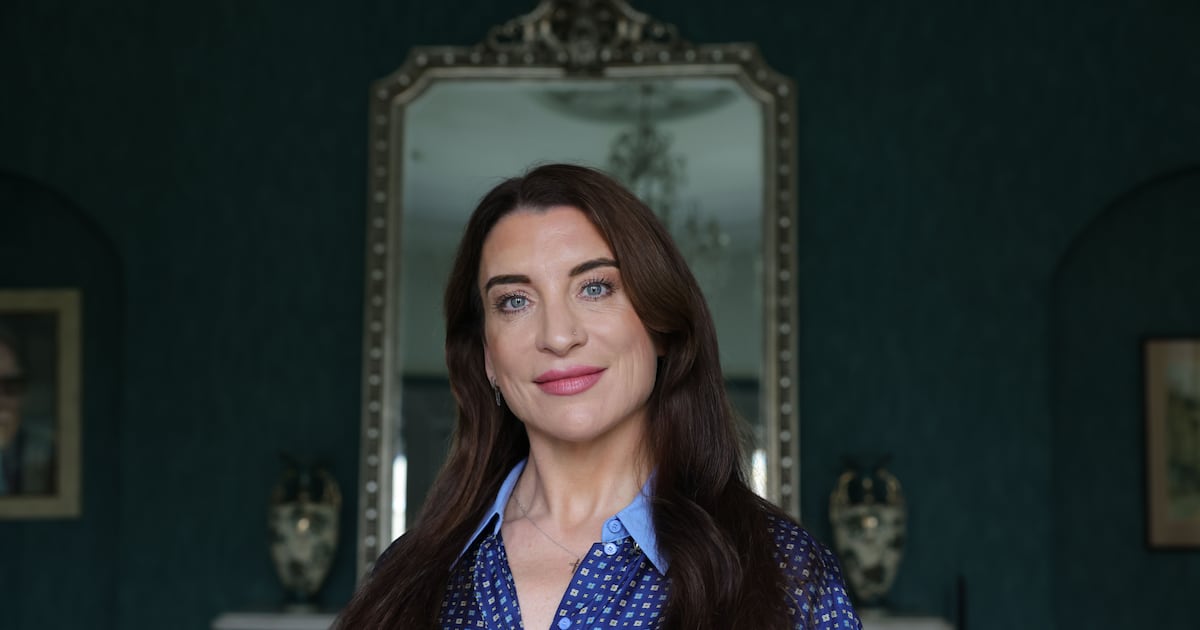
 Rachel Morrogh: ‘Immigration does not seem to be a central driver of the harm experienced by the clients we are currently supporting.’ Photograph: Sam Boal/Collins
“Sexual violence can be perpetrated by anyone, including by people who have moved to Ireland, and every perpetrator needs to feel the full force of the law for any act of violence they commit. However, our data shows that immigration does not seem to be a central driver of the harm experienced by the clients we are currently supporting,” says Morrogh.
In her speech, Nolan points to 2023 research by the Sexual Exploitation Research and Policy Institute, which, she says, “clearly expressed fears that sexual exploitation of children is going on all the time under the radar in Ireland, while drawing parallels with child sex abuse that went on in Rotherham and Rochdale in the UK”.
According to the Jay Report, a UK government inquiry into child sexual exploitation in Rotherham, the majority of perpetrators “were from minority ethnic communities”.
Nolan claims the links between immigration and crime “are there, the patterns are emerging – there’s no doubt about that”.
But the UCD study Nolan cited, in a speech explicitly linking crime to migration, makes no reference to the race or ethnicity of alleged abusers grooming children in Ireland.
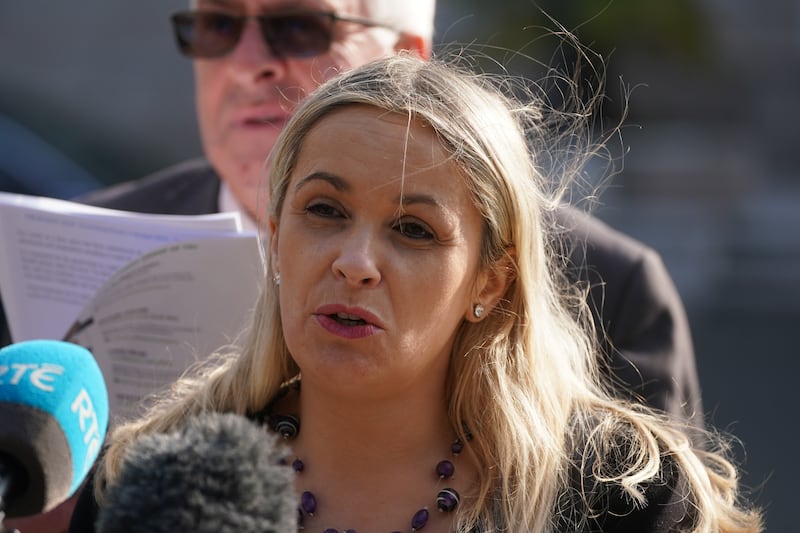 Carol Nolan was one of two TDs who had come to speak at the anti-immigration event. Photograph: Brian Lawless/PA Wire
Ruth Breslin was one of three authors of the UCD report cited by Nolan, alongside Mary Canning and Marie Keenan.
Breslin told The Irish Times the report “did not gather any data on the race or ethnicity of perpetrators or victims, and when parallels were made with Rochdale and Rotherham, they were made in relation to institutional failures and victim blaming, there was no parallel to be drawn on the issue of race or ethnicity because we did not collect any data on that”.
Sarah O’Reilly, the Aontú Senator, had also been due to attend the event. But according to Aontú, the party has no connection with the Women’s Coalition on Immigration.
Aontú leader Peadar Tóibín has previously called on the Government to release crime statistics based on nationality, ethnicity or citizenship status. But in the absence of having that data, the party has declined to claim there is a link between migration and crime.
The Women’s Coalition on Immigration, without the same data, instead tries to point to statistics in other European countries.
It is true that migrants are over-represented in crime statistics, including sexual offences, in countries including Germany, according to statistics recorded by German police, Sweden, according to a 21-year longitudinal study, and Denmark, according to figures from the Danish ministry of justice.
But research linking immigration and crime can be complex. In Sweden, for example, research has said the gap between the crime rates of immigrants and native people narrows when adjustments are made for socio-economic factors. In Denmark, a 2020 review of research linking immigration and crime warned that results differed depending on the data collected, and a 2025 study warned that public perceptions of immigrant crime rates were higher than the reality.
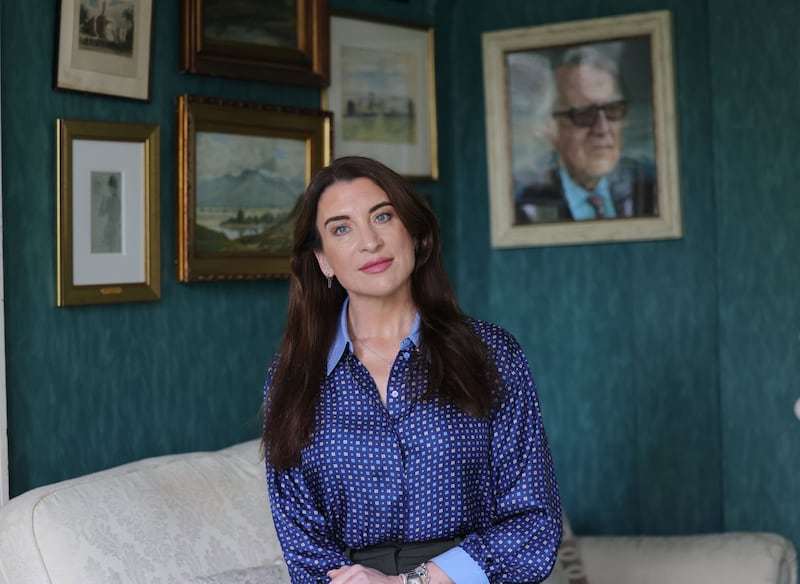 Laoise de Brún: ‘It is the recording and release of this data that we are calling for.’ Photograph: Alan Betson
De Brún claims that “anecdotally, it would seem” that migration is linked to sexual, domestic and gender-based violence in Ireland. The Women’s Coalition on Immigration points to a number of high-profile cases before the courts.
In a research document it compiled, the group tries to connect one recent alleged incident with “a broader backdrop of rising sexual offence cases entering the Irish courts”.
But An Garda Síochána and frontline rape crisis services have said that when reports of rape increase, it may be because more people are coming forward rather than because the prevalence of sexual violence has actually increased.
De Brún said this was a “talking point that’s been put out there” that was “impossible to disprove”.
“We do not know how many non-national men are suspects in sexual assaults in this country because this data is not collected and released. It is the recording and release of this data that we are calling for.”
Ireland does have a national study that recorded the prevalence of sexual violence, rather than the rate at which sexual violence was reported to the authorities.
[ How far-right claims of protecting women justify abuse of immigrantsOpens in new window ]
The 2022 study by the Central Statistics Office, which is due to be repeated every 10 years to monitor trends, found that the vast majority of sexual violence in Ireland is committed by someone known to the victim. It found that 78 per cent of victims who experienced sexual violence in their lifetime knew the perpetrator.
The event heard complaints from the Women’s Coalition on Immigration that those who articulate their concerns are labelled as “far right”, only for one of its own speakers to espouse the “Great Replacement” theory – widely accepted as a far-right conspiracy theory.
Barrister and anti-lockdown campaigner Una McGurk, a member of the alliance who told the event that her views “may not necessarily represent the views of the women’s coalition [on immigration]”, claimed the Irish population was under threat of being “completely replaced”.
Earlier this year, she again told an anti-immigration conference that Irish people would become a minority in their own country, claiming – without offering evidence – that migrants who come here do not believe in abortion while there were 10,000 terminations a year among the “native white Irish population”. Abortion statistics in Ireland are not broken down by ethnicity.
De Brún said: “Una gave a disclaimer because those issues she expressed were outside the scope of the coalition.”
When asked for comment, Nolan said she had “no faith or confidence in the mainstream Irish media to report accurately or fairly on what is without doubt a clearly established pattern, seen in a number of EU member states, that correlates high rates of sexual violence with men of particular ethnic and cultural backgrounds”.
In a statement, Independent Ireland said that O’Flynn “believes that public debate on criminal justice policy should be informed by accurate data and that raising concerns about equality before the law should not be mischaracterised”.
He said issues relating to the “ethnicity of offenders are made more difficult and more opaque due to the fact that Ireland does not publish detailed crime statistics broken down by nationality or ethnicity of offenders”.