

The ocean’s most notorious predators are often depicted as solitary hunters, gliding through the blue with little need for company.
However, a study has suggested the “lone shark” label may often be wrong. Some very large sharks, it turns out, have complex social lives, complete with preferred companions and, perhaps, the odd frenemy.
The research, conducted at the Shark Reef Marine Reserve in Fiji, found that bull sharks did not swim together at random. Instead, they formed consistent relationships with particular individuals, choosing their own “friends”.
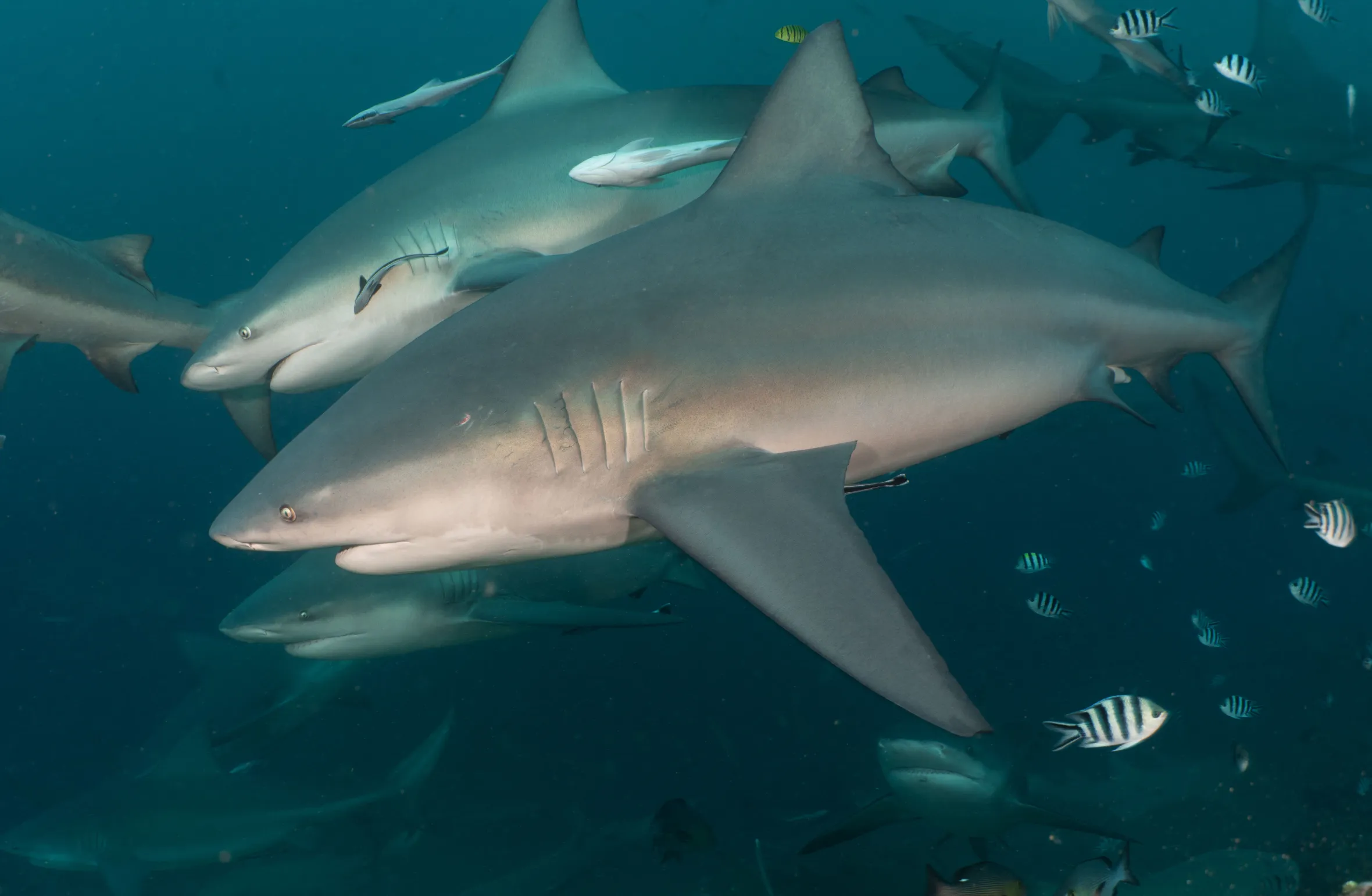 Adult bull sharks have preferred swimming companionsNatasha D Marosi
“As humans we cultivate a range of social relationships, from casual acquaintances to our best friends, but we also actively avoid certain people,” said Natasha Marosi, the lead author of the study and founder of the Fiji Shark Lab. “These bull sharks are doing similar things.”
Bull sharks are among the largest and most adaptable of shark species, growing up to 3.5 metres in length and weighing as much as 230kg. They are found in warm coastal waters around the world and are unusual in being able to also tolerate fresh water, often swimming in rivers and estuaries.
Alongside great whites and tiger sharks, they are one of the three species most often implicated in biting humans. Such incidents remain extremely rare, however, and bull sharks generally pose little risk to people unless provoked or encountered in murky coastal waters, where cases of mistaken identity are more likely than deliberate attacks.
Environment newsletter
The latest climate, energy and nature news and analysis, plus reasons to be hopeful.
Sign up with one click
The study, published in the journal Animal Behaviour, was based on observations of 184 sharks over six years.
Two types of interaction were measured. The first involved sharks staying within roughly one body length of each other. The second included more deliberate behaviour, including sharks swimming alongside each other and “lead-follow” movements, where one shark appears to guide another.
The results showed that they did not mill about randomly. Instead, certain individuals repeatedly paired up, often swimming in parallel or following one another through the water. Nor did they mix evenly with every neighbour, suggesting they preferred some companions and actively avoided others.
Adult sharks of reproductive age formed the core of the social network, maintaining the most consistent relationships. In general they were more likely to interact with sharks of a similar size.
Both male and female sharks appeared to prefer interacting with females. Males, however, tended to have a greater number of social connections overall. Because male bull sharks are typically significantly smaller than females, Marosi suspected that their greater sociability could serve a strategic purpose.
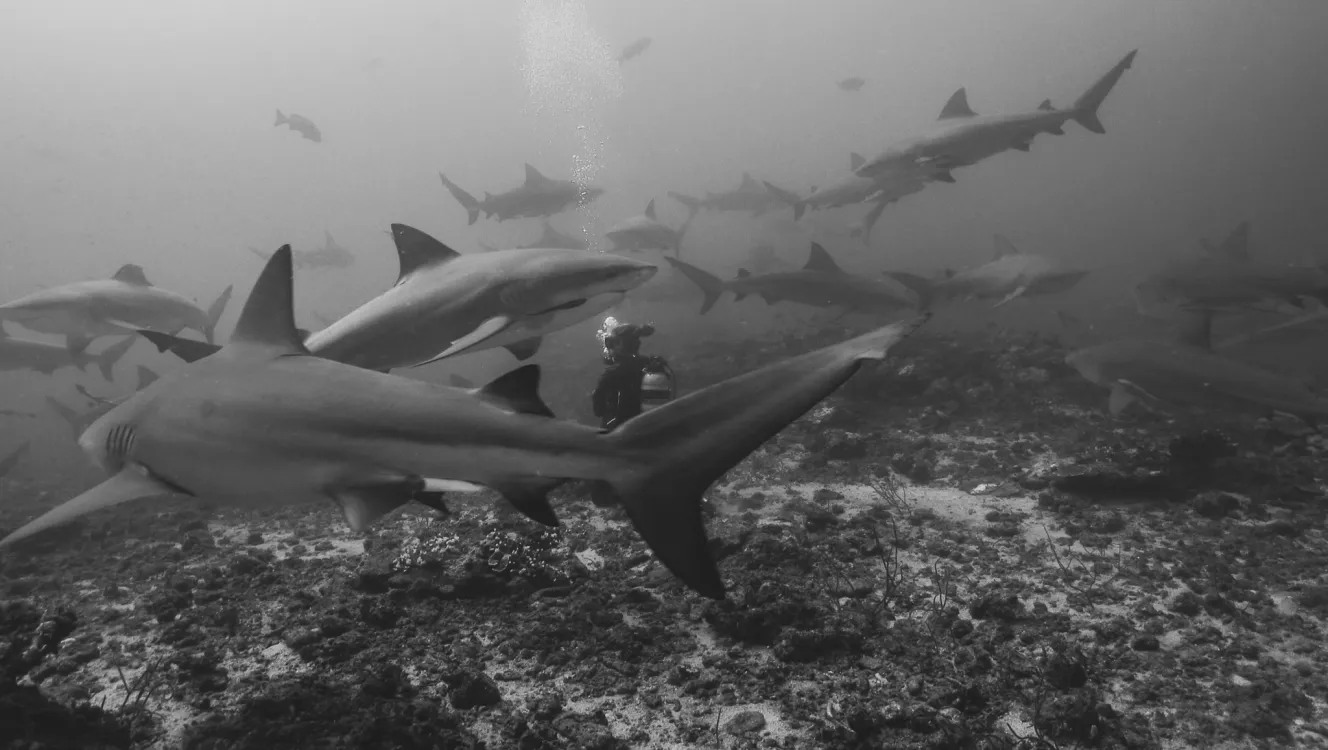 Natasha Marosi, the lead author of the study, with some sharks MIKE NEUMANN
She said: “One potential benefit is that by being more socially integrated they may be buffered from aggressive confrontations with larger individuals.”
Older sharks tended to be less social. “These individuals have many years of experience honing skill sets such as hunting and mating, and sociality may not be as integral to their survival as it is for an individual in its prime,” Marosi said.
Younger sharks also seemed somewhat stand-offish. “Sub-adults usually occupy near-shore habitats, while juvenile bull sharks can be found in Fiji’s river and estuarine systems,” she added. “During these early life stages there is a need to avoid predation, including the threat posed by adult bull sharks.”
Professor Darren Croft of the University of Exeter’s Centre for Research in Animal Behaviour said the results underscored how little was known about these animals.
He said: “Contrary to commonly held perceptions of sharks, our study shows they have relatively rich and complex social lives. We are only just beginning to really understand the social lives of many shark species.”