
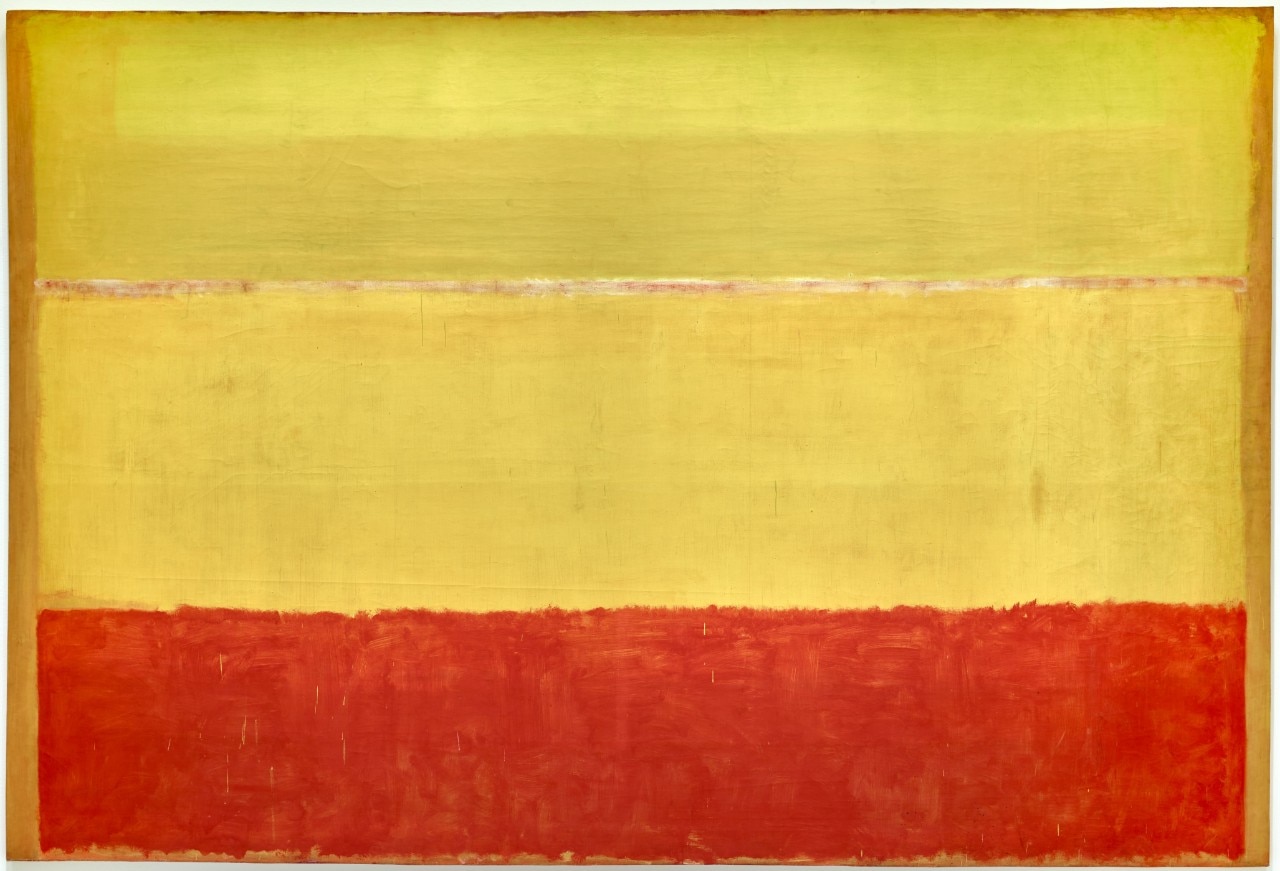
From the late 1950s, with the public commissions for the Four Seasons restaurant in the Seagram Building in New York, designed by Philip Johnson and Mies van der Rohe, painting effectively becomes architecture, constructing a space that envelops the viewer. In the exhibition the works glow with deep maroon tones emerging from dark reds and blacks with a unique emotional tension. As is well known, the cycle of the Seagram Murals was never installed in the restaurant and was later donated to the Tate, where it is displayed as a single indivisible ensemble. The exhibition presents exceptional preparatory drawings, rarely seen, displayed here in the two small rooms that Palazzo Strozzi traditionally dedicates to a more intimate encounter with the works.
The collectors Dominique and John de Menil later commissioned Rothko to create one of his most ambitious projects, the famous Rothko Chapel, on which he worked in the mid-1960s. As Christopher Rothko writes in the exhibition catalogue: “At once artist and interior designer, my father creates a choir of fourteen paintings that sing in unison. In fact Rothko reduces painting to architecture. The chapel is a holistic work, a single statement.” The exhibition includes exceptional canvases from the same period as the Black and Grey cycle and concludes with a number of late works on paper that invite viewers into an even more intimate dimension of the artist’s practice, quieter, filling the gaze and illuminating thought.