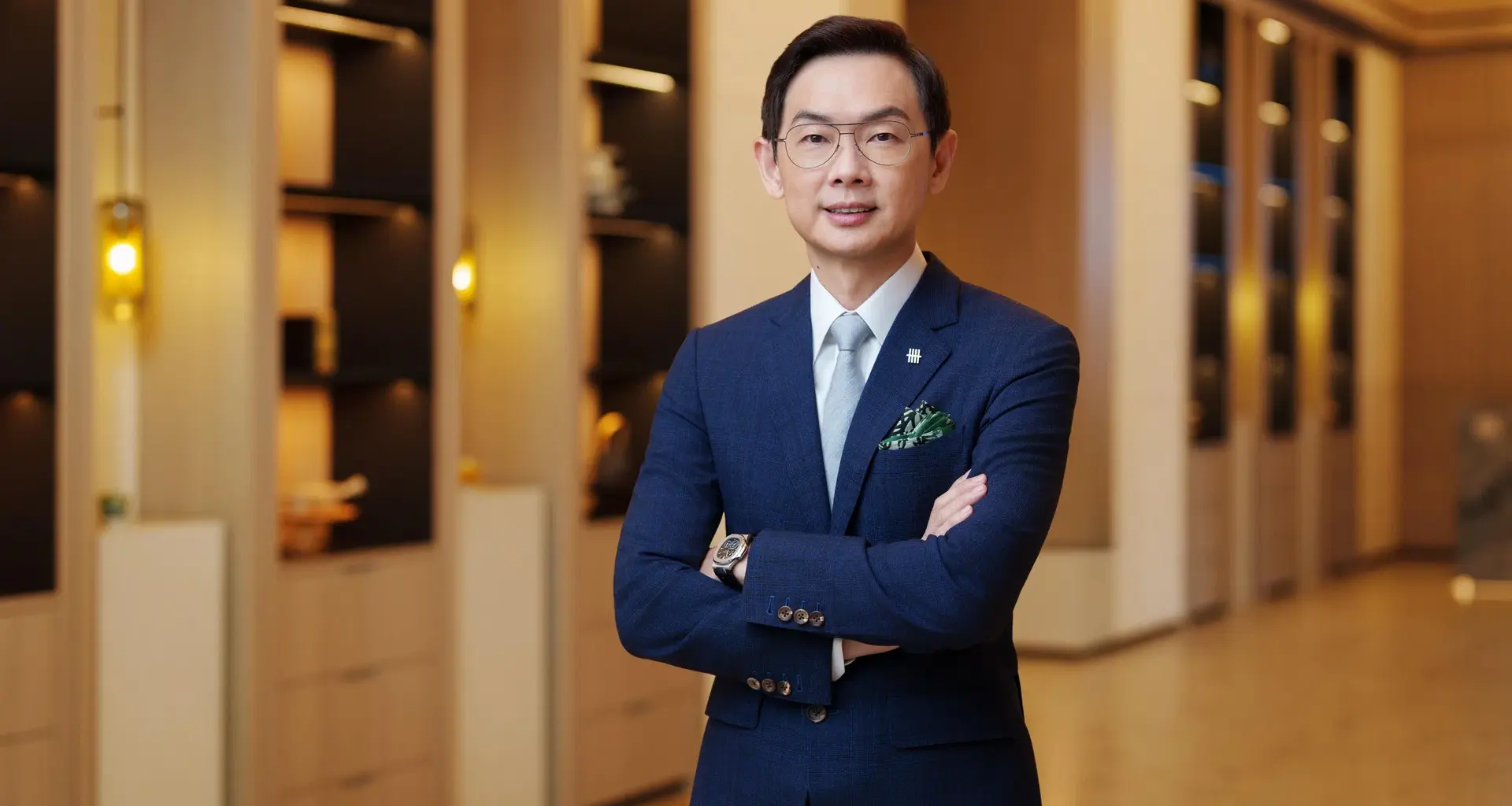
Succession is no longer a single handover event – it is a long-term process demanding foresight, governance and shared direction, says managing director and head of UOB Private Bank
ASIA is approaching a pivotal phase in its wealth journey. As private wealth across the region continues to grow, families are increasingly focused on how to pass on not only assets, but also leadership, values and long-term purpose to the next generation.
Over the past 25 years, the region’s share of global private wealth has climbed from 6 per cent to 21 per cent and is projected to reach US$99 trillion (S$127 trillion) by 2029.
According to The Asia Generational Wealth Report 2025: Succession in a New Era published by UOB Private Bank, together with Boston Consulting Group and the National University of Singapore Business School, much of this capital sits within family-owned enterprises. Indeed, across many Asian markets, more than 40 per cent of businesses remain founder-led.
For many business families, the coming decade will be pivotal in determining how successfully leadership, ownership and purpose are transferred to the next generation.
Chew Mun Yew, managing director and head of UOB Private Bank, shares how families can navigate this period with clarity and cohesion.
Q: Asia is entering what many describe as its most critical chapter of wealth transfer. What are the biggest shifts in how high-net-worth families are approaching succession today?
Many founders have spent decades building successful enterprises. The pressing question now is how to transfer that wealth and leadership in a way that preserves both control and unity.
Navigate Asia in
a new global order
Get the insights delivered to your inbox.
One major shift is the difference in aspirations across generations. Founders often see the family business as central to legacy. The next generation, however, may have their own ambitions.
Some want to lead the enterprise. Others are drawn to entrepreneurship, professional careers or social impact. Families therefore need to strike a balance between preserving what has been built and allowing space for individual direction.
There is also a growing recognition that succession is more complex than it appears. Naming a successor is only one part of the equation. Building consensus and preparing the next generation for responsibility are equally important.
Finally, many families underestimate the technical complexity of wealth transfer. As estates grow, structuring challenges multiply. Those who approach succession early and deliberately tend to navigate the transition more smoothly. That emphasis on preparation is closely tied to UOB’s own experience as a family-run institution.
Q: UOB is a third-generation, family-run bank. How does that heritage shape your perspective when advising business families on leadership transition and legacy planning?
Our heritage gives us a practical understanding of what generational continuity requires. It is not achieved through a single decision. It is the result of disciplined planning, open communication and clarity around roles.
In our experience, succession works best when families treat it as stewardship. That means thinking beyond one-off transfer of assets and ownership. It involves asking how values are transmitted, how trust is maintained and how the next generation is prepared to carry responsibility.
Early engagement is critical. When conversations begin before a triggering event, families can explore options calmly and align expectations. That reduces the risk of misunderstandings later.
Q: While many founders expect their children to take over, they are not always confident that the next generation has the experience, capability or desire to run the business. How, then, can they ensure the continuity of the business?
It is natural for founders to want their children to take over. At the same time, capability and interest of the next generation may vary.
Our research found that 28 per cent of founders cite lack of interest from the next generation as a succession challenge, while 24 per cent believe their successors are underprepared, even though 72 per cent still expect their children to eventually take over.
Professional management can strengthen continuity, especially in complex or global businesses. Families can retain ownership and strategic direction while appointing experienced leaders to manage day-to-day operations. The key is to ensure that governance structures are robust and clearly defined.
Equally important is the genuine transfer of authority. Successors must be given room to make decisions and learn from experience. Beyond formal control, intangible assets such as networks, reputation and institutional knowledge need to be consciously passed on.
Family charters, councils and independent boards can provide forums for dialogue and accountability. They create alignment and reduce friction during transition.
Q: Family wealth is increasingly diversified and often spans multiple jurisdictions. How does this complexity change the way families should think about structuring ownership and planning wealth transfer?
Portfolios today extend beyond traditional assets. Alongside property and listed securities, many families hold private investments and digital assets. In fact, 27 per cent of respondents in our survey identified digital assets among their top three holdings.
As wealth becomes more diversified, structuring becomes more demanding. Almost half of respondents cited complexity in establishing wealth transfer instruments as a key challenge, rising to 63 per cent among those with more than US$30 million.
Equal division may seem equitable, but it can fragment ownership and stall decision making. Cross-border holdings introduce additional legal considerations. Early structuring through vehicles such as holding companies or trusts helps consolidate control and clarify rights before disputes arise.
Succession planning is rarely completed overnight. Families who begin early have the time to refine structures and align expectations carefully.
Increasingly, families are also recognising that legacy planning extends beyond financial capital. It involves shared values and creating platforms where different generations can participate meaningfully. Structured philanthropy is emerging as one such platform.
Q: How can philanthropy help families strengthen unity across generations while institutionalising their legacy?
Philanthropy often becomes a unifying platform. It allows founders to articulate the principles that guided their success and gives the next generation a constructive role in advancing those priorities.
When giving is structured thoughtfully, it moves beyond ad hoc donations. Families that institutionalise purpose through philanthropy tend to build cohesion alongside continuity. There are various ways to do this, including setting up foundations, establishing trusts or using structured giving vehicles that allow families to formalise their charitable commitments.
For many business families, philanthropy reinforces unity and helps ensure that wealth continues to serve a meaningful role across generations.
How structured giving can create lasting impact
UOB Private Bank has established a philanthropy partnership with Temasek Trust Foundation Advisors (TTFA) to support families in translating giving intentions into structured, long-term impact. Through this initiative, families can establish a donor-advised fund (DAF) in Singapore.
A DAF is a structured philanthropic vehicle that allows individuals or families to set aside assets in a dedicated account for charitable purposes. Under UOB’s initiative, donors retain advisory rights on the timing and choice of charitable recipients, while TTFA handles administration and grant disbursement.
With this arrangement of providing governance and operational support, it will be easier for families to involve the next generation in philanthropic decision-making and to align their charitable activities with broader legacy planning goals.
Read the Asia Generational Wealth Report 2025 here.
This article is for general information only and does not have any regard to the specific investment objectives, financial situation and particular needs of any specific person. This article shall not be regarded as an offer, recommendation, solicitation or advice. You may wish to consult your own professional advisers about this article. Any past events, trends and/or performance referred to in this article may not necessarily be indicative of future events, trends or performance. This article is based on certain assumptions and reflects prevailing conditions as at the time of publication, which are subject to change at any time without notice. United Overseas Bank Limited makes no representation or warranty of any kind, whether express, implied or statutory, in respect of this article and accepts no liability or responsibility for the completeness or accuracy of this article or any error, inaccuracy or omission relating to this article and/or any consequence, injury, loss or damage howsoever suffered by any person relating to this article, in particular, arising from any reliance by any person on this article.