
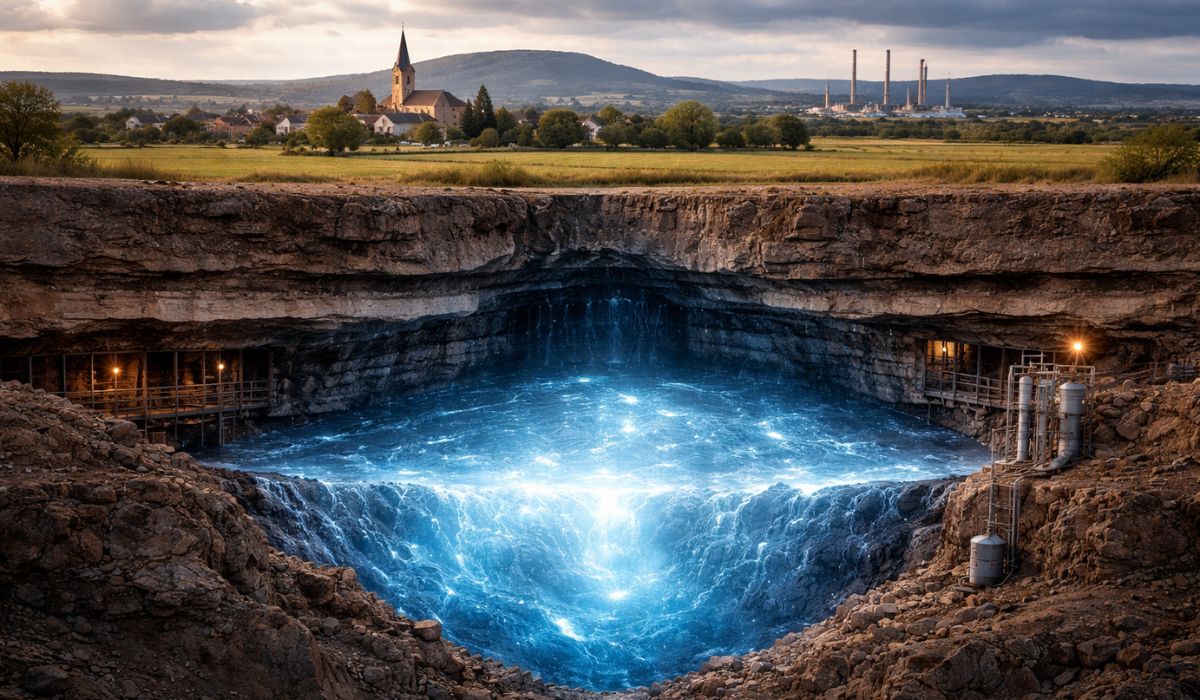
Discovery of natural hydrogen in France expands global interest in underground energy sources and raises discussions about viability, scale, and impact on the energy transition in different countries.
A discovery made in eastern France has put the natural hydrogen, also called white hydrogen, is at the center of the debate about new low-emission energy sources.
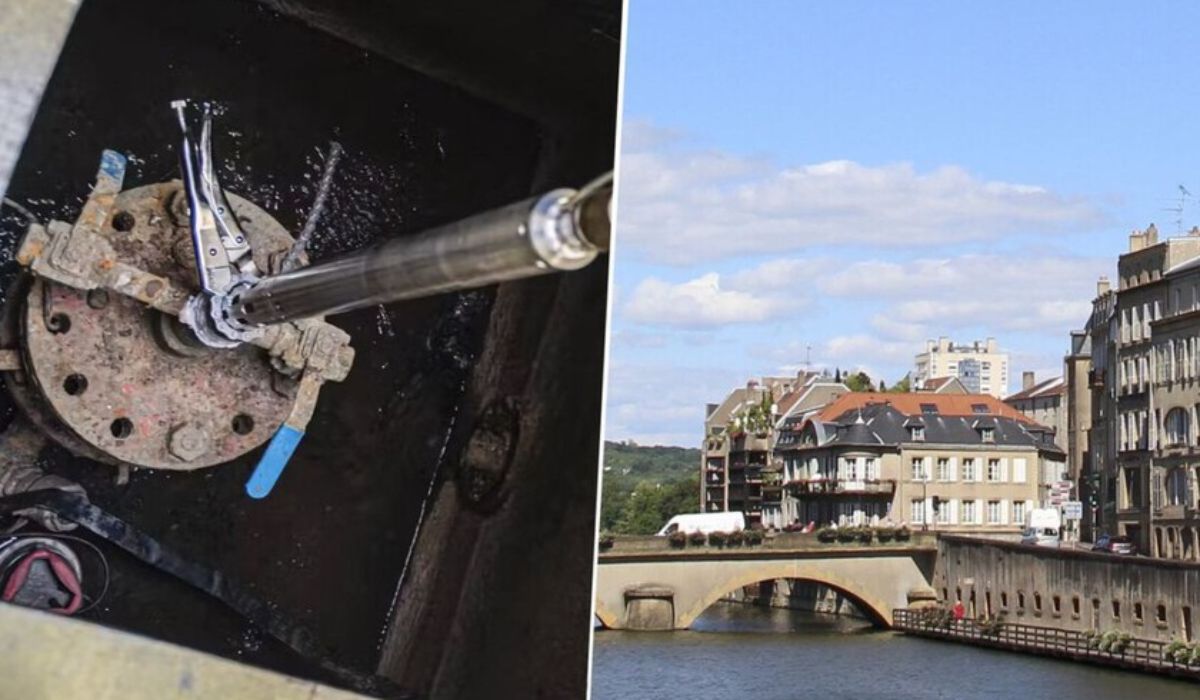
Researchers analyzing gases in the subsoil of the Lorraine region identified significant concentrations of the element in an old mining area, especially in the Folschviller pit.
Based on this result, research teams began to investigate the geological potential of the area.
The discovery gained attention because it increased interest in a still largely unexplored energy source.
According to researchers and companies in the sector, natural hydrogen could play a role in the decarbonization of industrial activities, provided that its technical and economic viability is confirmed.
The discovery did not occur during a campaign initially created to search for hydrogen.
According to information released by research institutions and the company involved in the project, the measurements were taken in the context of Regalor, which focuses on the study of gases present in the coal formations of the former Lorraine mining basin.
During these analyses, the researchers detected dissolved hydrogen at different depths.
The data indicated a measurement of approximately 1.093 meters. 15% concentrationThis result then began to guide new simulations regarding the area’s potential.
Discovery in Lorraine and the potential of underground hydrogen.
The point that most caught the researchers’ attention was the combination of depth, geological context, and evidence of gas enrichment in deeper layers.
According to CNRSThe working hypothesis is that the hydrogen detected at approximately 1.100 meters was generated at even deeper levels and migrated to the area analyzed.
Based on this model, initial simulations projected higher concentrations around 3.000 meters and an estimated potential volume of… approximately 46 million tons.
This number, however, is still treated as a scientific projection and depends on confirmation through further drilling and testing.
This point is crucial for distinguishing what has already been measured from what is still under evaluation.
There is evidence of hydrogen in the subsurface of the Lorraine Basin, but there is no public confirmation of its existence. fully delimited commercial reserve and ready for large-scale exploration.
International news reports on the case have also noted that the actual extent of the accumulation and the economic viability of extraction still need to be verified.
Up to this point, what exists is a set of geological measurements and hypotheses considered relevant by researchers who follow the topic.
Why natural hydrogen is gaining attention in the energy transition.
The interest surrounding white hydrogen is linked to the fact that it occurs naturally underground, without depending, in its origin, on industrial processes such as natural gas reforming or water electrolysis.
In theory, this could reduce costs and emissions associated with production, if extraction and transportation prove feasible.
For industrial sectors seeking to replace fossil fuels or reduce emissions, this possibility has begun to be observed with attention.
According to experts interviewed by international media outlets, natural hydrogen could represent a complementary route within the energy transition.
At the same time, the topic is still being treated with caution.
Researchers and industry analysts point out that doubts persist regarding the frequency of economically recoverable deposits, the cost of production, leak monitoring, and the infrastructure needed for large-scale exploration and use.
For this reason, the French discovery broadened global interest, but did not end the technical debates.
The case began to be followed as a relevant example of applied research, and not as a solution already consolidated for the energy system.
Natural hydrogen exploration is still in its early stages.
To date, one of the most cited cases of harnessing natural hydrogen on a local scale is that of Mali.
Studies by the Energy Research Company, EPE, mention production that began in 2012 to supply energy to a rural area, in a limited-scale operation.
Apart from that example, the international landscape is still mainly characterized by prospecting, applied research, and business activity in search of new areas.
Large-scale production has not yet become a reality in this segment.
In France, the Lorraine region has come under closer scrutiny due to its collection of old wells, mining history, and geological data that have allowed the identification of gas in an area previously associated with other types of underground exploration.
This context helped explain the repercussions of the case.
The company involved in the project reported in 2023 that it intended to deepen the measurement campaigns and move forward with requests for exploration permits.
Since then, the topic has continued to develop within the European regulatory and business environment.
Brazil enters the radar for research on natural hydrogen.
In Brazil, the topic has also gained prominence in institutional studies.
In 2025, EPE published a landmark paper on natural hydrogen and noted that research is ongoing in the country.
Furthermore, the Geological Survey of Brazil participated in technical discussions with the Petrobras Regarding the potential, regulatory challenges, and exploration pathways in the national subsoil.
This movement indicates that the subject has entered the Brazilian energy research agenda.
So far, however, there is no public evidence of a large commercial reserve in the country comparable to the hypothesis being studied in France.
According to the available documents, the current stage is still one of research and technical evaluation.
The progress of these investigations is of interest to Brazil because the country has expertise in basin geology, mining, oil, gas, and low-emission energy.
However, any expectations regarding large-scale production depend on consistent geological evidence, feasibility tests, and regulatory definition.
In the French case, the next step involves precisely the validation of what currently appears as a scientific estimate and hypothesis.
The evolution of this research should indicate whether natural hydrogen can occupy a relevant space in the energy transition or whether it will remain restricted to localized experiments and projects in the initial phase.