
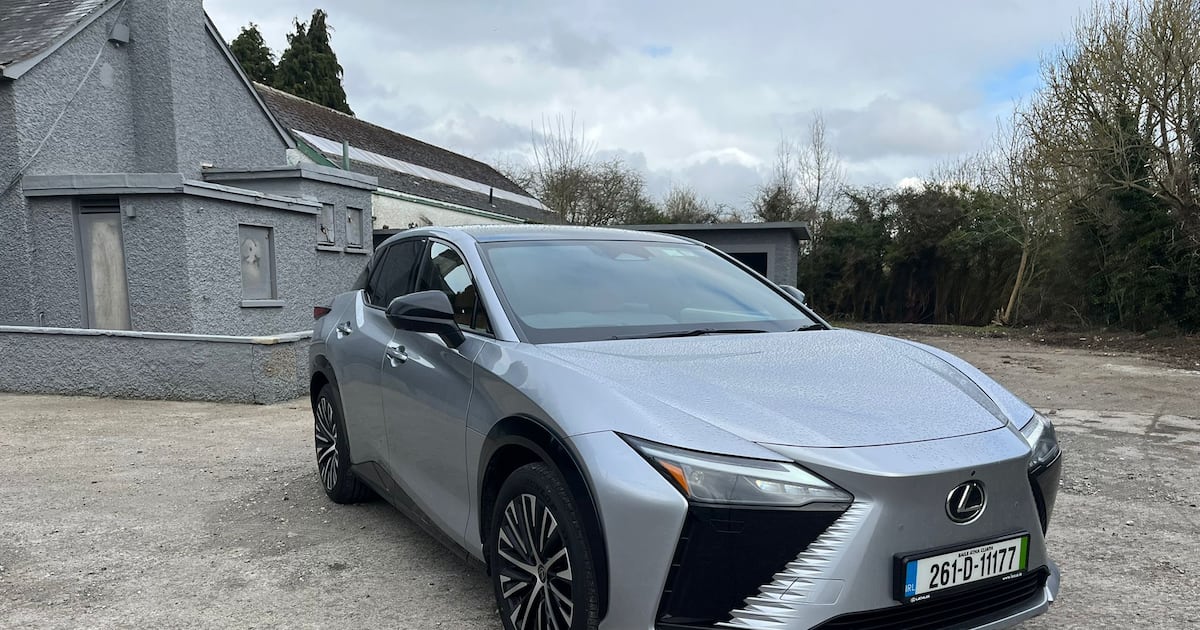
Lexus RZ500e
Year: 2026
Fuel: Electric
Verdict: Brave and beautiful crossover, but it fails to overtake either rivals or the speed of tech
Hands-free driving is finally here. Or at least the rules have changed to allow it on the appropriate cars. The current Irish fleet features vehicles that nominally self-steer, but you must keep your hands on the wheel.
Under the revised rules signed off by Minister of State for Transport Seán Canney, cars with the necessary self-driving and monitoring technology will permit you to let go of the wheel indefinitely, so long as you are paying attention to the road and are ready to take back control at any time. And the car will be watching, monitoring your eye line and attention to make sure you’re not slacking.
It’s not the phone-scrolling future some envisioned, but it’s a step in that direction.
So, is any of that relevant to the new Lexus RZ? No, not right now. But its biggest talking point is part of the Japanese brand’s own step towards an autonomous future. More of that later.
First, it’s worth noting that only a few years from its initial launch, Lexus is back with a major update to its first dedicated all-electric model.
As with the Toyota BZ, with which it shares its platform, the initial arrival back in 2022 failed to deliver any significant lead over rivals, despite the Japanese firm’s vast experience with battery tech over decades of hybrid development. In fact, judged against that heritage, its first fully electric models were very underwhelming, failing to set new standards in range or charging speed.
Perhaps we were expecting too much. After all, Toyota had for years played down the importance of full EVs in the current format, believing the real battery revolution will occur when we move to a new format called solid state, which its engineers are busy developing for sale within the next three years. They claim the new format will deliver up to 1,000km on a full charge, while taking just 10 minutes to get from 10 per cent to 80 per cent on a fast charger.
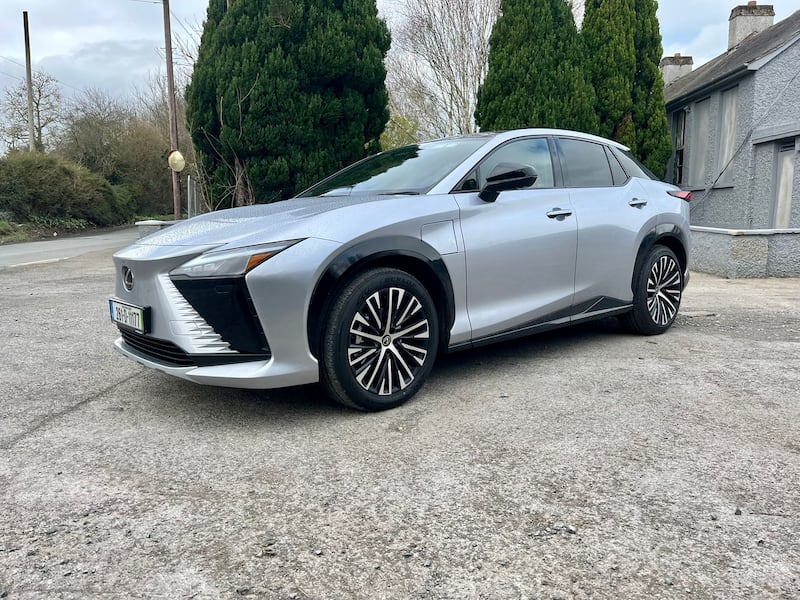 Lexus RZ500e
For this, we must wait. For now, we have a new RZ that features a battery pack 7 per cent larger than before, at 72kWh of usable storage and improved AC charging speeds, now up to 22kW, even if the rapid-charging remains at 150kW. On that, while the top-line figure hasn’t improved, we did note that it managed to stay for quite some time above 100kW on the faster chargers and our times spent plugged in were impressively quick.
Yet from a full charge, the range remains in the mid-300km as tested in our all-wheel drive 500e variant, which is disappointing. Rivals are opting for larger batteries to deliver better range. In the next few months, a trio of new EVs from Mercedes, BMW and Volvo will land here, promising to deliver 800km.
Two versions are on offer: the rear-wheel drive, single-motor RZ 350e from €66,280 and our test car, the RZ500e all-wheel drive at €81,490. Both get the same battery pack, but the 500e gets two motors, which means power output goes from 224hp (165kW) to 380hp (280kW), which means you get a big five-seater SUV that packs quite a punch when you hit the throttle.
Official range for the 500e is 457km, but our test car never topped 370km. On the 350e the promise is 558km, but we’d expect a similar degree of reduction when its rubber hits real Irish roads.
Of the styling and design, this is proper premium Lexus trim. There are clear similarities in its silhouette to its Toyota sibling, but there are also enough design tweaks to turn heads, and our test car was regularly complemented by passing motorists as we loitered in car parks waiting for a charge.
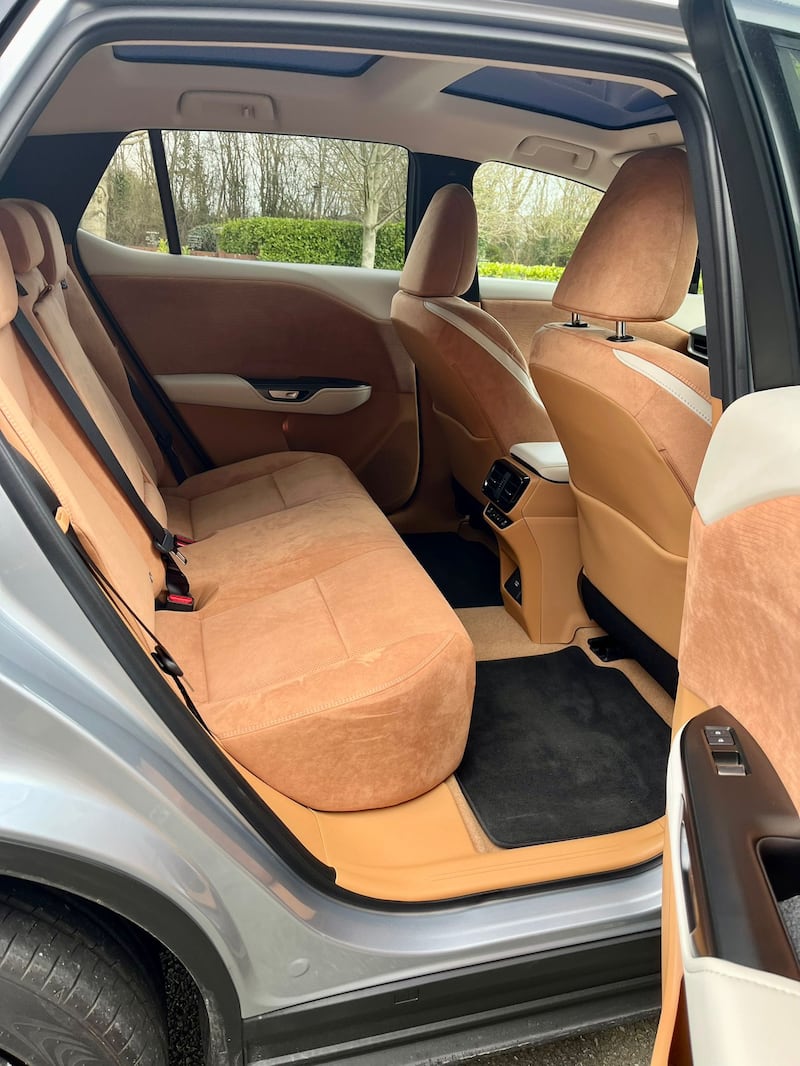
While the test car’s exterior was a sedate platinum grey, you only needed to open a door to encounter a wave of colour. Dressed in what Lexus bills as “hazel Ultrasuede”, the cabin was better upholstered than a five-star hotel suite.
 Lexus RZ500e
In all the touchpoints that matter, Lexus delivers on the detail, creating a proper premium cabin, tastefully styled and without the rather tacky tech bling for which brands such as BMW and Mercedes have fallen foul. Even the graphics on its touchscreen are delivered with the same tasteful touches, making Apple CarPlay’s format seem clunky.
All these touches are enhanced by a cocooning quietness that casts this Lexus in the luxury arena.
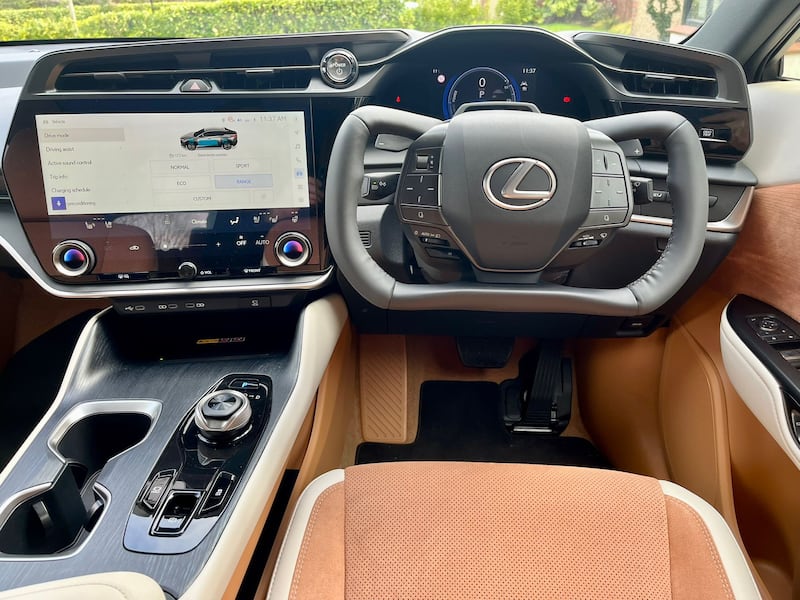
But none of those features – nor its electric power train – will be the main talking point of this car. That’s going to be the yoke where the steering wheel should be. This is what turns RZ’s cabin into a cockpit.
 Lexus RZ500e
On the 350e, you get a regular wheel, but on the 500e that’s swapped out for what is meant to be a bit of an automotive revolution. Dubbed the yoke, this butterfly-shaped steering device looks to have been nabbed from the hands of a teenage gamer and stuck on the dash.
This is the advent of steer-by-wire, removing the mechanical link between hand and front wheels. Out goes the steering column and in comes an electronic device that opens the door to a world of infinite programming for weighting, gearing and motion, fed by a mix of speed.
Now this isn’t the first yoke. Pilots are well used to them, as are sailors and F1 drivers.
But those are hardly comparable to a family SUV on a school run. It might lend itself to lightning-fast turns on a racetrack, but that’s a little too direct for the shopping-centre car park.
Others have mulled an introduction but stepped back. Tesla boss Elon Musk showed off his yoke on the internet some time ago. But he never let the Irish public get their hands on his yoke.
So, Lexus is the first widely available family SUV in Ireland with such tech, which is brave.
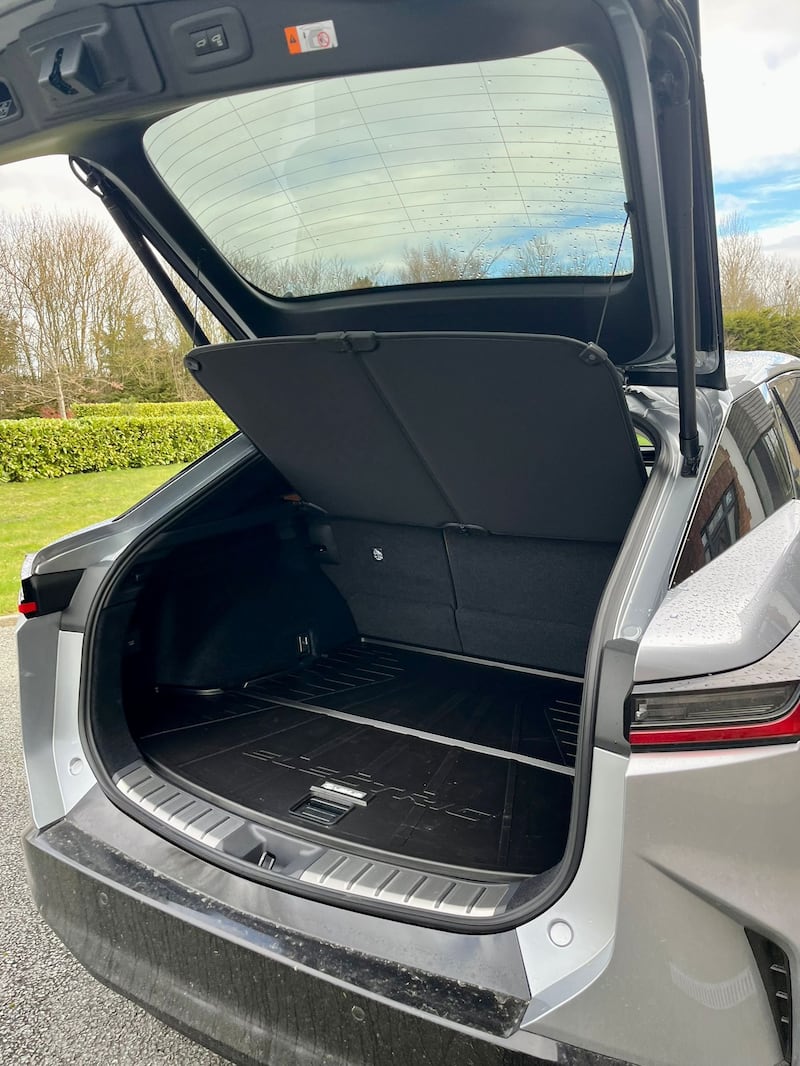 Lexus RZ500e
You get 1.2 turns between locks, which effectively cuts the wheel turning needed by 50 per cent. That does make a difference, particularly at low speeds, where a slight turn can direct the RZ around a tight car park.
We tested this Toyota tech four years ago when the lock-to-lock was still just 150 degrees, so far more reactive to every input and more like a driving game simulator. The problem back then was that it was too direct for a family car. It’s one thing to screw up a bend and stuff a simulated car into a stone wall, another when it’s your premium motor.
Yet even then, after a minute or so to get a feel for the reactions, it felt surprisingly natural. At slow speeds, it never feels like an errant shopping trolley. The sense of feel and motion is quite natural, even if decades of driving clocked up by your ageing motoring hack meant inbuilt learned experience led to occasional cries of “why is it doing that?”
At regular speeds, the RZ sweeps through the bends with a gentle turn, and even a rapid change in speed doesn’t upset the ratios into creating too much or too little turn. Where it did slightly disappoint was on proper tight and twisting rural roads. On a stretch of narrow west-of-Ireland road, where a seemingly slight bend can suddenly close into a hairpin corner, there were times when we lost that sense of knowing exactly what the front wheels were at. It’s no more disconcerting than on a fleet of other cars with neutral steering, but we had hoped for more from the Lexus.
Our biggest qualm with the yoke was always over-turning. The wheel is nicely weighted in these turns, but you are wary of just how sharp a corner the car is making, and whether it might mean that car park pillar meets your front wing. In truth, it’s not nearly as direct as it was the first time we tested it back in 2022, but it’s something that potential buyers should try out.
All in, the RZ is nicely balanced and our initial concerns that buyers will find the leap to a yoke too much to stomach have been eased.
Over our 730km behind the yoke of this car, we never felt it compromised our experience with the car. Driving an EV requires very little change compared to a petrol or diesel version. Adapting to the yoke is more akin to the changes you might first encounter moving from manual to automatic.
The question is, did it deliver any benefit? That’s much harder to answer.
There are some weight savings, due to fewer mechanical bits, though the necessary backup systems mean some of those have been negated. It opens the way for engineers and car designers to work towards the autonomous world, where the yoke becomes an optional fit if the owner wants to plug it into the dash and drive for some journeys. Then at other times they can put it back in the glovebox, let the car do the driving so they can sit back and watch Netflix streaming widescreen on to the windscreen.
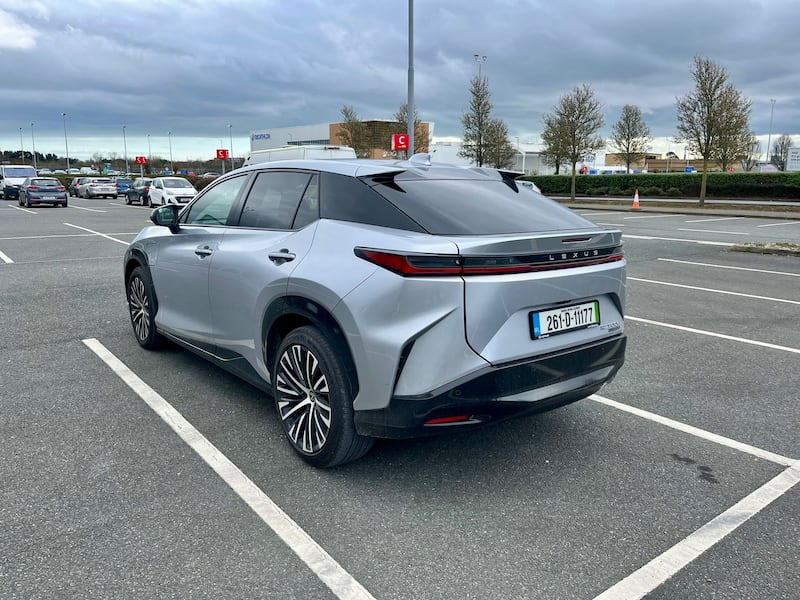 Lexus RZ500e
But that’s all a little futuristic for now. And not the experience for current RZ buyers. For these, opting for the yoke version will mean weighing up the whether the yoke will prove divisive to future used-car buyers.
Is the yoke better than a regular wheel? In a full-blooded, tail-happy sports car I can see where there will be real benefits from the short input and quick response. Here, it’s trying so hard to be as similar to a regular wheel in feel and response that there are few apparent benefits accruing to buying this yoke.
The fact others will be rolling out hands-free features for cruise control driving on motorways makes the butterfly-style wheel a bit redundant.
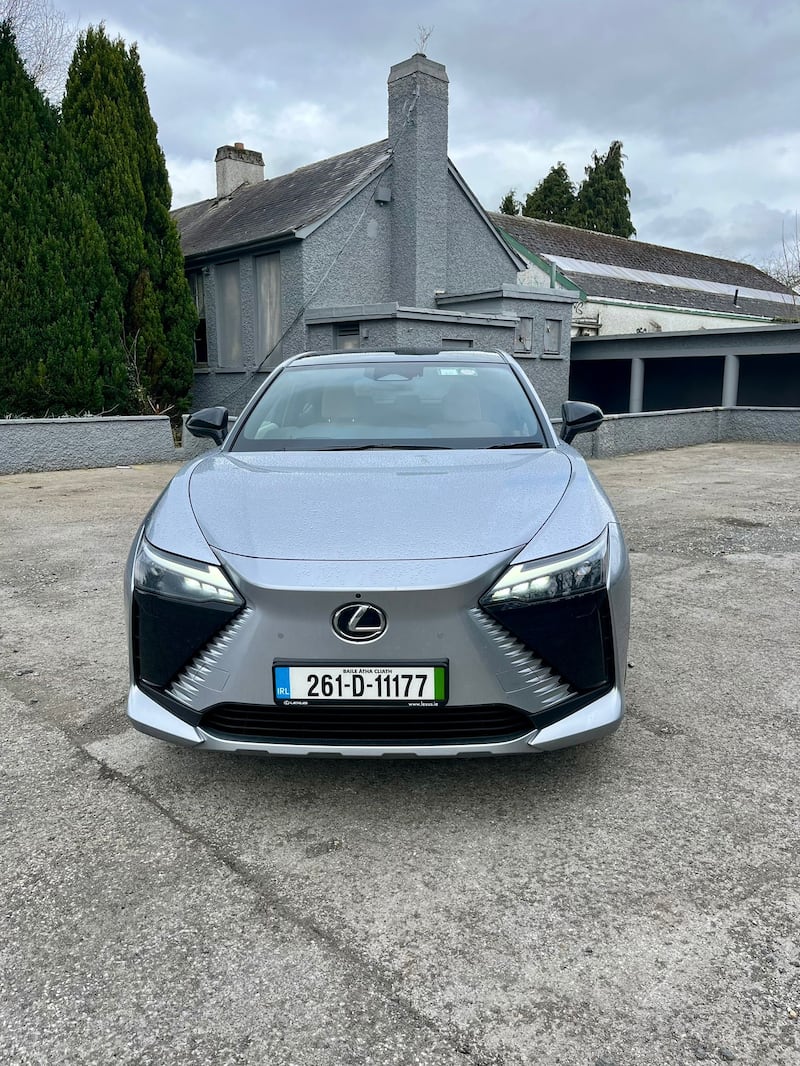 Lexus RZ500e
Regardless, the problem for Lexus really lies not with the yoke, but with the competition. At €66,000 the RZ350e can win favour with its luxury fit and finish, even if the range is average.
At €82,000 or so, the RZ500e looks overpriced against rivals like the upcoming BMW iX3 which is due to land here at €74,000, boasting more power at 469hp and nearly double the real-life range at 800km. Plus, it’s got a radical cabin overhaul of its own and comes with the technology that allows hands-free autonomous driving on selected roads as approved by Canney this month. Against that backdrop, the yoke doesn’t seem all that radical, and therefore nor does the RZ.
The updated RZ is beautifully built and is bold with its yoke, but at €82,000 it struggles to stand up to a new wave of competition.
Lowdown: Lexus RZ500e
Power: 380hp (280kW) electric motor powered by a 72kW (net) lithium-ion battery pack capable of an AC charge up to 22kW and DC up to 150kW. Four-wheel drive
0-100km/h: 4.6 seconds
Official consumption: 16.8kWh/100km (22.9kWh/100km over our 730km test drive)
Official range: 457km (circa 370km as tested)
Price: €81,490 (RZ range starts at €66,280 for the RZ350e)