
Iran has halted all supplies of gas to Iraq and threatened to attack oil facilities in Saudi Arabia, the United Arab Emirates (UAE) and Qatar. The announcement came after attacks on the huge Iranian South Pars gasfield and on a refinery in Asaluyeh, a large energy hub on Iran’s Gulf coast.
The South Pars offshore gasfield, which Iran shares with Qatar, is the largest such facility in the world.
Global oil and gas prices rose sharply after the attacks, which according to Israeli media reports were carried out by Israel in co-ordination with Washington. Neither country acknowledged immediate responsibility.
The Pentagon late on Wednesday night asked the White House to approve a more than $200 billion request to the US Congress to fund the war in Iran, the Washington Post reported, citing a senior administration official.
Iran’s official Fars news agency described the strike on Asaluyeh as a shift from limited confrontation to what it called a full-scale economic war. “It will not go unanswered,” Fars quoted military-linked sources as saying, adding that Iran’s response would target infrastructure previously considered safe.
Iran listed an array of prominent regional oil and gas targets belonging to Saudi Arabia, the UAE and Qatar, which it said were now “direct and legitimate targets” and should be evacuated at once before it struck them in the coming hours.
Analysts said the attacks were a calculated move by Washington, aimed at exerting pressure on Iran to lift the siege on shipping passing through the strategic Strait of Hormuz waterway, which handles 20 per cent of the world’s oil and liquefied gas supply.
Qatar described the attack on South Pars as “a dangerous and irresponsible step” that threatens global energy security. The United Arab Emirates warned against further attacks on “vital facilities under all circumstances”.
Previously during nearly three weeks of war, the US and Israel had held back from targeting Iran’s energy production facilities in the Gulf, averting Iranian retaliation against the oil and gas industries of its neighbours.
On day 19 of the war, the US military said its air force used 2,200kg deep ordnance “bunker buster” bombs against Iran’s missile sites near the Strait of Hormuz. It said the targets were reinforced underground sites where Iran was storing and possibly preparing to launch powerful anti-ship cruise missiles at shipping using the waterway.
Israel and the US maintained around-the-clock air strikes on what they said were regime targets across the country, with Tehran firing rockets and launching drones at Israel and Arab Gulf states.
An Israeli couple in their 70s were killed when a cluster missile hit their apartment close to Tel Aviv.
Israel confirmed it killed Iran’s intelligence minister, Esmail Khatib, in an overnight air strike on Tehran. He was the third senior official to be killed within 24 hours. As intelligence minister, Israel said, Khatib played a significant role during the recent protests in which thousands of protesters were killed.
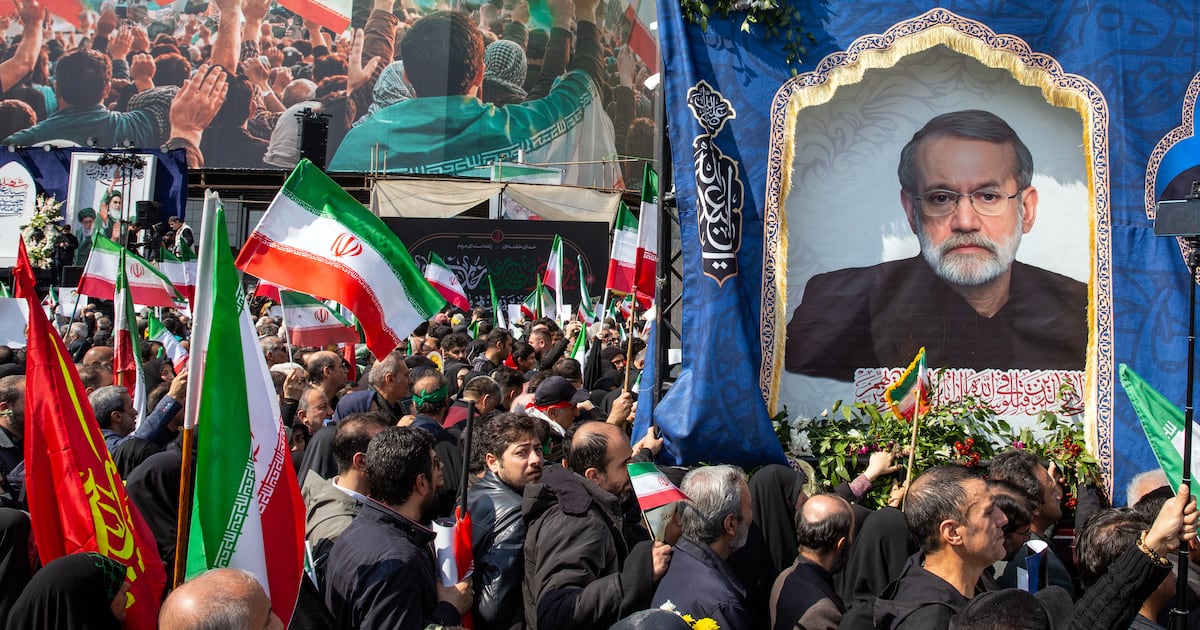
Huge crowds gathered in Tehran for the funerals of Ali Larijani, Iran’s security chief, and Gholamreza Soleimani, the head of the Basij paramilitary force, who were killed in strikes this week. Iran’s new supreme leader Mojtaba Khamenei said in a written message that the killers of Larijani “will have to pay”.
Since the war began at the end of February, more than 2,000 people have been killed across the Middle East – more than 1,200 people in Iran, more than 850 in Lebanon, and 13 in Israel. Thirteen US service members have also been killed.
[ Israel says it has killed Iran’s de facto leader Ali LarijaniOpens in new window ]
US director of national intelligence Tulsi Gabbard told a Senate committee on Wednesday that Iran’s government has been significantly degraded but it remains intact and Tehran and its proxies are still capable of attacking US and allied interests in the Middle East.
Seemingly contradicting US president Donald Trump, Gabbard also said Iran did not try to rebuild its nuclear enrichment programme following last year’s US strikes on its nuclear facilities.
In southern Lebanon the Israeli military destroyed two bridges across the Litani river after again ordering residents to flee north. Israel said the action was to prevent Iranian allies Hizbullah from sending reinforcements and combat equipment to areas where Israeli forces were operating. – Additional reporting: Reuters