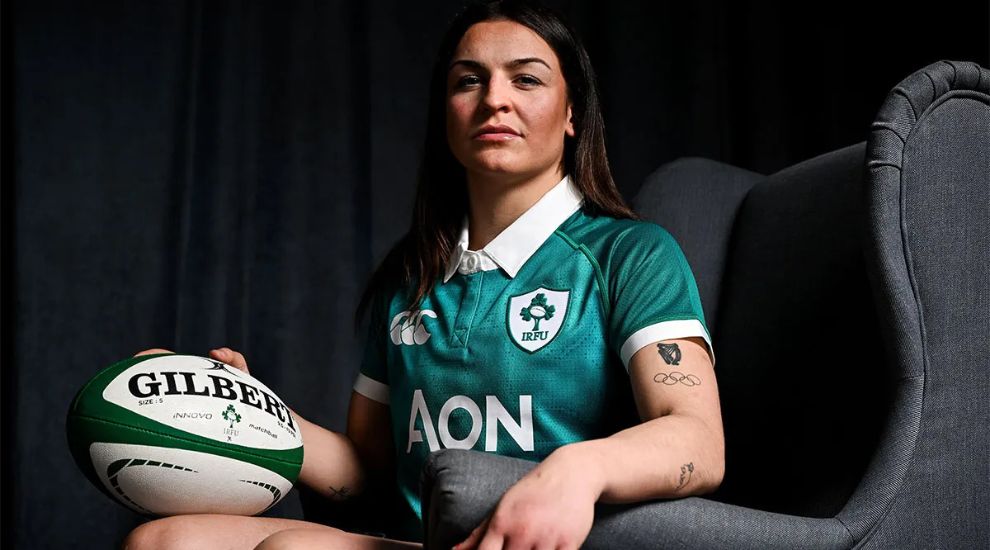
Erin King admits she did not expect the call.
Having only recently returned from injury, and with her first Guinness Women’s Six Nations campaign still ahead of her, the 22-year-old was still finding her rhythm again when Scott Bemand asked her to captain Ireland.
Her reaction was natural enough.
“At the start I maybe had a bit of imposter syndrome when I really didn’t expect it,” King said. “He asked me after I’d only played 20 minutes back and the first thing he said was, ‘Don’t change a thing. That’s why we picked you.’”
That message has shaped how King is approaching one of the highest-profile leadership roles in Irish women’s sport. Rather than trying to become somebody else, she intends to captain in the same way she plays: with energy, honesty and example.
“I’m definitely more of a lead-by-example kind of captain,” she said. “I wouldn’t say too many words in the huddle but I’ll always work hard for the team and I’ll always put my best foot forward no matter what. Hopefully I can inspire the girls through that.”
It is a leadership style Bemand believes fits both the player and the wider direction of this Ireland squad.
The head coach said King “leads with energy” and “role models every session,” pointing to the standards she sets in training, analysis and the gym as much as on matchday. He sees the appointment not only as recognition of what King already brings, but as an investment in what she can become over the next three-and-a-half years.
“She’s somebody that people would want to follow,” Bemand said. “She tries to get better every single session, whether that be rugby, gym, analysis. She’s always trying to get better. It’s quite inspiring to see.”
Bemand made clear that the role is not being handed to King with an expectation of instant perfection. Instead, he sees it as part of a broader investment in leadership across the squad and the pathway.
“Clearly she’s got growth to go in terms of leadership, but it’s how you support leaders,” he said. “We call it our leadership triangle. Put people either side of her who will be able to support her both emotionally or tactically on a pitch, and she’s going to grow over the next three and a half years.”
That longer view is central to Bemand’s thinking. He spoke repeatedly about age profile, depth and development, arguing that Ireland must build not just a starting team but a leadership group capable of taking the side forward towards the 2029 Rugby World Cup in Australia.
By then, King should have years of captaincy experience behind her.
“It doesn’t have to be perfect now,” Bemand said. “But people have to be able to grow into that space.”
King is embracing that challenge, but she is also drawing on those who came before her. She has leaned on past captains and previous leaders from both the sevens and fifteens environments as she adjusts to the role.
“I’ve picked up a lot of conversations with previous captains,” she said. “I was captained by Ailís Egan and Amy Costigan in the Sevens and then when I came into the Fifteens team I was welcomed so well by Sam Monaghan and Edel McMahon.”
That welcome has helped define how she now wants to lead the current group, particularly with nine uncapped players included in the squad.
“If I can make people feel that welcome I’d be delighted,” King said. “Definitely a person-before-player kind of attitude for me. If girls are comfortable and feel welcome and are happy, I think the rugby then just comes.”
A strong thread through this Ireland set-up is that leadership is built on connection as much as authority.
King wants to be “an approachable friendly face” for those entering camp for the first time, while Bemand sees her as part of a wider crop of young leaders emerging through the system. He pointed to captaincy roles in the Celtic Challenge and under-age programme as further evidence that Ireland are growing responsibility early.
“The other examples that you’ve used, the Celtic Challenge or girls that are leading within the 20s, 21s programme, we’ve got such talent,” he said.
King’s authority also carries extra weight because of what she has come through. Injury forced her to watch from the outside for long periods last year, including missing part of the Six Nations and then the World Cup. That experience altered her perspective.
“The fact that not playing ever again was a reality for me, it definitely shifts your mindset,” she said. “I’m never taking that green jersey for granted.”
She spoke candidly about how that period changed her.
“Rugby brings me so much,” King said. “The fact that I didn’t have that for so long, I thought about it so much and I had a lot of time to think about my return. I have this great new perspective on life and on rugby.”
That lived experience may now be one of her greatest assets as captain. She knows what it is to be central and what it is to be sidelined. She knows what the jersey means when it is suddenly taken away.
Her ambition now is to make that appreciation contagious.
“I want everyone to have that mindset that I have and just really enjoy it,” she said. “I think when you’re enjoying it, we’ve got this great culture in our team and hopefully as captain it’s something I want to add to and make it better and better and make it a team that people want to be a part of.”
There is also the small matter of leading Ireland into Twickenham against England in the opening round of the championship. For any captain, it is a daunting assignment. King, though, spoke of it in terms of pride rather than pressure.
“During my rehab I imagined playing again and singing the anthem again,” she said. “Then once I got the captaincy, it’s kind of beyond my wildest dreams. It’s an absolute honour.”
Tony O’Byrne, Senior Vice President of the IRFU, echoed that confidence in the new captain when the squad was launched, telling King: “I have no doubt that you will do a great job in your captaincy role.”
Ireland’s decision is about more than one player wearing the armband. It reflects where the squad is heading: younger, deeper, increasingly confident, and prepared to trust leaders early.
King’s brief, though, is even clearer.
Do not change a thing.
And lead.
 If you, like the IRFU, Vodafone, PwC, Bank of Ireland, Energia, Aer Lingus, Laya Healthcare, Aviva and other Irish Rugby sponsors, would like to be part of the Sport for Business community and see your organisation in our content, on our stages, and in the conversation happening every day around the commercial world of Irish Sport, email us today and let’s see what is possible.
Image Credit: IRFU and Inpho.ie
ABOUT SPORT FOR BUSINESS
Sport for Business is Ireland’s leading platform focused on the commercial, strategic and societal impact of sport. It connects decision-makers across governing bodies, clubs, brands, agencies and public institutions through high-quality content, events and insight. Sport for Business explores how sport drives economic value, participation, inclusion and national identity, and how your story can be part of ours.
Through analysis, storytelling and convening the sector, it helps leaders understand trends, share best practice and make better-informed decisions. Its work positions sport not just as entertainment, but as a vital contributor to Ireland’s social and economic fabric.
Find out more about becoming a member today.
Or sign up for our twice-daily bulletins to get a flavour of the material we cover.
Sign up for our News Bulletins here.
Upcoming Events