
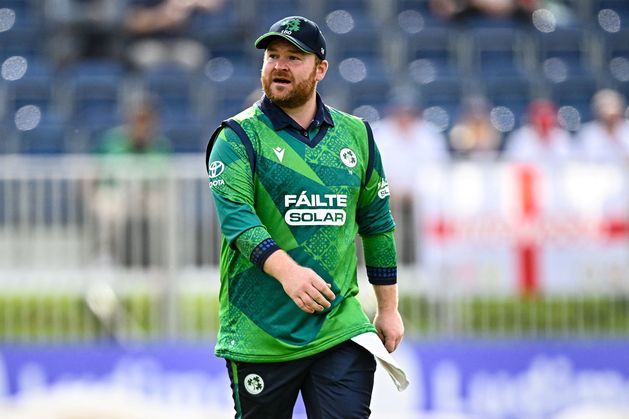
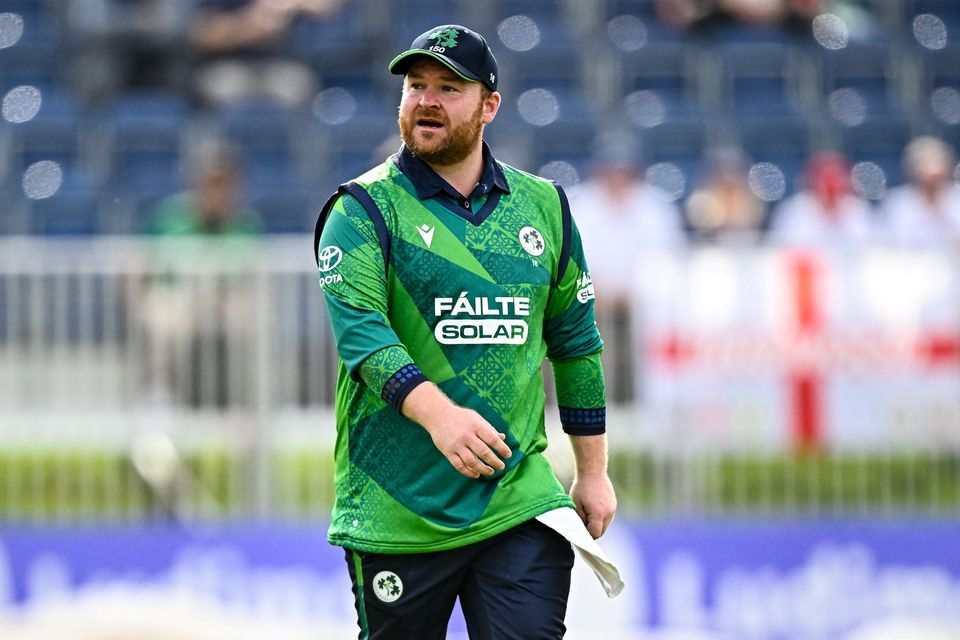
Paul Stirling will remain skipper of the 50-overs one-day international team. Photo: Sportsfile
Paul Stirling has stepped down as captain of the Ireland T20 side to give his successor – either Lorcan Tucker or Harry Tector – the longest possible time to prepare for the next World Cup in 2028.
Entering the veteran stage of his career, Stirling will remain skipper of the 50-overs one-day international team but the 35-year-old feels the time is right to hand over the reins in the shortest format.
“I still have a huge amount of ambition as a player and feel this decision will allow me to fully focus on being the best version of myself and making the strongest possible contribution on the field,” he said.
In paying tribute to Stirling’s three years in charge, high-performance director Graeme West let slip that Ireland will be playing world champions India at home this summer, probably at Malahide.
“With qualification secured for the T20 World Cup in 2028, Paul’s decision provides the opportunity for the new captain to begin implementing their style and methodology, starting with the India series in June,” West said.
Cricket Ireland has yet to confirm the India visit, or any of this season’s fixtures, but is expected to officially announce a Test match against New Zealand in Belfast at the end of May at a press conference on Friday and an Afghanistan tour later in the year.
The delay in naming a permanent T20 captain could indicate that Tector will be given the role ahead of vice-captain Tucker, who led the side in the final two matches of the recent World Cup when Stirling was out with a knee injury.
Meanwhile, cricket could be the latest victim of the war in the Middle East, according to the owner of Dukes, who has warned of a shortage of balls.
Dukes, which dates back to 1760, supplies all the red balls for Test and first-class cricket in England, with the new season starting on April 3. For this, it produces between 4,000 and 5,000 balls each summer.
But Dukes owner Dilip Jajodia has said he is having to ration the number of balls he gives each team because of supply-chain issues caused by the American/Israeli assault on Iran.