
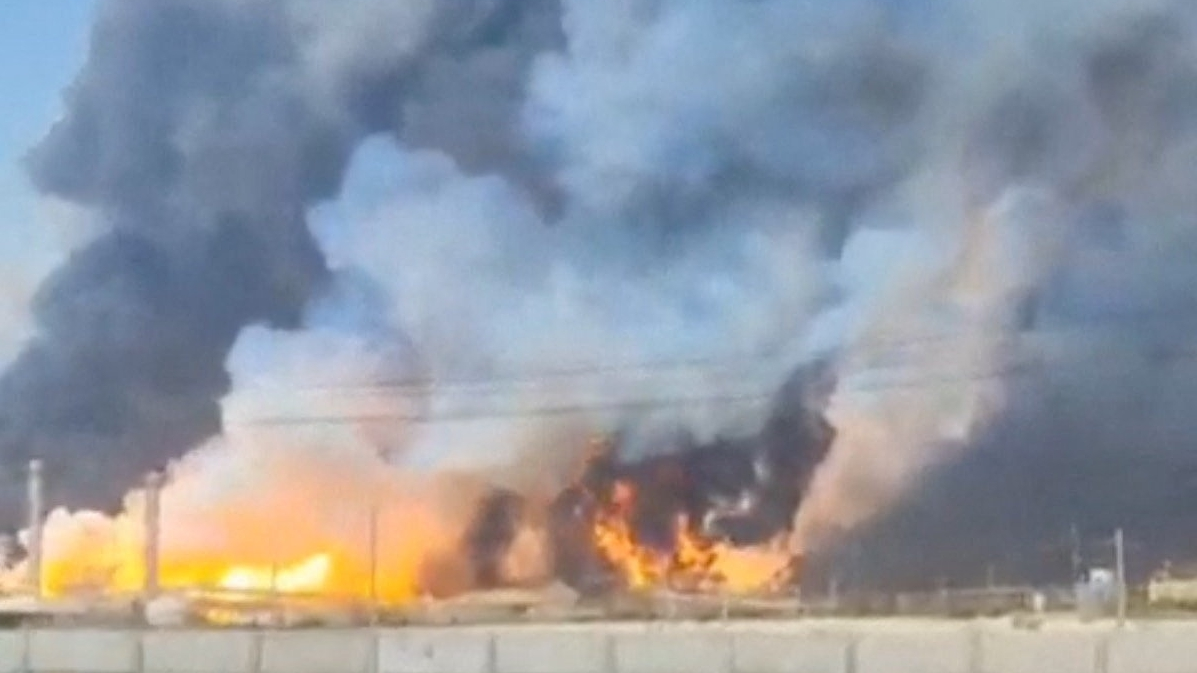
Bond yields spiked, oil and gas prices rallied and the FTSE 100 sank to its lowest level since the start of the year as reciprocal military strikes on energy interests across the Middle East raised the prospect of a “doomsday scenario” for global energy markets.
Heightened anxiety over the possibility that a protracted energy shock could stoke inflation led central banks in Britain, the United States, Canada, Europe and Japan to put interest rate-cutting cycles on hold.
The Bank of England’s monetary policy committee voted 9-0 in favour of keeping the borrowing rate at 3.75 per cent, the first time it had acted unanimously since 2021, and warned that “energy supply would take time to recover even if the conflict abated”.
Andrew Bailey, the Bank’s governor, said: “None of us know how this is going to play out.” He later told LBC “the longer it goes on … the effect will be larger”, adding that reopening the Strait of Hormuz shipping route was “the best thing to do to get the energy market back on its normal footing”.
As the conflict in the Gulf escalated on its 20th day:
The yield on two-year gilts, which influence the cost of UK government borrowing, rose at the fastest rate in two years. Five-year gilts also suffered heavy losses as money market investors raised bets on two or three interest rate rises this year.
Brent crude jumped 10 per cent and briefly punched through $119 a barrel, almost double the price at the start of the year. Oil ended the session up 2 per cent at $109 after the Trump administration outlined steps to expand supply.
Natural gas contracts in the UK rose as much as 29 per cent, while benchmark Dutch gas prices hit their highest level since January 2023.
The FTSE 100 suffered its steepest daily fall since March 3, losing 2.4 per cent to 10,063, its lowest close since January. The energy giant BP was among only three blue-chips in positive territory. The index is now almost 8 per cent off its record closing high, which was reached on the day before America and Israel launched attacks on Iran.
The price of gold, a non-yielding asset whose value is eroded by higher interest rates, fell 5 per cent.
The renewed market sell-off came after a missile attack on Iran’s vast South Pars gasfield prompted an Iranian retaliatory aerial assault on Ras Laffan in Qatar, the world’s largest LNG terminal, and across the Gulf.
Qatar Energy, the state-owned group, said missiles that hit Ras Laffan caused damage worth $20 billion a year in lost revenue that would take up to five years to repair, affecting supply to markets in Europe and Asia.
Business newsletter
The business editor’s exclusive analysis of all the latest financial and economic news.
Sign up with one click
Saad al-Kaabi, Qatar Energy’s chief executive and the country’s minister for energy affairs, said: “These unjustified and senseless attacks weren’t just an attack on the state of Qatar but attacks on global energy security and stability.”
He said the group would be forced to declare force majeure on long-term contracts for up to five years for LNG supplies bound for Italy, Belgium, South Korea and China.
“I never in my wildest dreams would have thought that Qatar would be in such an attack, especially from a brotherly Muslim country in the month of Ramadan,” he told Reuters. “These are long-term contracts that we have to declare force majeure. We already declared, but that was a shorter term. Now it’s whatever the period is.”
The spread between Brent crude and US West Texas intermediate crude reached $12.05 per barrel, its widest since March 2015, signalling that the supply disruption is hitting international markets particularly hard.
“We are now well on the road to the doomsday gas crisis scenario,” said Saul Kavonic, head of research at MST Marquee. The LNG supply disruption could last for months or even years once the war ends, depending on how long it takes to repair the damage, he added.
Key to energy disruption has been Iran’s effective closure of the Strait of Hormuz, halting almost all tanker traffic out of the Gulf. Even if there were a ceasefire and tankers could move again, it would take time for exports to recover, said Ole Hvalbye, commodities analyst at SEB.
Aluminium prices dropped as much as 8 per cent to $3,150 a tonne on the London Metal Exchange as speculators liquidated holdings, while copper sank to a three-month low on worries that higher energy prices will hit global growth.
Alastair Munro, a metals strategist at the broker Marex, said: “The world is in a clear-the-decks moment — cut risk.”
David Rees, head of global economics at Schroders, said: “It felt as though markets were positioned for a relatively brief price shock rather than an extended crisis.”
With no end in sight almost three weeks into the war, Britain, Canada, France, Germany, Italy, the Netherlands and Japan issued a joint statement expressing “our readiness to contribute to appropriate efforts to ensure safe passage through the Strait”.
They also promised “other steps to stabilise energy markets, including working with certain producing nations to increase output.”