
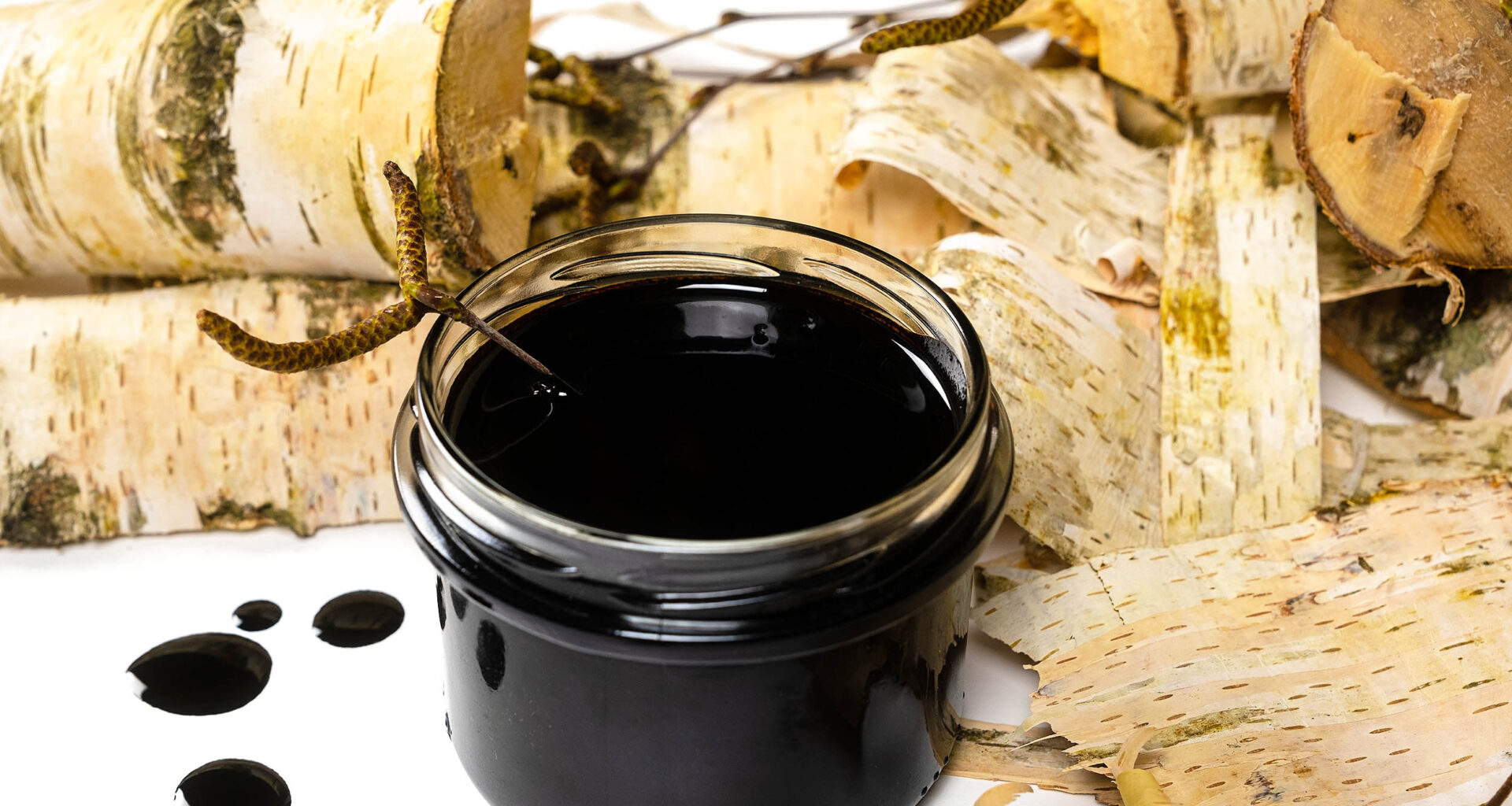
Birch tar has long appeared at Neanderthal sites as a black, sticky residue – usually explained as a kind of prehistoric glue used to hold tools together. However, that simple picture may be missing something important.
A new study from the University of Cologne and the University of Oxford suggests the same substance that helped Neanderthals build their tools may also have helped them treat wounds.

When researchers recreated birch tar using ancient methods, they found it could slow the growth of bacteria linked to infection.
The findings don’t prove Neanderthals practiced medicine. But they add to a growing body of evidence that these early humans were more than skilled hunters – they may also have been practical caregivers, using the materials around them to manage injury and disease.
Birch tar shows up everywhere
Birch tar is both humble and revealing. It’s not as flashy as cave paintings or figurines, but it’s hard to make by accident.
Producing it requires heating birch bark under controlled conditions so it breaks down and releases sticky compounds instead of simply burning. That places it between a natural substance and a manufactured product.
Archaeologists already know Neanderthals used tar as an adhesive, helping attach tool components and enabling more complex implements.
But researchers have begun asking a broader question: if Neanderthals made and carried tar, would they really limit it to one use?
Ethnographic parallels make that unlikely. Indigenous communities in northern Europe and Canada have long used birch tar to treat wounds.
At the same time, evidence has been growing that Neanderthals practiced more care and medicine than once believed. Put together, birch tar starts to look like a multi-purpose material – glue, sealant, and perhaps even a form of ancient first aid.
Recreating Neanderthal tar
To test the medicinal potential of birch tar, Siemssen and colleagues made tar from modern birch bark, focusing on species known from Neanderthal sites.
The goal wasn’t to produce “the best tar possible” with modern lab equipment. It was to recreate something Neanderthals could plausibly have made.
The team used multiple extraction methods, including distilling tar in a clay pit and condensing it against a stone surface.
Both methods would have been available to Neanderthals, which matters because the chemistry of tar can vary depending on how it’s produced. If you want to argue about what Neanderthals could have used, you need to start with what Neanderthals could have made.
A messy, sensory process
The researchers also make a point that anyone who has ever tried to clean resin off their hands will immediately understand: this is not a neat process.
“The messiness of birch tar production deserves a special mention. Every step of the production is a sensory experience in itself, and getting the tar off our hands after spending hours at the fire has been a challenge every time,” the authors explained.
That line does more than complain about sticky fingers. It hints at something easy to forget when we talk about “ancient technology.”
This wasn’t sterile chemistry. It was smoke, heat, smells, and hands that stayed tacky for hours. A substance like that would have been memorable, and it would have invited experimentation simply because it was so present in daily life once people knew how to make it.
What the bacteria tests showed
After producing the tar, the team exposed samples to different strains of bacteria. Across the board, it hindered the growth of Staphylococcus bacteria known to cause wound infections.
In other words, the tar wasn’t just chemically interesting – it behaved like something that could reduce infection risk when applied to damaged skin.
This finding does two things at once. It supports Indigenous medicinal practices that use birch tar for wounds, and it strengthens the case that Neanderthals could have noticed the same effect.
Even without knowing about microbes, people can observe outcomes. If certain substances lead to fewer swollen cuts, less pus, or faster healing, that knowledge spreads.
“We found that the birch tar produced by Neanderthals and early humans had antibacterial properties,” the authors wrote.
“This has important implications for how Neanderthals may have mitigated disease burden during the last Ice Ages, and adds to growing evidence of healthcare in these early human communities.”
That phrasing leaves room for uncertainty, but the broader point is clear: if Neanderthals could make and use antibacterial materials, their survival likely included basic infection control – not just hunting skill and physical hardiness.
Medicine, glue, or something in between
One of the most interesting parts of this story is that birch tar doesn’t need to be labeled “medicine” or “adhesive” as if those are separate compartments. A multi-use material gets used where it’s handy.
If you have a sticky tar in camp to repair tools, and you also have someone with a cut that won’t stop reopening, it’s not a big leap to try putting the sticky substance on skin, especially if it also forms a protective layer.
The study also points out that there are other potential functions for birch tar, like insect repellent. That matters because it reinforces the idea that we shouldn’t assume single-use behavior. People, especially people living in demanding environments, tend to squeeze value out of whatever works.
There’s also a larger idea hovering in the background: Neanderthals had access to many plants and natural materials besides birch.
Birch tar might be one visible example of a broader “toolkit” of natural remedies – some of which may never show up clearly in the archaeological record because they don’t preserve well.
Lessons beyond Neanderthals
The paper also frames this work as part of a growing field sometimes called palaeopharmacology, which tries to reconstruct ancient medicinal practices by combining experimental archaeology with knowledge from ethnobotany and pharmacology.
“By bringing together research on indigenous pharmacology and experimental archaeology, we begin to understand the medicinal practices of our distant human ancestors and their closest cousins,” the authors said.
“Additionally, this study of ‘palaeopharmacology’ can contribute to the rediscovery of antibiotic remedies while we face an ever more pressing antimicrobial resistance crisis.”
That last point taps into a modern anxiety: antibiotic resistance. The researchers aren’t suggesting we replace hospitals with birch bark fires. But they are pointing out that the natural world contains compounds with antimicrobial effects, and humans have been experimenting with those compounds for a very long time.
Looking carefully at ancient practices can sometimes spark new questions about old remedies, especially as modern medicine searches for fresh strategies.
If there’s a quiet theme running through this study, it’s that it makes Neanderthals feel less like caricatures and more like people. People get injured and infections. People look for what helps.
If Neanderthals used birch tar to keep a tool together, it already shows planning and technical skill. If they also used it to protect wounds, it suggests something else: attention to health, comfort, and the survival of group members over time.
The study doesn’t claim to have solved Neanderthal medicine in one go. But it pushes the conversation in a clear direction.
Birch tar wasn’t just a sticky residue on ancient tools. It may have been part of a broader, practical knowledge of how to live through cold, injury, and disease – one messy, smoky, stubbornly adhesive experiment at a time.
The study is published in the journal PLOS One.
—–
Like what you read? Subscribe to our newsletter for engaging articles, exclusive content, and the latest updates.
Check us out on EarthSnap, a free app brought to you by Eric Ralls and Earth.com.
—–