
Main PointsKey Reads
Jade Wilson – 15 minutes ago
Israel Defense Forces confirms killing of Iran’s Islamic IRGC spokesperson
The Israel Defense Forces (IDF) has said Iran’s Islamic Revolutionary Guard Corps (IRGC) spokesperson, Ali Mohammad Naeini, has been killed, confirming earlier reports in Iranian media. The Israeli military said in a post on X that he was killed in an overnight airstrike.
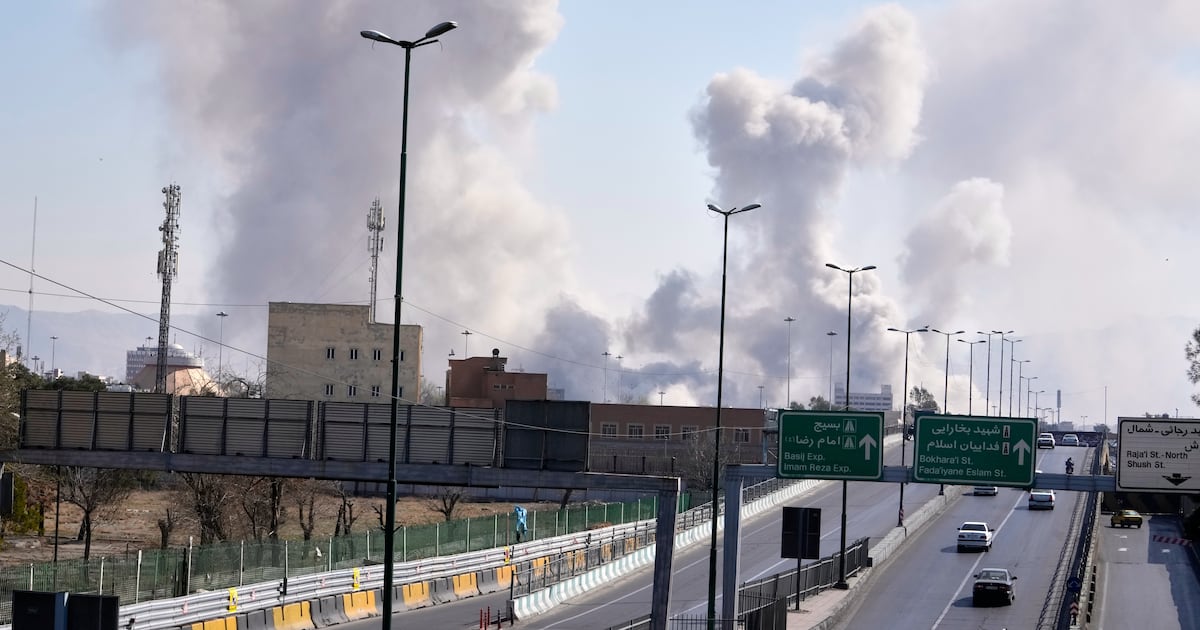
Israeli military begins strikes east of Tehran
The Israeli military has said it has begun attacking Iranian targets east of the capital Tehran, Reuters reports.
Trump reportedly considering plans to occupy or blockade Iran’s Kharg Island
According to a report in Axios, the Trump administration is considering occupying or blockading Iran’s Kharg Island to pressure Iran into reopening the Strait of Hormuz. The report cited four sources who all spoke under the condition of anonymity.
“He wants Hormuz open. If he has to take Kharg Island to make it happen, that’s going to happen. If he decides to have a coastal invasion, that’s going to happen. But that decision hasn’t been made,” a senior administration official told Axios.
“We’ve always had boots on the ground in conflicts under every president, including Trump. I know this is a fixation in the media, and I get the politics, but the president is going to do what’s right,” a second senior official said. No decision has been made yet, the official said.
Kharg, an 8km-long coral island in the Persian Gulf about 26km from the mainland, is a key processing hub for Iran, through which 90 per cent of the country’s oil exports typically flow. The island had been largely left untouched by the US-Israeli attacks during the first two weeks of the war.
But US president Donald Trump claimed on Saturday that US strikes had “totally demolished” most of Kharg Island, telling NBC News that its military may hit site “a few more times just for fun”.
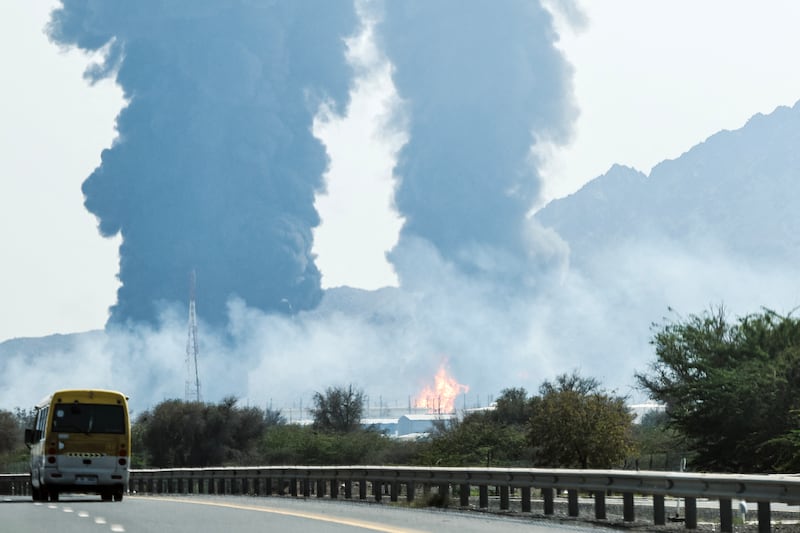 Smoke and flames rise from an energy installation in the Gulf emirate of Fujairah on March 14th. Photograph: AFP via Getty Images
Jade Wilson – 2 hours ago
Use of British bases seen as ‘participation in aggression’, Iranian foreign minister says
Iran’s foreign minister Abbas Araghchi told his British counterpart, Yvette Cooper, in a phone call that any US use of British bases would be seen as “participation in aggression” against the Islamic Republic, Reuters reports.
Jade Wilson – 2 hours ago
Both sides in US-Israeli war on Iran may have committed war crimes, UN chief suggests
The there were “reasonable grounds” to believe both sides in the US-Israeli war on Iran may have committed war crimes, the UN secretary general, António Guterres, has said in an interview with Politico,
“If there are attacks either on Iran or from Iran on energy infrastructure, I think that there are reasonable grounds to think that they might constitute a war crime,” Gutteres said.
Earlier this week Israel’s attack on Iran’s massive South Pars gasfield – which it shares with Qatar – triggered Iranian retaliatory strikes on Qatar’s Ras Laffan gas complex, in what was a major escalation of the conflict.
“I don’t see any difference. It doesn’t matter who targets civilians. It is totally unacceptable,” he added.
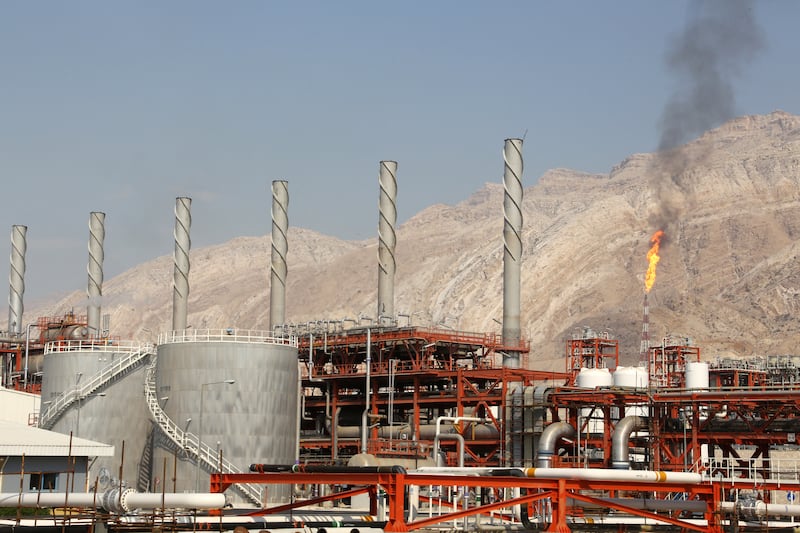 A section of the South Pars gas field facilities in the southern Iranian port town of Assaluyeh. Photograph: Atta Kenare/AFP via Getty Images
Jade Wilson – 2 hours ago
IRGC spokesperson killed in US-Israeli airstrikes
A spokesperson for the Islamic Revolutionary Guards Corp (IRGC), Ali Mohammad Naini, has been killed in US-Israeli airstrikes, Iranian media has been reporting, including the Tasnim news agency.
Targeted Israeli/US-Israeli attacks have already killed the former supreme leader Ali Khamenei, the security chief Ali Larijani, head of the paramilitary Basij force, Gholamreza Soleimani, and the intelligence minister, Esmail Khatib, among others.
Jade Wilson – 3 hours ago
War in Iran threatens fresh food-price shock across developing world
Disrupted fertiliser shipments and soaring energy prices from the war in Iran are threatening to unleash a fresh food-price surge across vulnerable nations, risking a years-long setback just as many were recovering from successive global shocks.
Developing countries were strengthening – and attracting investment – after the global pandemic and the Ukraine war sent food, fuel and financial markets into turmoil. Now the Iran conflict threatens to unravel those gains and leave households struggling to feed families.
“This could have a big impact on prices, food prices, over time,” said Odile Renaud-Basso, president of the European Bank for Reconstruction and Development, a core lender across some 40 emerging economies.
Food and fuel make up less than a quarter of the consumer inflation basket in most developed economies, but account for 30 per cent to 50 per cent in many emerging markets, said Marie Diron, managing director with Moody’s Ratings.
“This exposure leaves many economies particularly vulnerable to externally driven price volatility,” Diron said.
Jade Wilson – 4 hours ago
Sri Lanka refuses to allow the US to station warplanes at one of its airports
Sri Lanka, which has strong economic and diplomatic ties with both Iran and the US, refused to allow the US to station two of its warplanes at an airport in the island’s south in early March, the country’s president, Anura Kumara Dissanayake, told parliament earlier today.
“They wanted to bring two warplanes armed with eight anti-ship missiles from a base in Djibouti to the Mattala International Airport from March 4th to 8th and we said ’no’,” Dissanayake was quoted by the AFP news agency has having said.
Sri Lanka, an island nation in the Indian Ocean more than 3,200km from the Gulf, has had a policy of non-alignment since it became independent in 1948.
Jade Wilson – 4 hours ago
Iran’s Revolutionary Guard says Tehran still building missiles
Tehran was still building missiles, the spokesman for Iran’s paramilitary Revolutionary Guard insisted on Friday, seeking to counter a claim by Israeli prime minister Binyamin Netanyahu that it no longer could.
Gen Ali Mohammad Naini made the comments in a report quoted by Iran’s state-run IRAN newspaper.
Referencing how Iranian schools consider a 20 as a perfect score, the general said “our missile industry score is 20 and there is no concern in this regard because we are producing missiles even during war conditions, which is amazing, and there is no particular problem in stockpiling.”
He also said the war would go on.
“These people expect the war to continue until the enemy is completely exhausted,” the general said of the Iranian public. “This war must end when the shadow of war is lifted from the country.”
Jade Wilson – 4 hours ago
Iran hits Kuwaiti oil refinery
A Kuwaiti oil refinery came under attack early on Friday from Iranian drones and sirens sounded in Israel warning of incoming fire, while explosions boomed over Tehran as Israel hit Iran as the country marked the Persian New Year.
As the war that has rocked the global economy neared the end of its third week, Iran showed no signs of letting up on its attacks on the Gulf region energy structure, as Kuwait said drone strikes at its Mina Al-Ahmadi oil refinery sparked a fire and crews were working to control the blaze.
The refinery, which can process 730,000 barrels of oil per day, was already damaged on Thursday in another Iranian attack.
It is one of three oil refineries in Kuwait.
Iran stepped up its attacks on energy sites in Gulf Arab states after Israel on Wednesday bombed Iran’s massive South Pars offshore natural gas field in the Gulf.
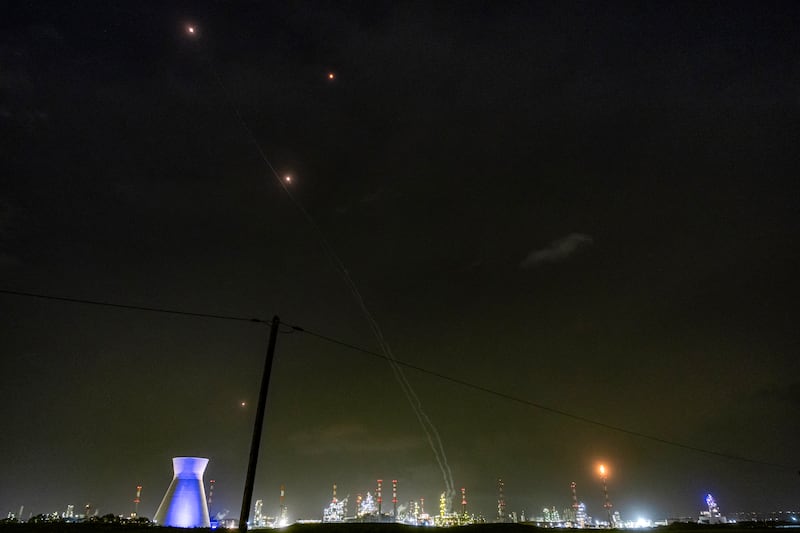 Lights from missile defence interceptors are seen in the sky above the oil refinery in Israel’s northern city of Haifa on Thursday night. Photograph: Odd Andersen/AFP
Heavy explosions shook Dubai as air defences intercepted early incoming fire over the city where people were observing Eid al-Fitr, the end of the holy Muslim fasting month of Ramadan, and mosques made the day’s first call to prayers.
Bahrain’s interior ministry said a fire broke out after shrapnel from an intercepted projectile landed on a warehouse, while Saudi Arabia reported shooting down multiple drones targeting its oil-rich Eastern Province.
The renewed attacks came after an intense day that saw Iran hit energy infrastructure around the region and launch more than a dozen missile salvos at Israel following the attack on South Pars.
South Pars, the Iranian part of the world’s largest gas field, is located offshore in the Gulf and is owned jointly with Qatar.
With some 80 per cent of power generated in Iran coming from natural gas, the attack posed a direct threat to the country’s electricity supplies.
In Israel, sirens sounded early on Friday, warning of attacks on Jerusalem and in the north of the country, sending people again scrambling to shelters. There were no immediate reports of casualties.
Jade Wilson – 5 hours ago
Deaths soar as conflict continues
More than 3,000 people are believed to have been killed across Iran so far, and the Pentagon says more than 15,000 targets in the country have been hit in the first two weeks.
A girls’ school in the southeastern Iranian city of Minab lies in rubble, with about 175 children and teachers killed in a strike that the US is believed to have carried out.
The Strait of Hormuz, the narrow sea passage turned chokepoint for the Gulf’s oil and the world, has, in effect, been closed by Iran. As Eoin Burke-Kennedy writes, Iran’s economic warfare has reshaped the battlefield.
And the bill, according to analysts at the Centre for Strategic and International Studies, is growing by roughly half a billion dollars every day.
Jade Wilson – 5 hours ago
Fuel prices hit
Asian shares were mixed on Friday following Wall Street losses, and oil prices pared earlier gains on the intensifying Iran war, falling back to about $107 a barrel. US futures were higher.
Oil prices had a rollercoaster day on Thursday with the Brent crude, the international standard, briefly surging to about $119 per barrel as attacks by Iran on oil and gas facilities around the Gulf escalated after Israel’s attack of Iran’s key natural gas field.
In early Friday trading, Brent crude fell 1.6 per cent to $106.90 a barrel, following Israeli prime minister Binyamin Netanyahu’s remarks that he would hold off on further attacks on Iran’s gas field at the request of US president Donald Trump. Benchmark US crude was down 2 per cent to $93.63 a barrel.
As Jack Power writes from Brussels, European gas prices jumped by 35 per cent on Thursday as Iran and Israel traded strikes on sites involved in the production and supply of oil and gas.
The targeting of energy infrastructure sent alarm bells ringing in Washington and European capitals, where governments had already been trying to contain an earlier surge in fuel prices, as the war heads towards its fourth week.
Governments across Europe are mulling short-term interventions to insulate households and industry from the worst of the spiralling fuel costs.
Jade Wilson – 5 hours ago
Israel pounds Tehran with air strikes
Israel pounded Tehran with air strikes on Friday as Iranians marked Nowruz, or the Persian New Year, and Israeli prime minister Binyamin Netanyahu denied he “dragged” US president Donald Trump into the war with Iran.
Activists reported hearing strikes around Iran’s capital. The attacks occurred a day after Israel pledged to refrain from more strikes on a key Iranian gas field and Iran intensified attacks on oil and natural gas facilities around the Gulf.
The strikes come as questions mount about how aligned the US and Israel are in their war aims, with Netanyahu saying that Israel had acted alone in the bombing of Iran’s South Pars gas field. He also confirmed that Trump had asked Israel to hold off on such attacks.
Iran is being “decimated” and no longer had the capacity to enrich uranium or make ballistic missiles, but a revolution in the country would require a “ground component,” he said, without elaborating.
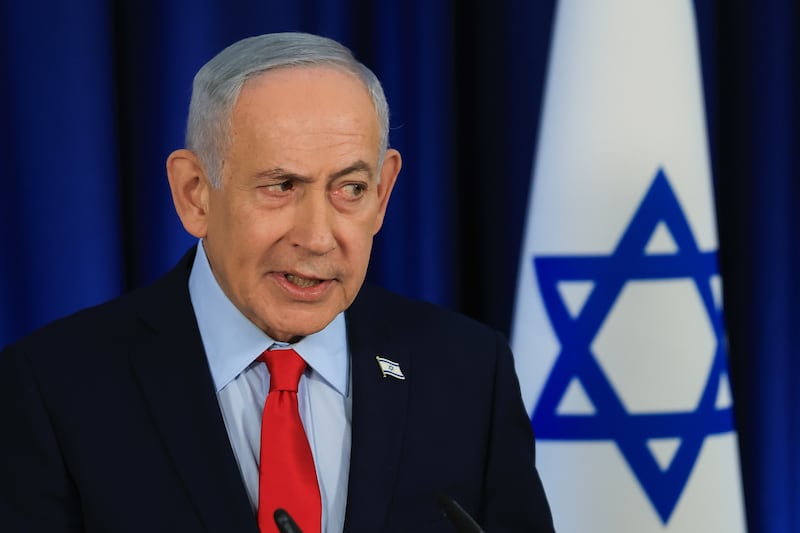 Israeli prime minister Binyamin Netanyahu speaks during a press conference in Jerusalem. Photograph: Ronen Zvulun/AP
The Israeli premier also rejected the notion that he had dragged Trump into the conflict, implying he was the junior partner in the joint assault on Iran.
“Does anyone really think that someone can tell president Trump what to do?” Netanyahu told reporters, at a press conference.
“He didn’t need any convincing,” he added.
“I don’t think any two leaders have been as co-ordinated as president Trump and I. He’s the leader. I’m, you know, his ally.”