

Keeping pace with Hollywood’s awards horserace. Sign up for the newsletter here.
Before Gold Rush takes a post-Oscar mini-break, all that’s left is to run down the biggest winners of Sunday’s ceremony.
Photo: Rich Polk/Penske Media via Getty Images
The 98th Academy Awards have come to a close. The furious debates of weeks past have cooled down. (One Battle or Sinners? Turns out they’re both pretty good.) Oscar-winning craftspeople have returned to work. Jessie Buckley’s family has presumably flown back to Ireland on Aer Lingus. (Shout-out to the Tree House Cafe in the Dublin airport, the best place for a post-red-eye full Irish.) After disappearing sometime around 10:30 p.m. PT Sunday, my voice has come back. Before Gold Rush takes a post-Oscar mini-break, all that’s left is to run down the biggest winners of Sunday’s ceremony, starting with the literal biggest winner:
The man of the hour, who leapt past his idols Robert Altman and Martin Scorsese on the Oscar leaderboard by winning three trophies in one night. Which means the former enfant terrible has now been enshrined as a member of the Establishment. His blank check officially cleared — is anyone willing to give him another $100 million to adapt a Thomas Pynchon novel? (Somewhere, an exec is wondering if there’s franchise potential in The Crying of Lot 49, or if audiences will skip it since they missed the first 48.) Or will PTA downshift to something smaller and more interior, the way he followed up Magnolia with Punch-Drunk Love and There Will Be Blood with The Master?
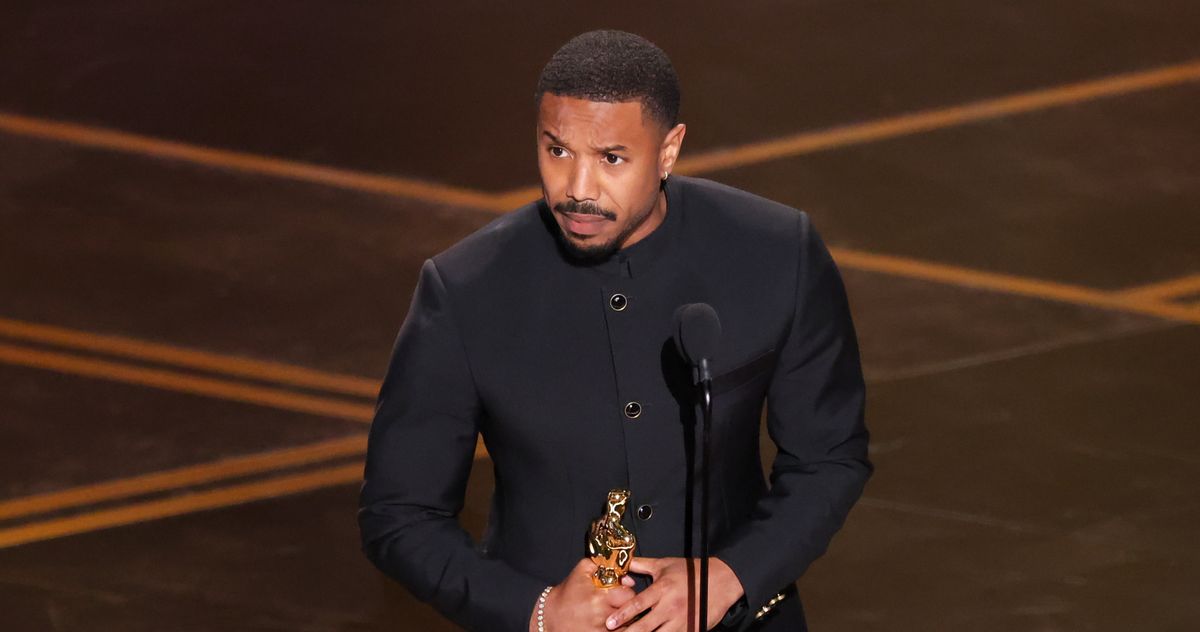
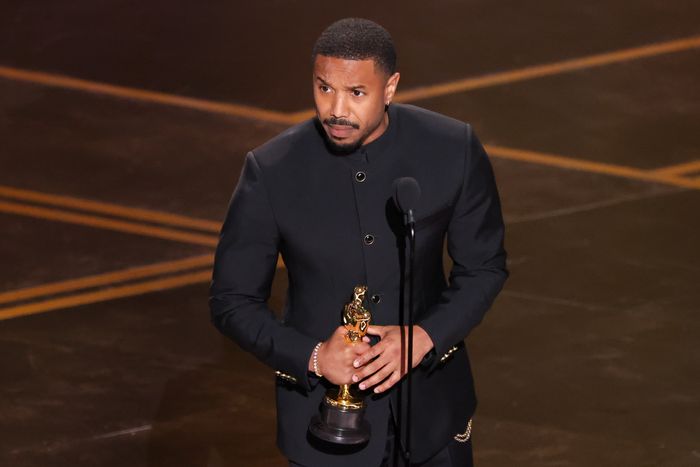
You may wonder why our headline from the Best Actor result was “Why Timothée Chalamet Lost” rather than “Why Michael. B Jordan Won.” (Some inside baseball for you: It’s because the post was a prewrite. I was reasonably certain Timmy would lose but less sure of who’d beat him.) So let’s give Jordan his moment now. The actor had been underestimated by many of us, perhaps because Sinners has so much else going on. “I had watched Sinners three times yet had never truly seen what it is that Jordan’s doing in the movie,” Wesley Morris wrote ahead of the ceremony, eventually concluding, “It’s not his acting that we keep showing up to see and rooting for … It’s heart.”
Jordan’s SAG win, two weeks before the Oscars, changed everything. For voters who were planning to rank OBAA No. 1 but still wanted to give Sinners its due, Jordan now appeared a viable way to hand the film an additional above-the-line trophy. In contrast to Timmy’s me-me-me press tour, Jordan’s speech that night was in the more traditional Oscar mode: heartfelt and grateful, which matched the generous and inclusive attitude of the Sinners campaign. All of this made Jordan incredibly easy to root for. Consider, too, that as much as Chalamet’s Oscar narrative rested on his status as Hollywood’s new favorite A-lister, Jordan has been a bankable leading man for even longer, one who’s increasingly proving himself as a filmmaker as well. A Jordan win would be “good for the industry,” an insider told my former colleague Kyle Buchanan before the Oscars. What studio wouldn’t want to put the words “From Oscar winner Michael B. Jordan” on a poster?
Assessing Sinners’s chances last spring, I wondered where Coogler was on his Nolan-esque journey from superhero-movie director to Oscar-approved auteur. Turns out, Sinners was his Dunkirk — the Best Picture nominee that wins a few trophies and lets him crack the Directing lineup for the first time. (Though by winning Original Screenplay, Coogler has already gotten further with Oscar.) And just like Nolan back then, Coogler not winning it all this year was, in one sense, a vote of confidence in his future. The only way OBAA over Sinners ages poorly is if Coogler never makes another movie that’s even better.
With PTA taken care of, he now inherits the title of Best American Director Never to Have Won an Oscar.
Six Oscars for OBAA, four for Sinners, and one for Weapons (plus another for F1, which Warner Bros. distributed) adds up to a whole lot of vindication for the duo, who this time last year were being assailed by anonymous sources within their own organization for their obviously insane strategy of giving great filmmakers money and creative freedom. Their reward was the studio getting gobbled up by oligarchs, but still!
The first-ever woman — and the first-ever Black person — to win the Cinematography Oscar was also the deliverer of one of the night’s most iconic speeches. When she asked every woman in the audience to stand up, it seems like most of them did, at least up in Mezzanine Two where I was sitting.
This is why you get comedians to present at the Oscars: They know how to improvise. Nanjiani steered the audience through the tie in the Live-Action Short category as calmly and confidently as a pilot navigating turbulence, and in the process probably bumped up his stock as a host for the precursor circuit. (He previously hosted the DGA Awards and the Independent Spirit Awards.)
With Vanity Fair trimming its guest list down to the bone and Warners not throwing the kind of party people like me were invited to, Neon’s Oscar party at Mother Wolf became the de facto post–Governors’ Ball gathering spot. What do you get when you put a bunch of Norwegians and Brazilians together? Tons of cigarettes.
Poor sound quality? Choppy editing? Lethargic direction? None of the issues with this year’s telecast were a problem for us in the room, who simply got to enjoy two gangbuster Original Song performances and a surprise Barbra Streisand concert. My colleague Rachel Handler, on duty at the bar, was despondent she missed it.
As PTA mentioned in his Best Picture acceptance speech, the Best Picture lineup at the 1976 Oscars was One Flew Over the Cuckoo’s Nest, Barry Lyndon, Dog Day Afternoon, Jaws, and Nashville. “There is no ‘best’ among them, there is just what that mood might be that day.” I’m not saying that the class of 2026 is destined to go down in history the same way, but with the caveat that global cinema was largely shut out — personally I would have loved to see The Secret Agent win something — I found very little to complain about. The Oscars are how Hollywood tells the story of itself, and look at the story told by this year’s slate of winners. The major prizes were divvied up between an auteur blank check in OBAA and an original blockbuster in Sinners. Our friends across the pond were represented by Hamnet, and the Cannes cinephile class by Sentimental Value. KPop Demon Hunters (and also Frankenstein) carried the flag for the streamers. Weapons, a horror flick released in the dog days of August, won an acting trophy! The only exciting corner of the industry not among the winners were the indies, as Neon only won the one trophy and A24 was shut out entirely. We needn’t cry any tears for them. They will be back.
I don’t want to undersell concerns about the ratings, which despite such a mainstream set of contenders, were down 9 percent. Put the Warners Bros. sale alongside the Oscars’ imminent move to YouTube, and the whole night carried with it a bittersweet fin de siècle air, as if it was being immortalized in retrospect even as it was happening.
Maybe that’s just end-of-season nostalgia talking. Because when the awards race kicks up again at Cannes, I won’t be here. Starting next week, I’m stepping out for my second chunk of paternity leave; my byline will return to grace your devices in June. (Soon, my colleague Joe Reid will take over Gold Rush for Emmys season.) Since I’ve been caring for an infant, this year has felt different to me than previous ones. But I’m confident that next season, when I have a 1-year-old, everything will go back to normal.
Also, if you’re curious about the Baby Oscars, it’s my honor to inform you that the season was swept by One Bottle After Another, which won big at the BGA Awards, the Screen Nappers Guild Awards, and the Golden Globes.
Sign up for Gold Rush
A newsletter about the perpetual Hollywood awards race.
Vox Media, LLC Terms and Privacy Notice