
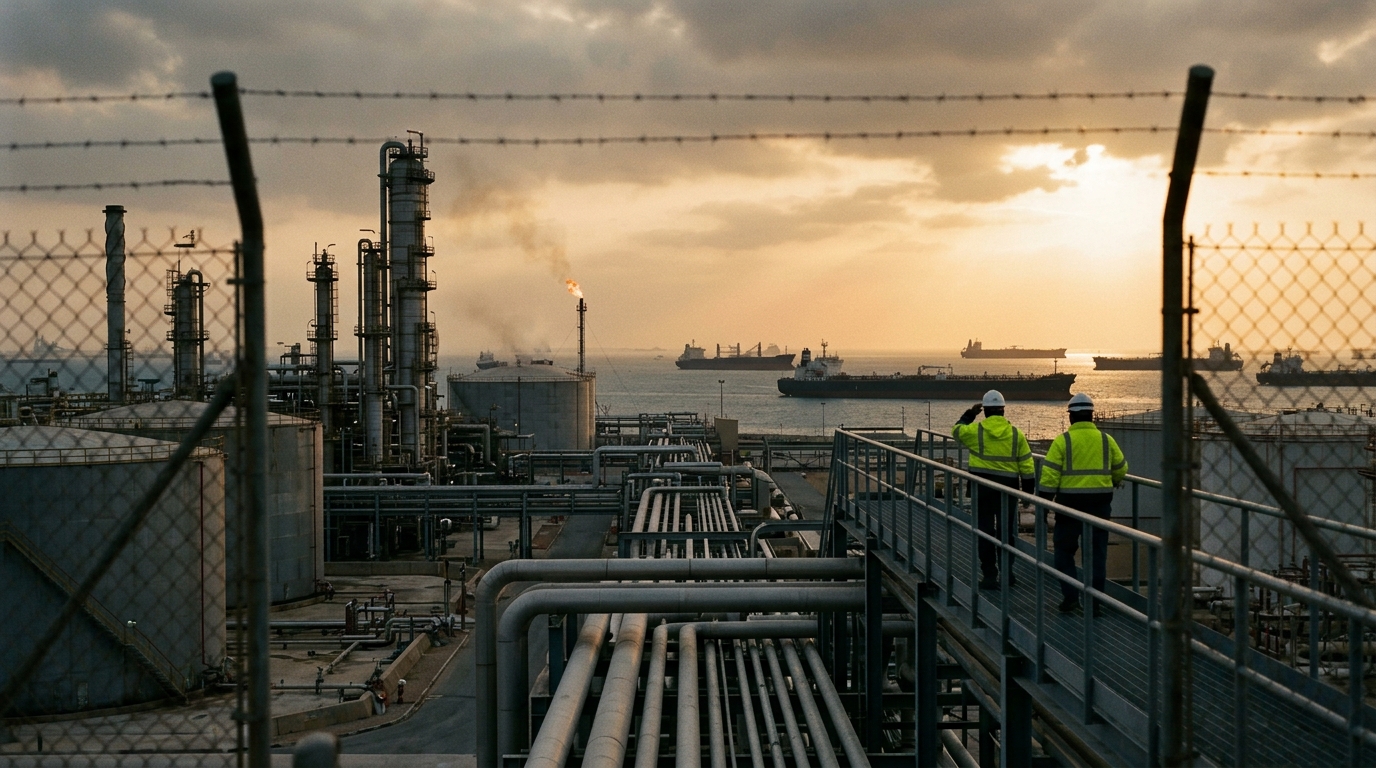
The doctrine of brinkmanship—that delicate, lethal dance of pushing an adversary to the precipice without allowing them to fall—has decisively collapsed. As smoke plumes rise over the Persian Gulf and global crude oil prices surge to 125 dollars a barrel, the international community is waking to the reality that the conflict in the Middle East has moved beyond a contained geopolitical struggle into an active, systemic threat to the global economy. The era of low-intensity proxy engagement is over the world is now witnessing a direct, high-stakes military confrontation that shows no sign of abating.
For global citizens, the immediate stakes are financial and existential. The conflict, now in its second week, has already incurred massive expenditures and inflicted profound human suffering. For developing economies, including Kenya, the ramifications are not distant concerns they are immediate threats to national budgets, local food prices, and the stability of the shilling. As energy markets react to the systematic targeting of critical infrastructure, the cascading effects on global supply chains promise to be more disruptive than any crisis seen since the 1973 oil embargo.
The Astronomical Cost of Open Warfare
The financial hemorrhaging caused by the current military engagement is staggering. The United States, currently providing the primary military counterweight in the region, has reported direct war expenditures of 12.7 billion dollars—approximately 1.65 trillion Kenyan Shillings—within the first six days of hostilities alone. The Pentagon is now seeking emergency funding authorizations totaling 200 billion dollars (roughly 26 trillion Kenyan Shillings) to sustain operations, a figure that underscores the scale of the commitment required to maintain regional security architectures.
The impact, however, is not merely fiscal it is structural. The targeting of energy infrastructure has created a vacuum that the market is currently incapable of filling. Key facilities, such as the Ras Laffan liquefied natural gas plant in Qatar, face prolonged closures that experts estimate will cost 20 billion dollars annually. The loss of such capacity in an already supply-constrained environment ensures that energy prices will remain volatile and elevated for the foreseeable future. Data regarding the immediate physical impact of the conflict provides a grim snapshot of the carnage:
Financial Burn Rate: United States military expenditure reached 12.7 billion dollars in the first six days, with a further 200 billion dollars requested.Energy Shock: Global crude oil prices have surged to 125 dollars per barrel, a historic high that threatens to stall post-pandemic economic recovery.Critical Infrastructure Loss: The forced closure of the Ras Laffan plant in Qatar represents an estimated loss of 20 billion dollars annually in production value.Human Toll: Official reports indicate more than 3,000 fatalities and 18,000 civilian injuries within Iran, marking a humanitarian crisis of significant proportions.The Kenyan and East African Perspective
For a reader in Nairobi, the conflict in the Gulf is not a foreign affair it is a direct domestic issue. Kenya remains heavily reliant on imported refined petroleum products, and global price shocks transmit directly to the pump. A barrel of oil priced at 125 dollars pushes the cost of logistics, manufacturing, and transportation to unsustainable levels. This creates an inflationary environment where the price of essential commodities, from maize flour to electricity, rises in tandem with fuel costs.
Economists at the Central Bank of Kenya warn that prolonged conflict in the Middle East risks exacerbating the current account deficit as the cost of imports swells. Furthermore, the volatility in the forex markets often leads to a weakening of the Kenyan Shilling against the dollar as the demand for greenbacks to pay for energy imports spikes. This creates a feedback loop: energy becomes more expensive, the currency weakens, and the cost of living for the average Kenyan household spirals, creating significant socioeconomic tension.
Political Fractures and Strategic Failure
The war has exposed deep, widening fissures within the Western alliance and inside the White House. United States President Donald Trump is reportedly incensed by the lack of strategic alignment among his allies, particularly in Europe. Leaders such as Italian Prime Minister Giorgia Meloni have already articulated a defensive posture, citing fears of economic recession and the potential for a massive influx of refugees from a destabilized Iran. This divergence is not merely diplomatic it is fundamental. Europe is being asked to participate in a high-stakes military escalation on which it was not consulted and whose negative consequences it explicitly predicted.
Domestically, the US administration faces a crisis of coherence. The Director of National Intelligence, Tulsi Gabbard, has faced intense scrutiny for testimony suggesting that Iran was not actively rebuilding its uranium enrichment facilities—a stance that directly contradicts the hawkish narrative of the military establishment. Meanwhile, the silence of Vice President JD Vance has created a political vacuum, leaving the administration’s narrative vulnerable to attack from both the populist right and the institutional establishment. The criticism from figures like Tino Chrupalla, co-leader of Germany’s Alternative für Deutschland, who lamented that the President has transitioned from a figurehead of peace to an architect of war, highlights the fragile nature of the current coalition.
The Asymmetric War of Attrition
The Iranian leadership has adopted a strategy of total escalation, betting that their willingness to absorb damage is a greater asset than the superior military hardware of their adversaries. By threatening to strike desalination plants, which serve as the lifelines for Gulf ecosystems, Tehran is leveraging the fear of environmental and humanitarian catastrophe. This asymmetric advantage is the central pillar of their current defense strategy. They have signaled that the current phase is merely the beginning, warning that additional, currently dormant playing cards remain to be deployed.
This is a conflict that has moved beyond the chessboard of traditional diplomacy. When a state acts with the perception of having nothing left to lose, the conventional tools of deterrence—sanctions, diplomatic isolation, and military posturing—become largely ineffective. As the world watches the Strait of Hormuz, where the prospect of international naval engagement creates a fraught environment for global trade, one question persists. Is this a manageable regional flare-up, or the opening act of a protracted, devastating war that will redefine the global economic order?