
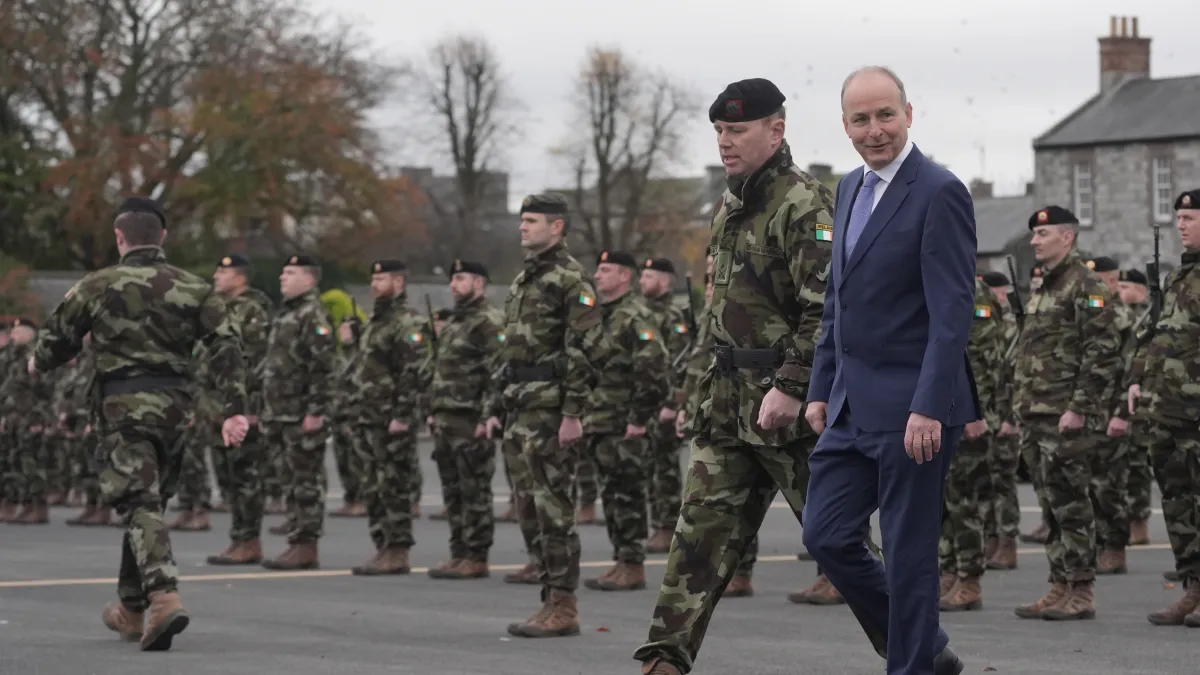
Irish state agencies will be permitted to invest in military-linked companies without prior government approval under proposals due before cabinet this week.
The significant policy shift aims to cut red tape for agencies seeking to invest in firms operating in areas such as drone technology, cybersecurity and telecommunications.
Ireland and the European Union are seeking to accelerate defence capability in response to geopolitical tensions. Ministers believe reducing administrative barriers will enable Irish companies involved in defence and dual-use technologies, including artificial intelligence and space systems, to compete for EU contracts tied to plans for a so-called “drone wall” designed to strengthen the bloc’s external security.
Ireland newsletter
Our best in-depth reads, exclusive features, news and a note from our editors in Ireland.
Sign up with one click
It is also expected to improve access for Irish firms to the €409 billion European Competitiveness Fund, scheduled to come on stream in 2028.
Peter Burke, the minister for enterprise, will bring a memo to cabinet on Tuesday proposing the removal of a long-standing requirement that IDA Ireland and Enterprise Ireland obtain government approval before supporting or promoting companies engaged in activities of a primarily military nature.
The change will involve deleting section 8 (5) of the Science and Technology Act 1987, which states that the agencies “shall not engage in or promote any activity of a primarily military relevance without the prior approval of the government”.
The proposal is likely to face criticism from the opposition, but senior government sources described the provision as “an outdated constraint” that no longer reflected the modern economic and technological environment, where defence and civilian applications increasingly overlap.
They argue that sectors such as cybersecurity, artificial intelligence, advanced materials and space technology are inherently dual-use, and that Irish companies have developed significant expertise in these areas over recent decades.
According to sources, removing the restriction would better position Irish industry to benefit from emerging EU innovation and industrial programmes, ensuring that SMEs, researchers and the wider technology sector do not miss out on big funding opportunities.
“This course of action sets us up to access new EU programmes so Irish firms can fully participate in initiatives like the European Competitiveness Fund,” one source said.
Officials have stressed that the proposed changes will not alter Ireland’s defence policy, but are aimed at enabling businesses to operate more effectively in a rapidly expanding global market.
The official said existing safeguards, including export controls, defence procurement rules and project appraisal requirements, will remain in place.
The amendment forms part of a revised Industrial Development (Miscellaneous Provisions) Bill, which is designed to modernise the legislative framework governing the state’s enterprise agencies and equip them to attract investment, support job creation and reduce unnecessary bureaucracy.
A senior government source told The Sunday Times: “Governments across the EU have committed to increasing spending on defence significantly, including the Irish government, so there will be opportunities for Irish SMEs to be involved in this as a result of the measures that Minister Burke will ask ministers to approve on Tuesday.
“The change allows businesses to function in a growing sector of the global economy, ensuring Irish businesses and workers can benefit from this growth.”
Meanwhile, People Before Profit/Solidarity focused much of its annual conference in Dublin on Saturday on the importance of protecting Irish neutrality and keeping the triple lock — the mechanism requiring cabinet, Dail and UN security council approval for deploying more than 12 Defence Forces personnel overseas. The party has frequently raised concerns over what it sees as the government’s continued moves to erode Irish neutrality, edging Ireland closer to military alliances with the US and Europe.
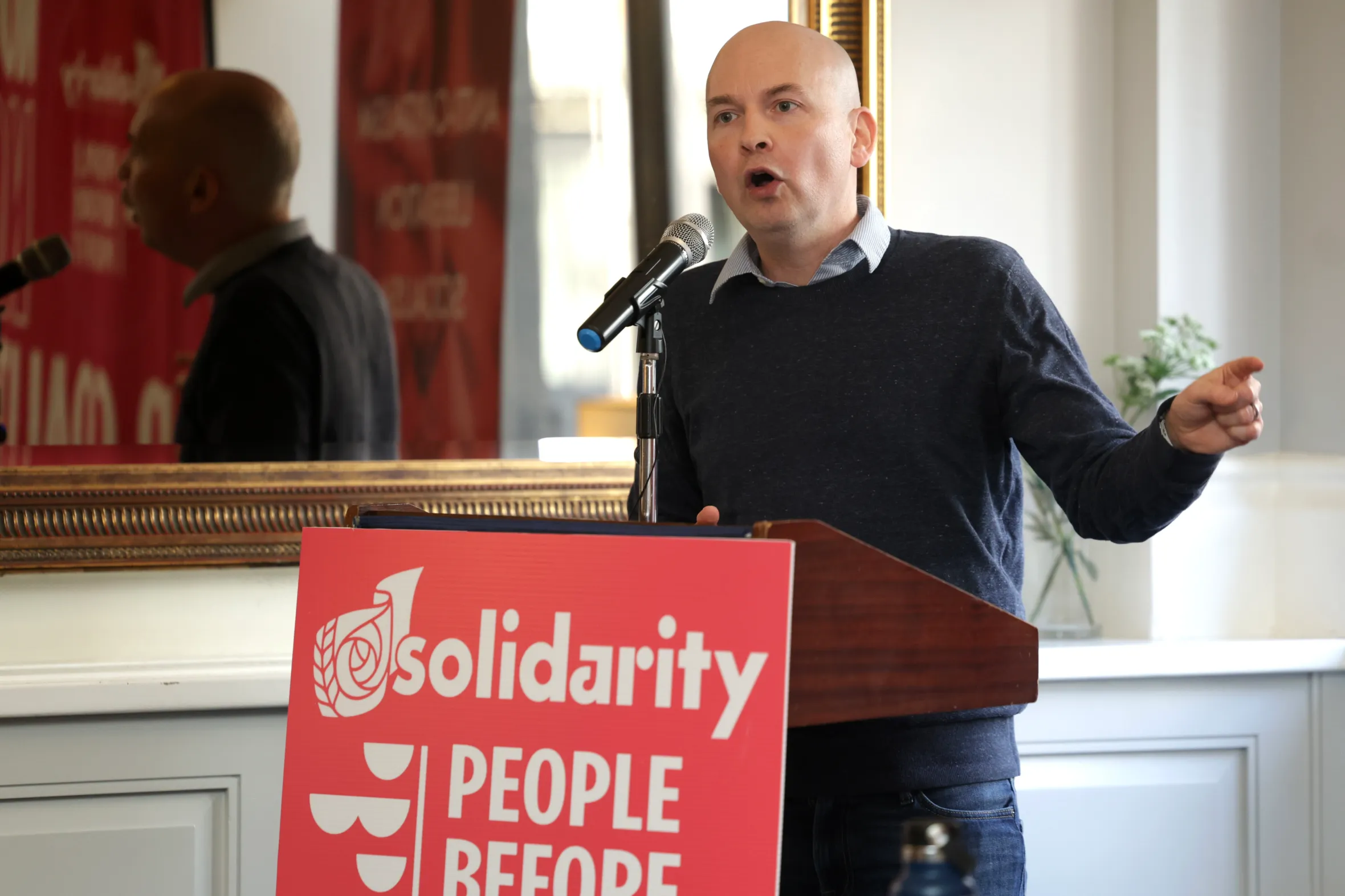 Paul Murphy, the People Before Profit/Solidarity TDLeah Farrell/RollingNews.ie
It is expected to protest strongly moves in the coming months to reform the triple lock — “in the Dail and in the streets”, according to Paul Murphy, the party’s Dublin South-West TD.
Richard Boyd Barrett told his party’s representatives and members there was significant momentum and appetite for a united left government to offer a real alternative to Fine Gael and Fianna Fail.