
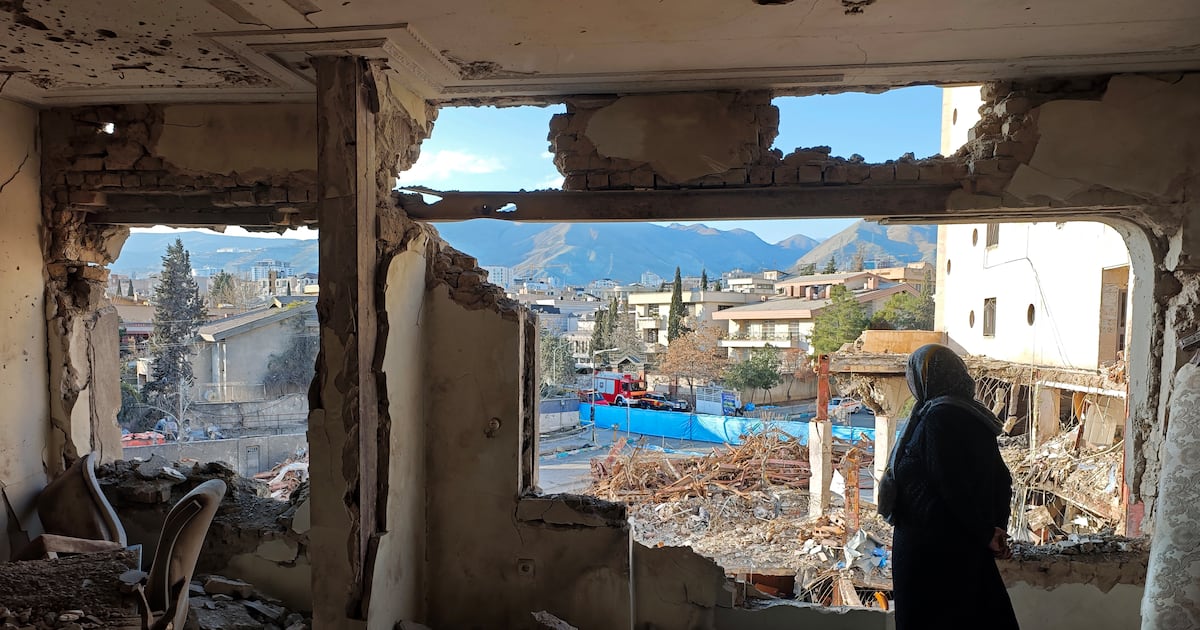
The US military said it has been able to degrade Iran’s ability to target ships moving through the Strait of Hormuz as president Donald Trump floated the idea of “winding down” military efforts in the Persian Gulf.
Trump’s comments came shortly after he ruled out a ceasefire and kept the door open to deploying ground troops, highlighting how the president continues to send wildly divergent signals about his objectives and plans for the US and Israeli war on Iran. The conflict, entering its fourth week, has sent energy prices soaring, prompting the US Treasury to take the extraordinary step of allowing the sale of Iranian oil and petrochemical products that had already been loaded on to tankers.
“We are getting very close to meeting our objectives as we consider winding down our great Military efforts in the Middle East,” Trump said in a social media post.
But Israeli defence minister Israel Katz said on Saturday that the joint campaign would intensify significantly, a day after Tehran launched ballistic missiles at the joint US-UK military base in Diego Garcia – nearly 2,500 miles (4,000km) away from Iran. The base suffered no damage, according to a person familiar with the matter speaking on condition of anonymity, but the attack demonstrated a capability that goes beyond what Iran was known to have possessed.
The US Central Command, meanwhile, announced that earlier this week it had bombed Iranian facilities that menaced commercial shipping in the Strait of Hormuz, a chokepoint for about a fifth of global oil and liquefied natural gas. Centcom commander Admiral Brad Cooper said in a video posted on X that the US struck Iran’s underground facilities and anti-ship missiles along with intelligence support and radar.
The International Atomic Energy Agency (IAEA) said on Saturday that Tehran had informed it that the Natanz nuclear site had been attacked. The IAEA said in a statement on X there were no reports of an increase in off-site radiation levels at the site, which is one of Iran’s key enrichment facilities and was bombed during Israel’s 12-day war with Iran last June and attacked during the first week of the current conflict.
The war also continued to affect Gulf neighbours, including the United Arab Emirates, which said on X that Iran had fired eight drones and three missiles at the country.
It’s unclear how Iran would respond to any unilateral decision by the US to pause strikes after recent attacks that targeted the country’s energy infrastructure and killed more high-profile officials, including security chief Ali Larijani.
Despite weeks of US-Israeli bombardment, the regime isn’t close to falling, and is instead coalescing around the remaining hardliners, according to western intelligence assessments.
Iranian officials have become reluctant to even discuss reopening the Strait of Hormuz amid the intense US-Israeli bombing campaign, which continued overnight. The Israeli army said on Saturday morning it was striking targets in Tehran and had detected missiles launched from Iran, which continued to launch retaliatory strikes at Gulf Arab neighbours.
Trump has been pressuring allies to help the US secure the strait militarily but indicated on Friday that he will leave that effort to other nations.
“The Hormuz Strait will have to be guarded and policed, as necessary, by other Nations who use it – The United States does not!” Trump said. “If asked, we will help these Countries in their Hormuz efforts, but it shouldn’t be necessary once Iran’s threat is eradicated. Importantly, it will be an easy Military Operation for them.”
In an effort to bring down oil prices, the US Treasury on Friday issued a general licence for Iranian energy that’s already on vessels, authorised through to April 19th. That follows similar moves for Russian oil on the water. For now, the vast majority of Iran’s oil is bought by Chinese customers.
Iranian oil ministry spokesman Saman Ghodousi said on X that the nation has no floating crude, nor a surplus that’s available for international markets.
Trump’s comments capped a tumultuous Friday in financial markets.
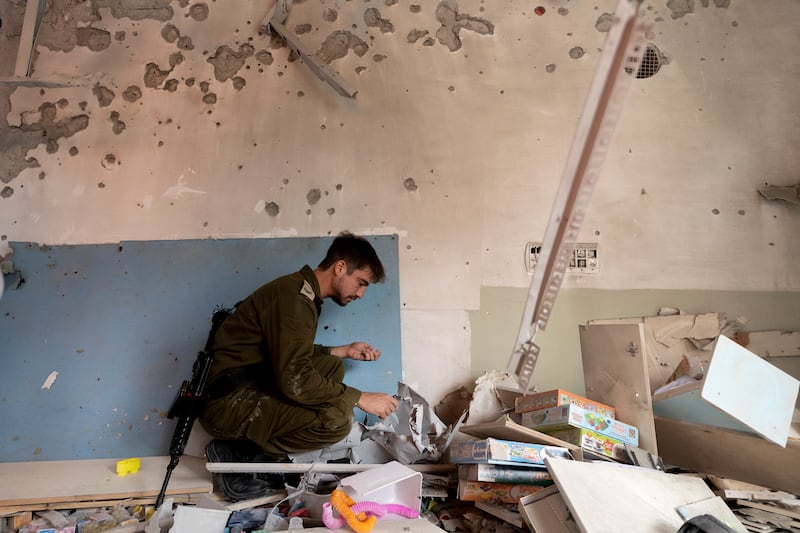 An Israeli emergency responder inspects a kindergarten hit by an Iranian missile on Saturday in Rishon LeZion, Israel. Photograph: Amir Levy/Getty Images
Oil prices surged again Friday with global benchmark Brent closing above $112 a barrel, the highest since mid-2022. Prices eased to trade near $108 a barrel in thin post-settlement trading on Trump’s comments about possibly winding down the conflict.
Adding to the market turmoil was the administration’s consideration of a ground operation. Trump was evasive when asked by reporters about his plans for Kharg Island, Iran’s major oil export hub. US officials have said the White House is ordering hundreds of Marines to be deployed to the Middle East as it weighs a plan to seize the outpost.
Any move to use ground troops to seize control of Iran’s energy facilities would pose risks for Trump, including by putting American forces at greater danger than they’ve already been exposed to in the conflict and adding to the cost and scope of the campaign.
Iran said that an attack on Kharg Island would provoke an “unprecedented” response that could include retaliation in the Red Sea and Bab al-Mandab Strait, the Tasnim news agency reported, citing an anonymous military source.
The Pentagon has asked for an additional $200 billion from Congress to pay for the war, sending another mixed signal on how long the administration expects the conflict to last.
More than 2,000 people have been killed in Iran since the US and Israel attacked on February 28th, while American voters appear increasingly concerned at signs the war could expand.
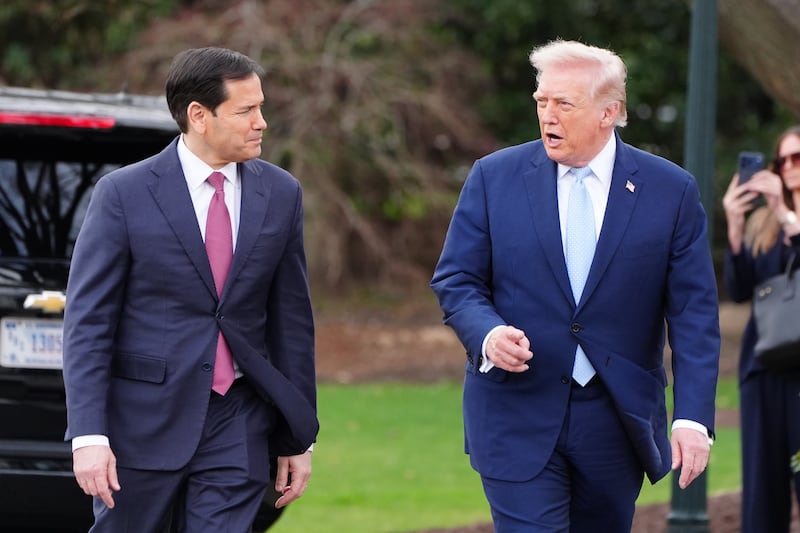 US president Donald Trump walks with US Secretary of State Marco Rubio on Saturday. Photograph: Alex Brandon/AP
Energy price shocks are fuelling inflation, hitting consumers and businesses hard – a major political liability for Trump as he seeks to justify the war to the US public before November elections in which he could lose control of Congress.
Trump had also accused Nato allies of cowardice over their reluctance to help open the strait. Some allies have said they will consider it, but most say they are reluctant to join a war that Trump started without consulting them.
Iranian media said U.S.-Israeli forces had attacked the Shahid Ahmadi-Roshan Natanz enrichment complex on Saturday morning. Technical experts found no radioactive leaks had occurred and nearby residents were not at risk. Israel said it was unaware of such a strike while the head of the International Atomic Energy Agency (IAEA) said it was investigating.
Iranian media later reported strikes on a passenger terminal in the southern port of Bushehr and an empty passenger ship at nearby Kharg Island. The island, where Iran loads nearly all its oil exports, is seen as a potential target if Washington decides to hit Iranian energy or to use ground troops to seize it.
Iran said it fired drones at US bases in the UAE and Kuwait used to stage attacks on Iranian islands in the Gulf.
Israel also attacked Beirut, saying it was targeting the Iran-backed Lebanese Hizbullah militia, part of the deadliest spillover from the war on Iran. Hizbullah fired on Israel in support of Tehran on March 2nd.
Defence minister Israel Katz said Israel was “determined to continue leading the attack against the Iranian terrorist regime, to behead its commanders and to thwart its strategic capabilities until any security threats to Israel and US interests in the region are removed”.
Israel also said it had attacked Tehran, Karaj, west of the capital, and the central city of Isfahan. Three members of a family were killed in a strike on a residential building in the city of Ramsar, Iranian media reported.
Air raid sirens in Israel warned of incoming missiles from early morning, sending millions to shelters as the blasts of interceptions rang out from above. There were no immediate reports of casualties.
Natural gas prices in Europe surged as much as 35 per cent this week after Israel hit Iran’s biggest gas field and Iran responded by attacking neighbours’ energy infrastructure. The European Union urged members to lower gas-storage targets and start refilling reserves gradually to curb demand, the Financial Times reported on Saturday.
The Strait of Hormuz, conduit for around a fifth of global oil and liquefied natural gas supplies, has been effectively closed to most shipping.
India, suffering a severe shortage of cooking gas, has been one of the few countries so far to persuade Iran to let any of its ships through the strait, with two tankers carrying liquefied petroleum gas leaving last week and two more in position on Friday. Prime minister Narendra Modi spoke to Iran’s president Masoud Pezeshkian on Saturday.
Iran’s foreign minister Abbas Araqchi told Kyodo news agency that Tehran was ready to let Japan-related vessels pass through the strait, which carries around 90 per cent of Japan’s oil imports. – Bloomberg/Reuters