
Airlines have published rules around devices NOT allowed in hold baggage and said they must be in hand luggage – strictly not to be used at take off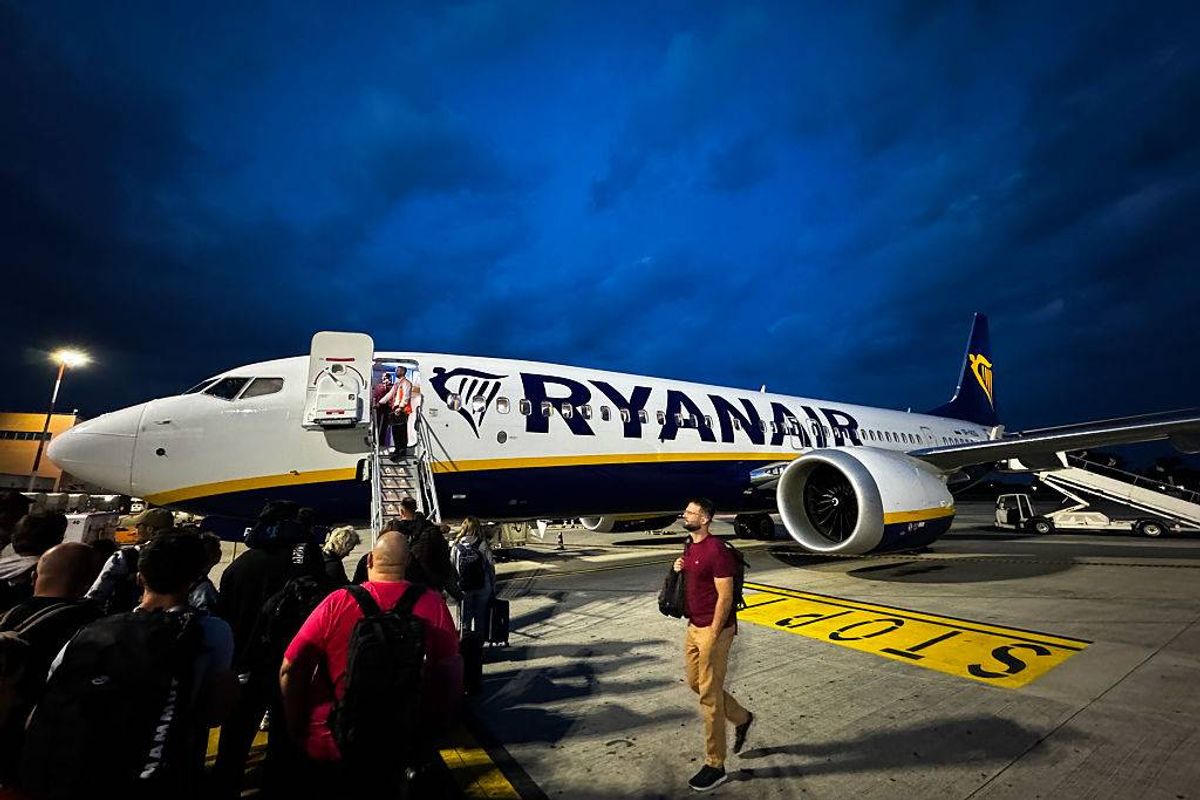
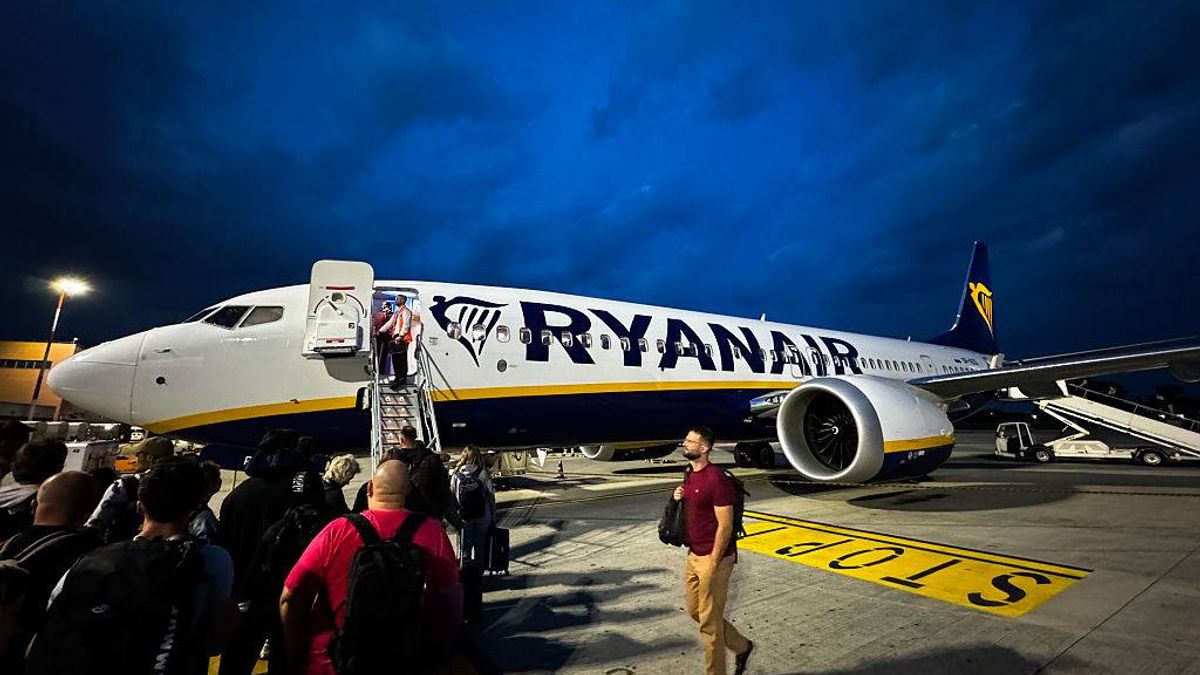
Ryanair plane is seen at the airport in Treviso, Italy on May 19, 2025(Image: Jakub Porzycki/NurPhoto via Getty Images)
Airlines have informed passengers they must not place common electrical devices in their hold luggage and issued regulations regarding their transport in cabin baggage.
Certain carriers have begun to completely prohibit power banks that people use to charge their phones and tablets due to safety concerns. Generally, power banks are permitted only in carry-on baggage, not checked luggage, amid concerns they could explode and ignite mid-flight.
Nevertheless, some of the major budget airlines operating in Ireland continue to permit power banks and batteries on board – albeit with restrictions.
Read More: Donald Trump mocks Catherine Connolly with awful insult
Read More: Social welfare payment change coming next month
Power banks are widely used because they offer essential, portable, and rapid-charging capability for smartphones and other gadgets whilst on the go, eliminating battery anxiety. They are reasonably priced, compact, and adaptable, enabling users to remain connected without requiring a wall socket, making them perfect for travel.
Vietnam Airlines, Vietjet Air and now Emirates have prohibited the batteries. Emirates states, like numerous airlines, the devices cannot be operated during flight.
Under certain circumstances, they will be permitted on aircraft provided they are switched off and stored beneath your seat – not in the overhead locker and their regulations commenced in October.
According to Irish Aviation Authority (IAA) safety specialists, lithium batteries are hazardous on aircraft primarily due to their potential to enter “thermal runaway,” a phenomenon where a battery undergoes a rapid, uncontrollable rise in temperature, resulting in fire, explosion, and the emission of toxic fumes.
Ryanair, Easyjet and TUI all have established guidelines regarding power banks, batteries and electronic devices.
Ryanair
Passengers on Ryanair are permitted to carry up to 15 personal electronic devices (including but not limited to: smartphones, tablets, laptops, cameras, handheld game consoles, headphones, power banks). Spare lithium batteries (including power banks) must be individually protected to prevent short circuits. This can be achieved by placing them in the original retail packaging or by insulating terminals by taping over exposed terminals or placing each battery in a separate plastic bag or protective pouch. These items must be carried in hand luggage only.
Additionally, passengers may carry up to 20 spare lithium batteries, provided they do not exceed 100Wh each.
Spare lithium batteries including power banks brought into the cabin should not be used to charge or power other portable electronic devices during taxi, take-off, or landing, and should not exceed 100Wh. They should not be placed in the cabin baggage loaded in the overhead storage locker. Instead, they should be placed in cabin baggage under the seat in front, or on your person. Devices or batteries over 100Wh are not permitted in the cabin or the hold with the exception of Electric Wheelchair batteries.
Spare batteries, including power banks, are not permitted in checked baggage.
For more information click here.
Easyjet
EasyJet strictly mandates that all lithium-ion batteries, spare batteries, and power banks must be transported in cabin hand luggage only, as they are forbidden in hold luggage due to fire hazards. Power banks under 100Wh (approximately 27,000mAh) are permitted without approval; items between 100-160Wh necessitate airline approval. Batteries contained within portable electronic devices should be carried as hand luggage.
If transported as checked baggage, precautions must be taken to prevent unintentional activation and to safeguard the devices from damage; moreover, the devices must be fully switched off (not in sleep or hibernation mode). easyJet imposes a limit of 15 portable electronic devices per passenger. Portable electronic devices containing non-spillable batteries must be 12 V or less and 100Wh or less. A maximum of 2 spare batteries may be transported.
If Smart Baggage is to be carried in the cabin, the customer must be capable of easily disconnecting and removing the lithium battery / power bank, although it can remain in the bag. Smart baggage must not be accepted for travel if the lithium battery / power bank cannot be readily disconnected and removed by the customer.
If you’re checking in smart luggage to be stowed in the hold, the lithium battery/power bank must be disconnected at Bag Drop and carried into the cabin. Any exposed terminals should be safeguarded against short circuiting. The lithium battery/power bank needs to be disconnected, so if you can’t remove it from your luggage, we won’t be able to accept the bag on board.
TUI
TUI regulations forbid the transportation of loose lithium batteries, power banks, or spare batteries in checked-in luggage. They must be carried in hand luggage only. Power banks generally must not exceed 100Wh, and terminals must be shielded from short circuits. Do not recharge devices on board. A dry AA(A) battery (type Alkaline, NiMh, NiC) for personal small items such as a pocket torch or a radio are permitted as long as they are inside the device or enclosed in robust packaging.
If devices are transported in hold baggage, precautions must be taken to protect the device from damage and to prevent unintentional activation; and the device must be completely switched off (not in sleep or hibernation mode). Loose batteries and powerbanks should be individually protected against short circuits by carrying them in their original packaging, with terminals taped or in a plastic bag in hand luggage.
Airline approval is always necessary for medical devices. For more information, see the Baggage – Medical baggage section. TUI fly mandates that all power banks must be transported in hand luggage, never in checked baggage. They must be packed to prevent short circuits (either in their original packaging or with taped terminals). Generally, the capacity is restricted to 100 Watt-hours (Wh) per battery, and power banks are not allowed to be used for charging devices or recharged onboard.
For all the latest breaking news headlines today, visit our website home page. Join Galway Beo’s top stories and breaking news service on WhatsApp. Click this link to receive breaking news and the latest headlines direct to your phone. We also treat our community members to special offers, promotions, and adverts from us and our partners. If you don’t like our community, you can check out any time you like. If you’re curious, you can read our Privacy Notice.