
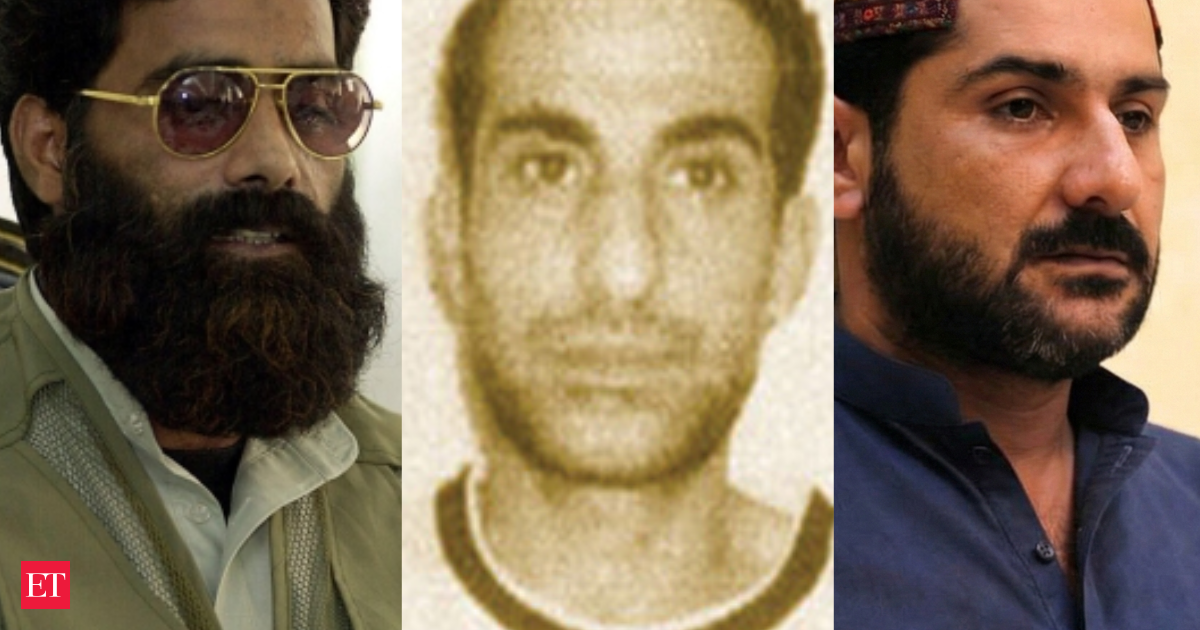
After the success of Dhurandhar, its sequel Dhurandhar: The Revenge has made a strong impact at the box office, drawing attention not just for its hero, Hamza Ali Mazari, played by Ranveer Singh, but also for its villains, many of whom are inspired by real-life figures and events.
While the film takes creative liberties, several characters are loosely based on controversial personalities linked to crime, terrorism and geopolitics in South Asia.
Here’s a closer look at the key villains and the real stories behind them.
Major Iqbal: The Shadowy ISI Operative
Played by Arjun Rampal, Major Iqbal is one of the central antagonists in the film. The character is reportedly inspired by a mix of real figures, most notably Ilyas Kashmiri, a former Pakistani Special Forces operative who later became a prominent jihadist leader.
Kashmiri was linked to multiple high-profile terror plots, including the 2008 Mumbai attacks, and was once described by global intelligence agencies as one of the most dangerous militants. He was killed in a US drone strike in 2011.
 Live Events
SP Chaudhary Aslam: The Controversial Enforcer
Sanjay Dutt’s character, SP Chaudhary Aslam, draws from the life of Chaudhry Aslam Khan, a well-known Pakistani police officer.
Known as an “encounter specialist”, Aslam led several operations against criminals and militant groups in Karachi, particularly during the Lyari operations. However, his career was also surrounded by controversy, including allegations of extrajudicial killings. He was killed in a suicide bombing in 2014, reportedly by Tehrik-i-Taliban Pakistan.Rehman Dakait: The Gangster with Political Links
Though appearing only briefly in the sequel, Akshaye Khanna’s character is based on Rehman Dakait, a notorious gangster from Karachi’s Lyari area.
Dakait was involved in organised crime, including extortion, kidnapping and drug trafficking. He also had political connections through the Peoples’ Aman Committee. He was killed in a police encounter in 2009.
Uzair Baloch: The Crime Lord of Lyari
Danish Pandor portrays Uzair Baloch, reportedly based on the real-life gang leader Uzair Jan Baloch.
Following the death of Rehman Dakait, Uzair Baloch assumed control of criminal operations in Karachi’s Lyari area, becoming a central figure in the region’s violent gang wars.
His rise in organised crime was reportedly driven by a mix of personal vendetta and power struggles, including allegations surrounding the brutal killing of rival gang leader Arshad Pappu. Claims of political connections further contributed to his growing notoriety.
‘Bade Sahab’: The Global Crime Kingpin
The character “Bade Sahab”, played by Danish Iqbal, is widely seen as inspired by Dawood Ibrahim, one of the world’s most wanted fugitives.
Dawood, the founder of the D-Company crime syndicate, has been linked to terrorism, organised crime, and the 1993 Mumbai bombings. He has been designated a global terrorist and remains a key figure in discussions around cross-border crime networks.
Javed Khanani: The Financial Link
Ankit Sagar’s role as Javed Khanani reflects the financial underbelly of global crime networks.
The character is reportedly inspired by Khanani & Kalia International, a foreign exchange firm that was shut down over allegations of large-scale money laundering.
The network was said to have facilitated illicit financial flows across multiple countries, highlighting the role of financial systems in sustaining organised crime.
Fiction Rooted in Reality
While Dhurandhar 2 is a work of fiction, many of its characters draw clear inspiration from real-world events, including gang wars in Karachi, terror networks, and complex financial crimes.
The influence of real-life figures extends beyond the villains to key protagonists as well.
For instance, R. Madhavan’s character Ajay Sanyal, the Director of the Intelligence Bureau, is widely seen as being inspired by Ajit Doval, India’s long-serving National Security Advisor. A veteran intelligence officer with over three decades of experience, Doval is known for his role in counter-terrorism operations and high-stakes covert missions, shaping India’s modern security strategy.
For now, all eyes are on how the film performs, it might be best to wait until its box office run concludes to see just how many records it ends up breaking.