
The High Court has dismissed a personal injuries action by a woman against an Irish university and a Dublin indoor climbing wall operator over injuries sustained by the woman after an 8½ft fall from an indoor climbing wall.
Judge Paul Coffey dismissed the action by Kathryn Yates against the Royal College of Surgeons in Ireland (RCSI) and Dublin Bouldering Gym Ltd over the fall in February 2018 at the Sandyford indoor climbing facility.
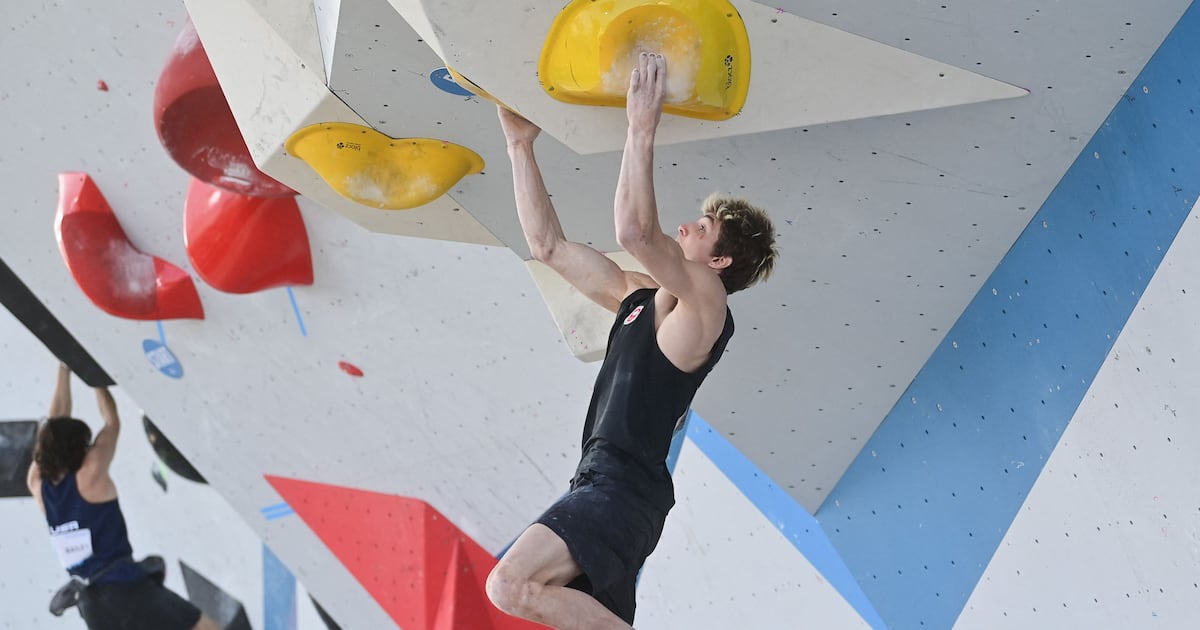
Bouldering involves climbing without ropes or harnesses and, in the fall on February 2nd 2018, Yates reached the top of the climb and, after touching the final hold with both hands as required, lost her grip and fell 2.6 metres (8.5ft) to the floor.
As a result of the fall, Yates sustained a displaced fracture of the left ankle and a sprain of the right ankle.
At the time, Yates – now 31 – was a student at the RSCI. She had joined the university’s climbing society during freshers’ week in September 2017 and first visited the bouldering facility with the society that month.
In her claim, Yates alleged she was permitted to participate in a hazardous activity without adequate risk assessment, warnings, training, supervision or safety measures on February 2nd, 2018, on her second visit to the facility.
Recalling the moment when she fell, Yates told the High Court: “I got to the top and touched with both hands the last [hold]. As I shifted my weight, I just lost my grip and I remember … landing on my feet and they just went.”
The fall to the floor took 0.75 seconds and as a result of the injuries sustained, Yates underwent open reduction and internal fixation of the left ankle, was hospitalised for five days, immobilised in plaster for six weeks, and used crutches for about seven weeks.
One screw was subsequently removed, while a metal plate remains in situ and while Yates made a good functional recovery, she reports continuing symptoms including stiffness, cold sensitivity around the metalwork, and reduced running tolerance.
In a written judgment, Coffey said he was satisfied that Yates’s fall and her injuries were the result of the materialisation of an inherent risk of bouldering, rather than the likely consequence of any failure on the part of Dublin Bouldering Gym Ltd to provide induction or supervision to her.
The judge stated that, for the same reason, even if the RCSI “was under an obligation to carry out an activity-specific risk assessment in respect of the bouldering activity (which I do not find), there is no evidence before me upon which I could find that any failure to do so caused or contributed to Ms Yates’s fall or to her injuries”.
He stated that the absence of medical evidence linking any alleged deficiency in landing technique to Yates’s specific ankle injuries is decisive.
“Whether a different landing pattern would probably have prevented or materially reduced the plaintiff’s specific injuries is a medical question, and no such evidence was advanced.”
While he said he had every sympathy for Yates, for the reasons outlined “I cannot find liability and the claim must be dismissed”.
The judge noted the indoor bouldering climbing facility has since closed.