
Two of the most privacy-obsessed VPNs are going head to head, and the gap between them is slimmer than ever. Mullvad and Proton have built loyal followings on transparency, open-source apps, and no-logs policies, but the latest round of testing and audits shows meaningful differences in how they protect users, how much they cost, and how far their networks reach.
Why These Two VPNs Matter in Today’s Privacy Landscape
Privacy threats are moving fast—governments expand data retention, adtech tracks across devices, and AI models vacuum public content at scale. Mullvad and Proton are among the few services pushing back with verifiable safeguards. Both publish transparency reports, ship open-source clients, and have undergone independent security audits. That combination puts them in a different league from one-click VPN brands built around marketing rather than engineering.
Jurisdiction and Logging Reality Check for Both VPNs
Mullvad is based in Sweden, part of the 14-Eyes intelligence-sharing alliance. Proton operates from Switzerland, a jurisdiction known for strong data protection laws and outside the 14-Eyes. On paper, Switzerland is the friendlier venue, but Mullvad’s operational model is the bigger story: it issues random account numbers, does not require an email address, and famously accepts cash by mail. In 2023, Swedish police searched Mullvad’s offices and reportedly left with no user data, a real-world stress test for its no-logs stance.
Proton’s policy is also strict—no activity logs and no identifying data needed to create a VPN account. Its apps and infrastructure have been audited by third-party firms in recent years, and the company maintains detailed transparency reports on law enforcement requests. The notable caveat often raised by critics stems from a Proton Mail case in which IP information was collected under Swiss court order; Proton emphasizes this was not VPN usage data and that Proton VPN remains a no-logs service.
Security Engineering and Independent Audits Compared
Both providers lean on modern protocols—WireGuard and OpenVPN—and both have moved to hybrid post-quantum cryptography for key exchange to future-proof against advances in computing. Mullvad’s clients and infrastructure have been examined multiple times by firms such as Cure53, with issues disclosed and fixed publicly. Proton’s apps and core systems have also been assessed by independent auditors, and the codebases are open for community scrutiny.
Mullvad offers multihop (called Bridge mode), robust kill switches, and first-rate DNS leak protection. Proton counters with Secure Core (routing traffic through hardened, Proton-controlled servers in privacy-friendly countries), its Stealth protocol for censorship evasion, and NetShield filtering to block trackers and malware domains. For everyday users, both are secure by design; for power users, the feature philosophies differ: Mullvad prioritizes minimalism and anonymity, Proton layers on defenses and convenience.
Network Size and Performance in Real-World Testing
Proton runs a large, globally distributed network, with thousands of servers spanning roughly 90+ countries. Mullvad is intentionally smaller—about 800 servers across roughly 40–50 countries—favoring carefully vetted, often bare-metal deployments and a public list of hosting partners. The scale advantage goes to Proton for travelers and streamers who need location variety.
Speed is where Mullvad consistently punches above its weight. In recent lab tests, Mullvad trimmed download speeds by roughly 10–12% and had minimal impact on uploads and latency, placing it among the fastest services tested. Proton was quick as well, but reductions closer to the 20–25% range were more common, with a larger hit to latency on distant hops. Real-world mileage varies based on your ISP, protocol, and nearest server, yet the pattern is clear: Mullvad is tuned for performance.
Streaming Access and Censorship Resistance Compared
Both services have improved streaming access, with consistent success across major libraries during testing windows. Proton’s broader footprint can help during peak congestion. For users in restrictive networks or behind DPI firewalls, Proton’s Stealth protocol provides an edge in reliability. Mullvad’s approach is more understated, avoiding marketing around specific platforms while quietly supporting obfuscation and multihop routes that work well in practice.
Pricing Models and Payment Options for Both Services
Mullvad remains the industry’s straight shooter: a flat 5 euros per month, no long-term lock-ins, no seasonal gimmicks, and no auto-renewals that require storing payment data. You can pay with cards, cryptocurrency, or cash mailed with your account number—something almost no competitor matches.
Proton’s Plus plan typically runs around $9.99 per month and supports 10 devices. The kicker is the free tier: unlimited data on selected servers, ideal for light users and a rare find among reputable VPNs. If you want a privacy bundle, Proton’s higher tiers add encrypted email, cloud storage, a password manager, and private docs—useful consolidation for those who prefer one vendor for multiple tools.
Apps and Everyday Experience Across Platforms
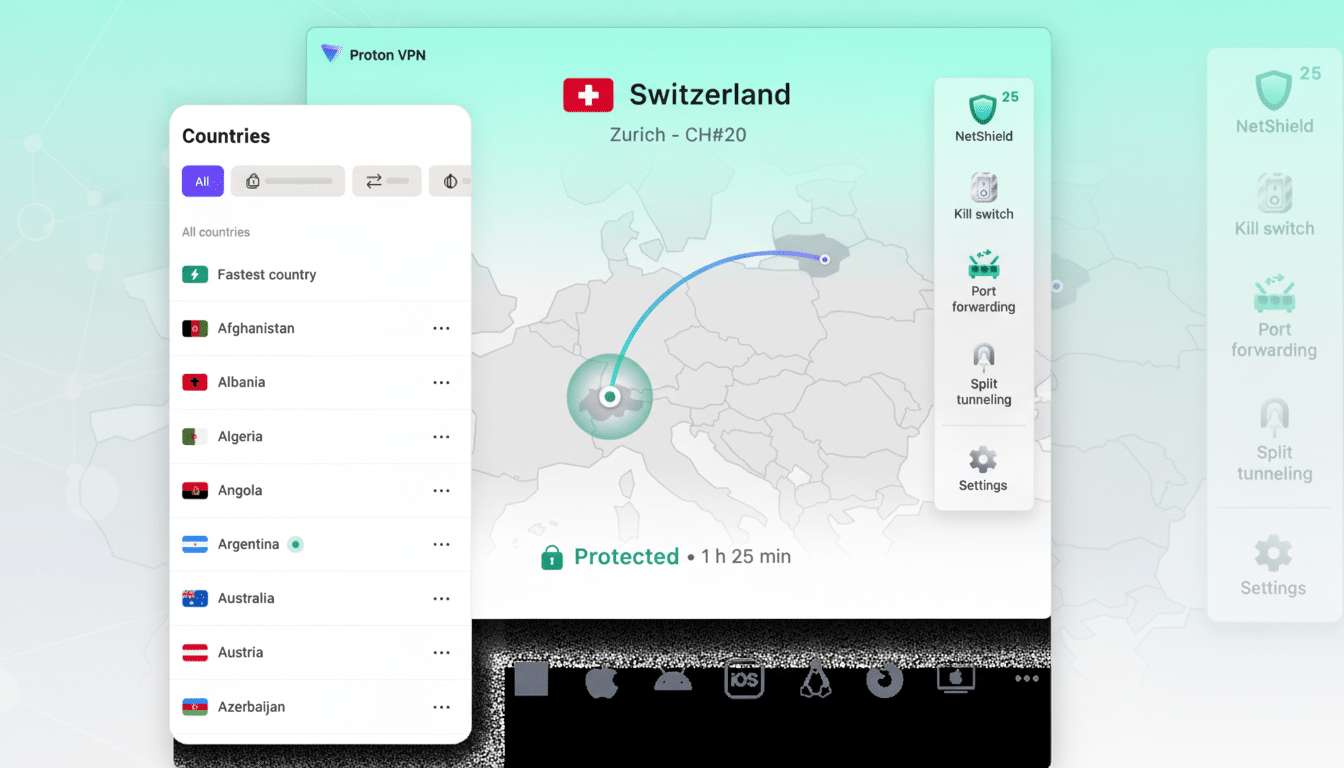
Mullvad’s apps are spartan, fast, and consistent across platforms. The design favors clarity over flash, and settings like split tunneling and system-level kill switches are easy to find. Proton’s apps skew more polished, with a prominent world map, deep settings menus, and helpful onboarding tips. Both are open-source and frequently updated; Proton’s UI may be friendlier for newcomers, while Mullvad feels engineered for people who know what they want and want it instantly.
The Bottom Line: Which VPN Suits Your Needs Best
If you prize maximum anonymity, predictable pricing, and raw speed, Mullvad is hard to beat. The company’s cash option, random account IDs, and demonstrated no-logs posture make it a favorite among security pros and journalists. If you want the broadest infrastructure, a capable free plan, advanced anti-censorship tools, and an expanding privacy suite under one roof, Proton edges ahead for overall value.
In this showdown, Proton wins by a nose on breadth and usability. Mullvad wins on anonymity-first design and performance. Either way, you’re choosing from the top tier of VPN privacy.