
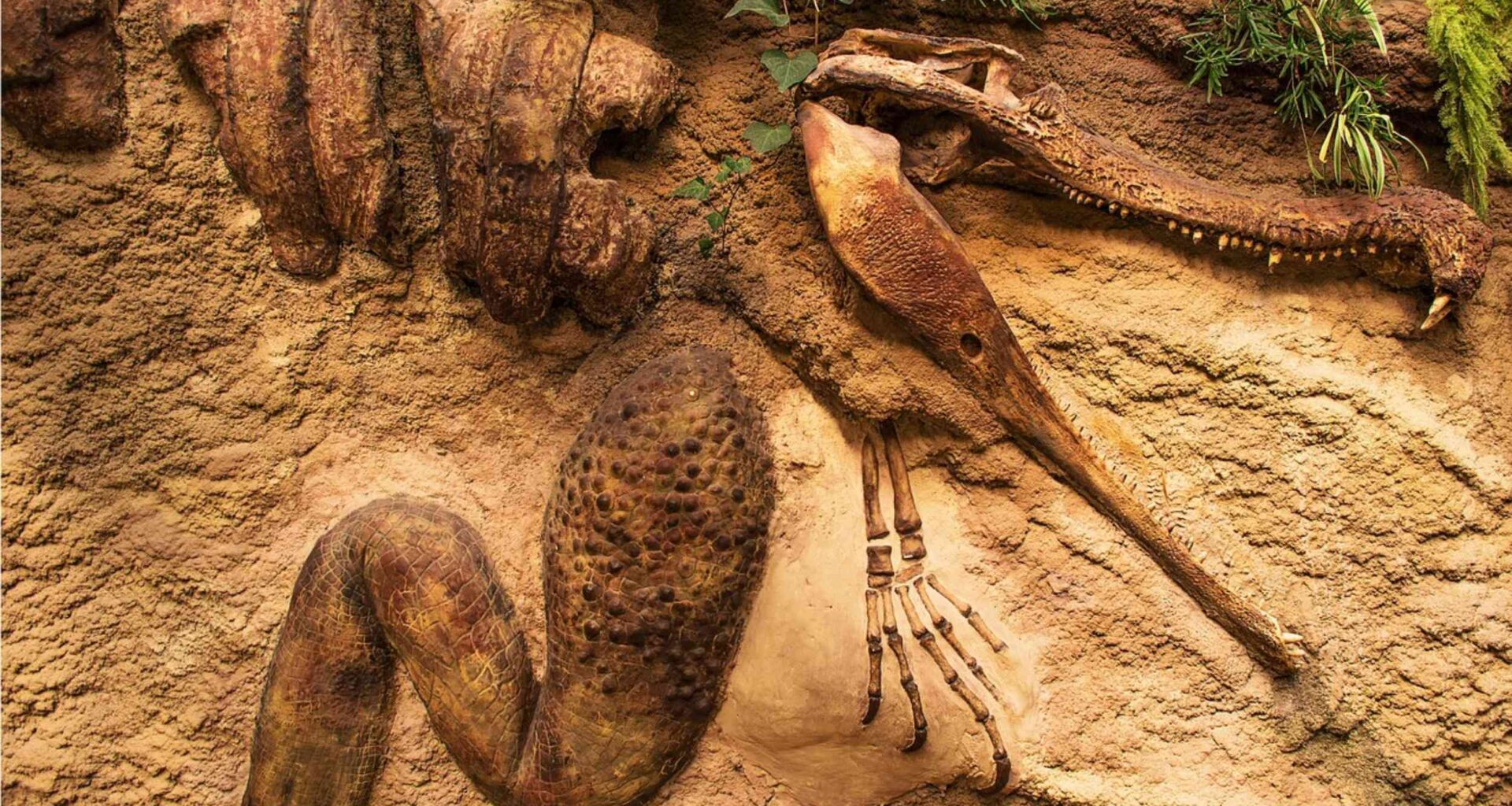
A new study has found that amino acids have survived inside fossil mammal teeth for 48 million years, extending the known lifespan of these molecules far beyond earlier limits.
That durability turns tooth enamel into a far deeper archive of ancient diets, species relationships, and ecosystems than scientists had previously confirmed.
Inside fossil tooth enamel

Inside 72 fossil teeth from horses, rhinos, and elephant relatives, the molecules persisted across samples spanning tens of thousands to tens of millions of years.
By analyzing those remains, Lucrezia Gatti at the Max Planck Institute for Chemistry (MPIC) documented how enamel shields a protected core of organic material.
Across that span of time, most losses occurred early, while a smaller fraction remained stable for millions of years within the same teeth.
That uneven survival points to a layered system of decay and protection, which sets up the need to explain how enamel preserves what other tissues lose.
Why enamel lasts
Tooth enamel lasts because it is almost entirely mineral, with only about one percent organic material left from tooth growth.
As crystals harden, some residues become intra-crystalline, trapped inside the mineral itself, where water and microbes have fewer paths in.
That sealed position also explains why East African enamel yielded proteins 18 million years old, despite tropical heat.
Those findings made enamel the obvious place to look for an even older molecular record.
Early fossil decay
Across all three mammal groups, amino acid levels dropped fast during the first 0.10 million years after burial.
Depending on the molecule, that early drop meant losing 55 percent to 96 percent of the amino acids originally present in modern enamel.
Once the more exposed material disappeared, the remaining pool changed far more slowly, which points to stronger protection deeper inside.
That two-step story matters because researchers can now separate rapid early decay from the long survival of the best-hidden molecules.
Age shapes decay patterns
Burial setting mattered less than age, even when teeth came from lakes, rivers, peat bogs, coal seams, and rock fissures.
Scientists call that burial backdrop a taphonomic setting, the place and conditions after death, and it was usually not decisive.
Only lake deposits showed more overlap between young and old teeth, hinting that some local chemistry can blur the pattern.
Even so, the overall result held firm: old teeth usually carried the stronger signal of loss, whatever the surrounding sediments.
Which molecules fade
Not all amino acids aged the same way, and some vanished much faster than others.
Aspartic and glutamic acid groups fell especially hard because their structures break down more easily during long chemical wear.
Serine also declined quickly, while leucine stayed relatively steady but told researchers less about a tooth’s age.
Those different fates mean future work must choose molecules carefully instead of treating the whole surviving mix as equal.
Horses held steadier
Horse relatives held a steadier pattern than rhinos and elephant kin, both in modern teeth and fossil ones.
Their starting levels varied less from tooth to tooth, so later losses looked cleaner and easier to track.
One striking case came from Messel in Germany, near Frankfurt, a former volcanic lake site known for exceptional fossil preservation, where 48-million-year-old horse-family enamel still resembled modern horses more than expected.
Messel is famous for exceptional fossil preservation, but the broader pattern did not depend on rare sites like that one.
Reading time from teeth
The team also tested whether amino acid patterns could estimate age, not just prove survival.
A computer model predicted sample age with moderate accuracy, showing that some molecules changed more consistently than others.
Certain amino acids also acted as reliable markers for estimating how old a tooth is because they changed in steady, predictable ways over time.
That opens a practical path for dating teeth when other clues are weak, although the signal still varies by animal group.
Beyond protein fragments
Earlier enamel nitrogen work had shown that tooth-bound nitrogen can track an animal’s place in a food web.
Because amino acids carry more specific chemical information, they could refine insights into diet and reveal seasonal changes.
Researchers call that targeted protein work paleoproteomics, the study of ancient proteins, and enamel may become its best scouting tissue.
A broad review had already shown that ancient protein studies work best when researchers can authenticate truly old molecules.
Limits and next steps
Even with this long survival, the study could not yet tell whether the molecules remain free or still sit inside protein fragments.
That distinction matters because intact fragments can reveal ancestry, while single amino acids may work better for diet chemistry.
Since MPIC’s method needed only about one milligram of cleaned enamel, museums could test rare teeth before using harsher analyses.
Future work will have to sort authentic residues from altered ones, then connect those molecules to species history and ecology.
Broader scientific impact
Fossil enamel now stands out as a durable source of biological detail that lasts far beyond earlier molecular limits.
If researchers can separate the surviving compounds cleanly, teeth may reveal meals, seasons, and kinship from eras where genetic material no longer survives.
The study is published in Communications Biology.
—–
Like what you read? Subscribe to our newsletter for engaging articles, exclusive content, and the latest updates.
Check us out on EarthSnap, a free app brought to you by Eric Ralls and Earth.com.
—–