
The Middle East energy wars are on the cusp of a dangerous escalation, with potentially catastrophic consequences.
Iran has responded to president Donald Trump’s 48-hour ultimatum to open the Strait of Hormuz to all shipping with a series of counter threats.
The Islamic Revolutionary Guard Corps (IRGC) said that should the US strike, the strategic waterway would not be reopened “until our destroyed power plants are rebuilt”. If energy facilities are targeted, companies with US shares will be “completely destroyed” and energy assets in countries that host American bases will be “lawful” targets for Iranian strikes, the IRGC said in a statement.
Iran’s parliament speaker Mohammad Baqer Qalibaf warned that critical infrastructure and energy facilities in the Middle East could be “irreversibly destroyed” if the US attacks Iranian power plants.
The comments came after Trump on Saturday night gave Tehran 48 hours to reopen the Strait of Hormuz or face the destruction of its energy infrastructure. He wrote on Truth Social that the US would “hit and obliterate” Iranian power plants – “starting with the biggest one first” – if Tehran did not fully reopen the strait within 48 hours, or just before midnight on Monday, according to the time of his post.
The crisis surrounding Iran’s chokehold on the Strait of Hormuz has created a global economic crisis, causing surging energy prices across the world.
On Sunday, day 23 of the war, the Israeli military said it targeted “sites for the production and storage of weapons, Iranian military bases, the headquarters of the Iranian intelligence ministry and the emergency headquarters centre of the internal security forces”. More than 1,500 people have been killed in Iran since the war began three weeks ago, state broadcaster IRIB reported on Saturday.
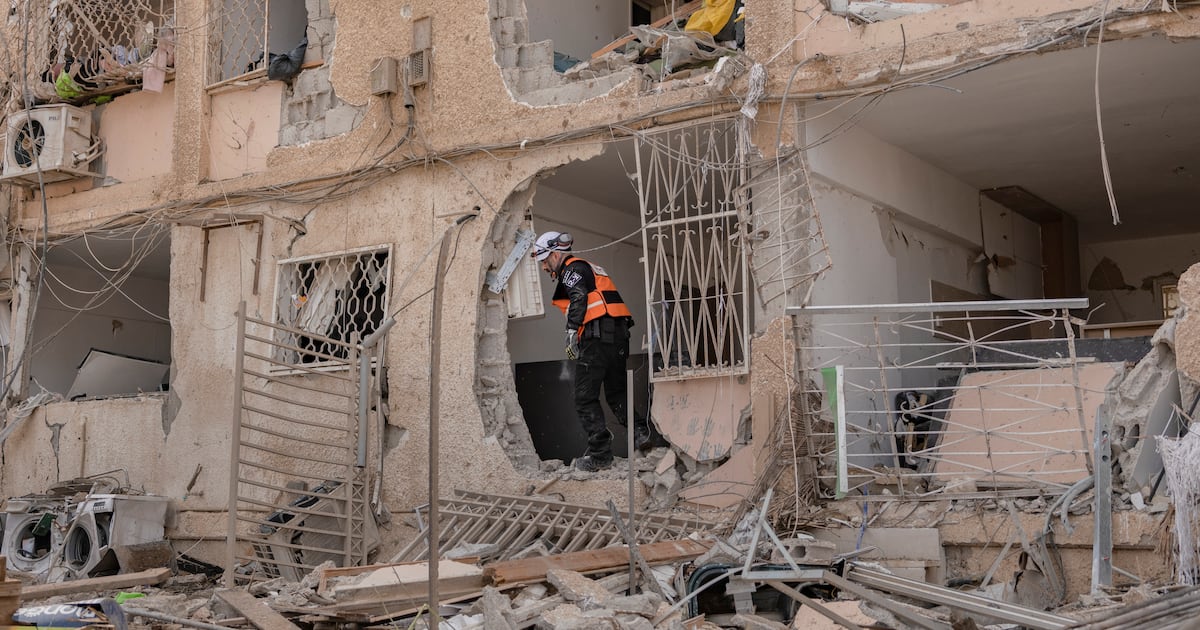
In Israel more than 200 people were injured, including 10 in a serious condition, when Iranian rockets hit the cities of Arad and Dimona in the south of the country on Saturday night. On Sunday cluster bomb missiles hit three sites in Tel Aviv and an Israeli on the northern border was killed in his car from rocket fire. At least 15 Israelis have been killed in the war.
The director general of the International Atomic Energy Agency, Rafael Grossi, said he hopes to “re-establish” nuclear talks between Iran and the US despite the escalating conflict.
In Lebanon a million people have already fled their homes, mainly from Shia areas, and entire communities are in ruins. More than a thousand people have been killed.
The Israeli ground operation in south Lebanon is designed to push militants from the Iranian-backed Hizbullah away from the Israeli border, removing the threat of anti-tank fire into Israeli communities in the Galilee and the possibility that militants will carry out cross-border incursions. However, it does not solve the problem of rocket fire, as Hizbullah fires most of its projectiles from deeper inside Lebanon, even though the Lebanese government banned all military activity from the group. The group is still firing 100-150 projectiles at Israel each day.
Defence minister Israel Katz said on Sunday that the IDF will accelerate the demolition of Lebanese homes in frontline villages along the border, similar to IDF actions in Gaza.
[ Israel’s strategic aims, rather than America’s, are shaping the war with IranOpens in new window ]
He said the IDF would destroy all bridges south of the Litani river “used for Hizbullah terrorist activity”, stressing that the army is continuing its ground offensive in south Lebanon “with full force” and will continue to facilitate the evacuation of Lebanese residents north of the Litani river.
Lebanese president Joseph Aoun warned that Israel’s attacks on bridges in the south of his country were a “prelude to a ground invasion”.