
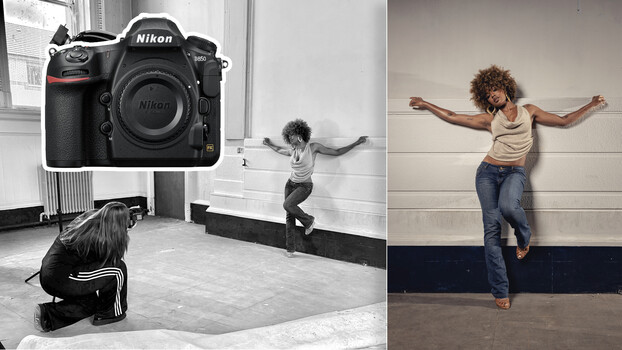
I’ve been asked more times than I can count when I’m finally going to move on from my DSLR. The assumption is always the same. People think that holding on is a technical decision, or a reluctance to keep up. But the truth is, it has very little to do with technology at all. Read on to find out why my Nikon D850 is still the camera that I reach for most today.
My Nikon D850 arrived in my life in 2018, and at the time it felt like the camera I had been waiting for all my life. It was the perfect fit for me, while being a significant leap forward from the Nikon D800 that had been my companion for many years before it. The camera felt reassuringly familiar, intuitive, and dependable. I didn’t feel like I was using new equipment because it felt like a continuation of my previous practice with a slight level-up.
The first DSLR that I owned was a Fujifilm FinePix S5 Pro. Released in 2006, with 12.34 megapixels and a Super CCD sensor and a maximum ISO of 3200 — although I dared not venture over 1200 due to noise. I usually paired this with Nikon lenses, thanks to its F lens mount, and a 4 GB Compact Flash card, which was plenty of space to store over 100 Raw files per shoot. I liked that limitation — more storage capacity than film, of course, but still limitations that made me conscious of what I was shooting as a learner. It was a great companion for many years.
DSLR cameras have been there through the key moments that shaped who I am as a photographer. From my first job assisting a wedding photographer, learning the ropes using strobes in the studio, through college and eventually into professional practice, the DSLR has been a constant presence. When I wrap my hand around the grip of my current camera, I’m also holding onto a long lineage of cameras that led me here. Like the bodies before it, the D850 became a partner, accompanying me on countless shoots, assignments, long days, and quiet moments of discovery and reflection. My DSLRs have almost exclusively documented the various stages of my daughter growing up through the years.
The images I’m most attached to were all made through an optical viewfinder. These are real moments, observed directly rather than translated from a screen. When I look through an optical viewfinder, I’m looking at the moment itself, not a digital interpretation of it. The light hitting my eye is the same light illuminating the scene. That makes me feel more grounded in the process of shooting. With an OVF, only after the shutter is pressed do those moments become digital. There’s something about the connection to the honesty in that process that still matters deeply to me, because most of the time, my work is about a collaboration or a narrative, not pixels or chasing perfection.
There’s also a particular comfort in the familiar weight and size of a DSLR. The sound and feel of the shutter mechanics, and that clunk as the mirror moves in and out of place. The muscle memory built up over years of consistent use becomes almost ritualistic, with layers of trust formed through repetition, mistakes, and success. The D850 is my collaborator, and one which I know I can depend on.
From the outside, it might seem obvious that moving to mirrorless is simply the next logical step. Technologically, it is. And I’m honest enough with myself to admit that my hesitation isn’t really about specs or performance. I’ve used mirrorless cameras extensively. I’ve borrowed various models, bought one for my daughter, tested an array of mirrorless bodies and lenses, and worked with them enough to know that the reasons I sometimes give myself — “I don’t like the EVF” or “the shorter battery life will annoy me” — are flimsy at best. Within a few shots, I adapt to the mirrorless way of working. I carry a spare battery. The supposed obstacles quickly dissolve.
The truth is, the resistance isn’t anything technical at all. It’s emotional. Transitioning away from DSLRs feels like closing a chapter of a book I don’t feel finished reading. The Nikon D850, and the other DSLRs before it, represent years of learning, growth, mistakes, breakthroughs, exhibitions, late nights, early mornings, and the slow forming of a visual identity. To set it aside feels strangely like setting aside a version of myself. There’s a quiet grief in that, even if what comes next might be exciting.
I know that progression is inevitable, and I am open to upgrading at some point in the near future. I previously discussed how I came close to upgrading during the pandemic, flirting with the idea of upgrading to a Nikon Z 9. Ultimately, due to supply issues after release, I didn’t make the leap and I upgraded my kitchen instead. At the time, it felt sensible, and still feels the same way now. My D850 was still doing everything I needed it to do, and doing it exceptionally well. Nothing about my work suddenly became less possible just because a new flagship camera existed. I don’t know what features will finally tempt me into being a full-time mirrorless camera user, whether there will be one single capability or whether the accumulation of existing reasons will eventually win out when I stop to think about upgrading again.
And that’s part of the reason I’m still holding on. Not because I’m resistant to change, or unaware of where photography is heading, but because my current tools still feel alive and still feel relevant to me. They are still very capable. More importantly, they still feel connected to the way I see and the way I produce my work.
I know that growth often requires discomfort. Most of the projects I’ve loved working on began with uncertainty, and many of my favorite images came from moments where I experimented, trusted the process, or asked “what if?” My work has evolved because I’ve evolved, and that evolution won’t stop when I’m no longer using a DSLR.
For now, holding on isn’t about refusing the future. It’s about honoring the path that brought me here, and enjoying it for a little while longer. The images I’ve made with these cameras aren’t going anywhere. The experiences they facilitated are already part of me. When the time comes to move on, I’ll carry those lessons forward, even when the camera changes.
Until then, I’m still holding on — and I am more than comfortable sharing with you that it is okay. Perhaps some of the readers are in a similar position; it would be great to hear your thoughts in the comments.