
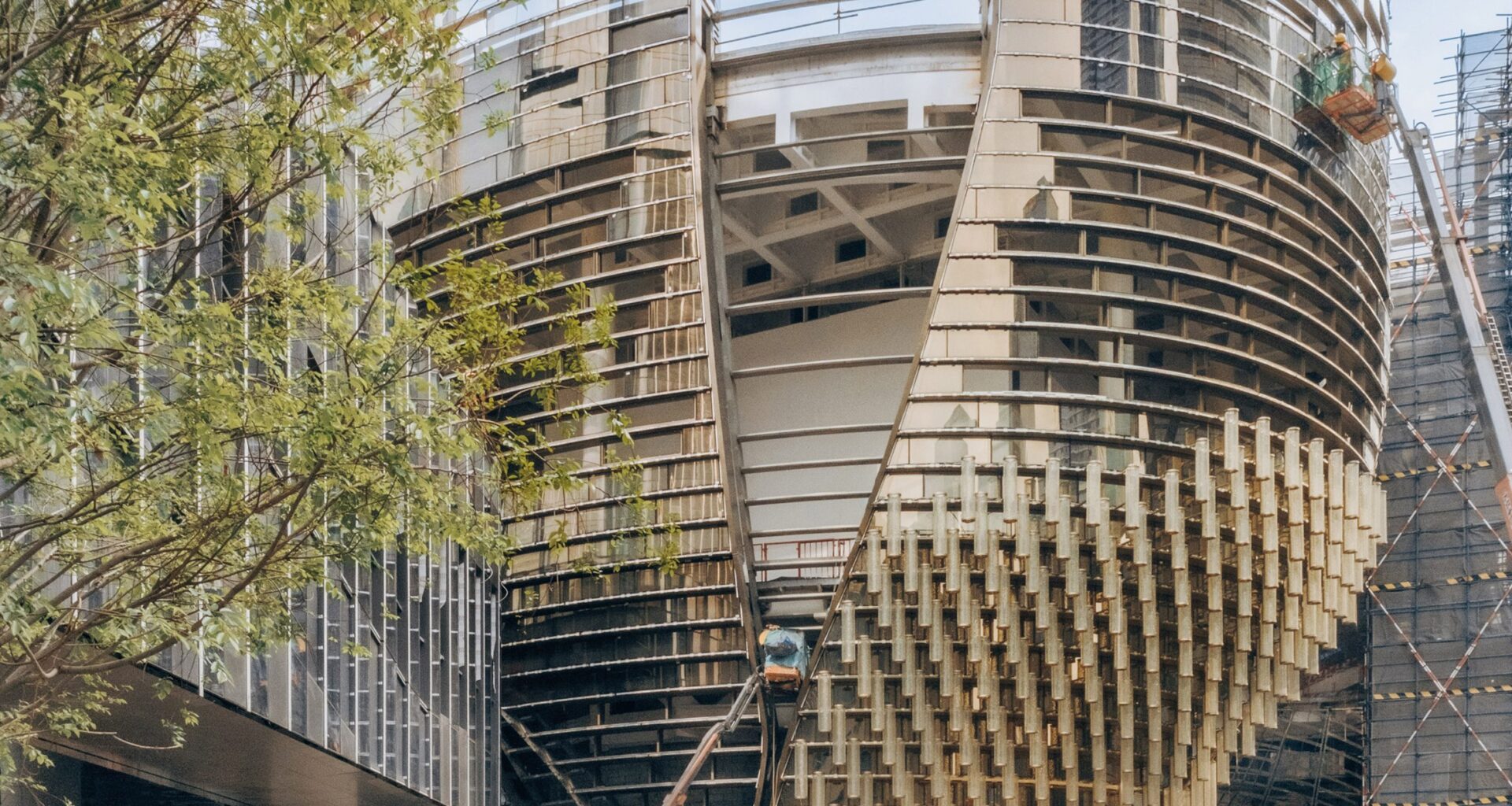
Architecture studio Büro Ole Scheeren has revealed photos and renders of the Róng Museum of Arts, which is currently under construction in Shenzhen, China.
Designed for Tenova Future – a private venture of Ma Huateng, the founder of technology company Tencent – the museum will focus on the visual culture of the 20th and 21st centuries.
It will be located alongside the Shenzhen Bay Culture Park by MAD, which will be topped by two pavilions designed to resemble stones and near a bullet-shaped skyscraper designed by KPF.
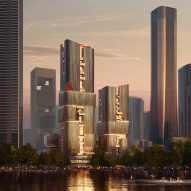
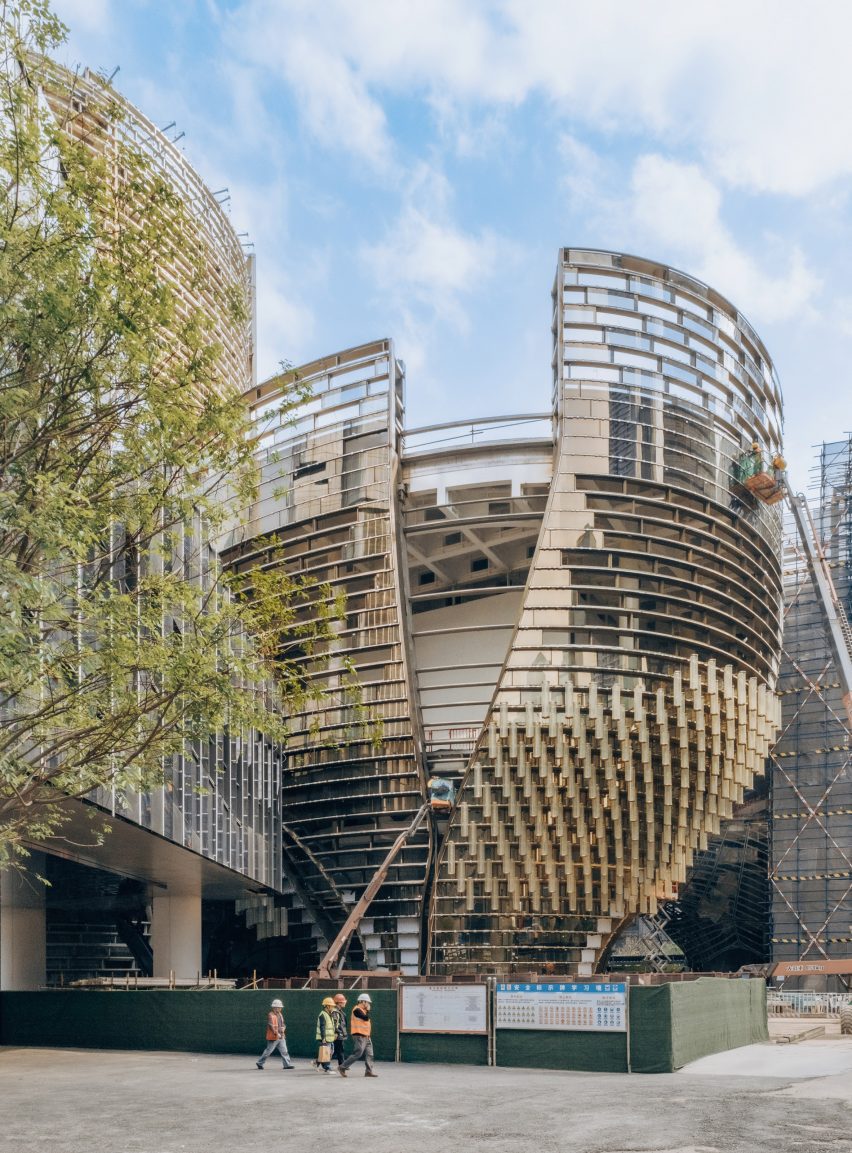 Above: the Róng Museum of Art by Ole Scheeren is under construction in Shenzhen. Top image: the building is set to open in 2027
“From the very beginning, we worked closely to define a museum and overall complex that is not only a showcase, but a symbiotic urban and ecological statement with big tech as a central cultural patron,” said Büro Ole Scheeren founder Ole Scheeren.
“Around the world, most tech environments are relentlessly self‑focused,” he continued.
“Here, the ambition is to chart a different path by investing in public space, cultural venues and education, and to use economic success to underwrite a deeper, more generous engagement with the city and wider society.”
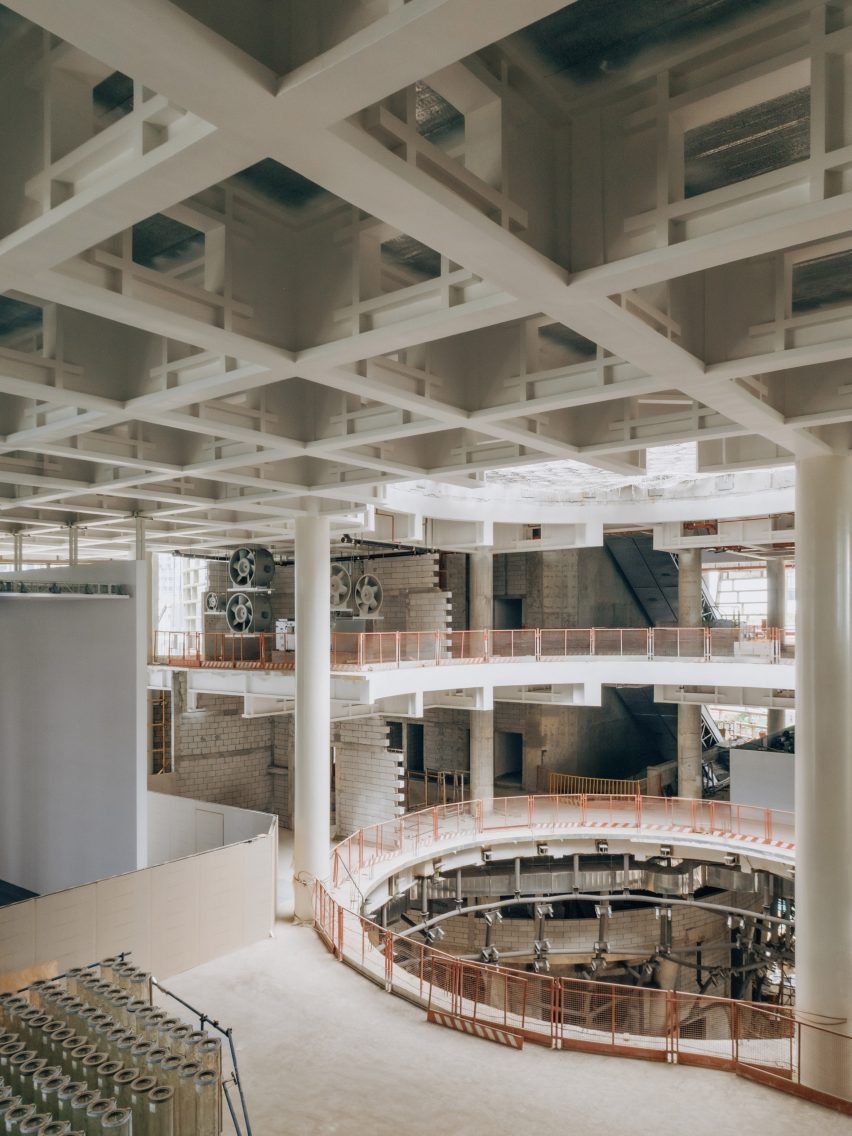 Much of the structure is complete
Set to be 53 metres high, the 4,500-square-metre cultural landmark comprises five blocks that surround a central, skylight plaza.
Each of the sculptural blocks has similar forms that expand in size as they rise and are interconnected to create a sinuous mass.
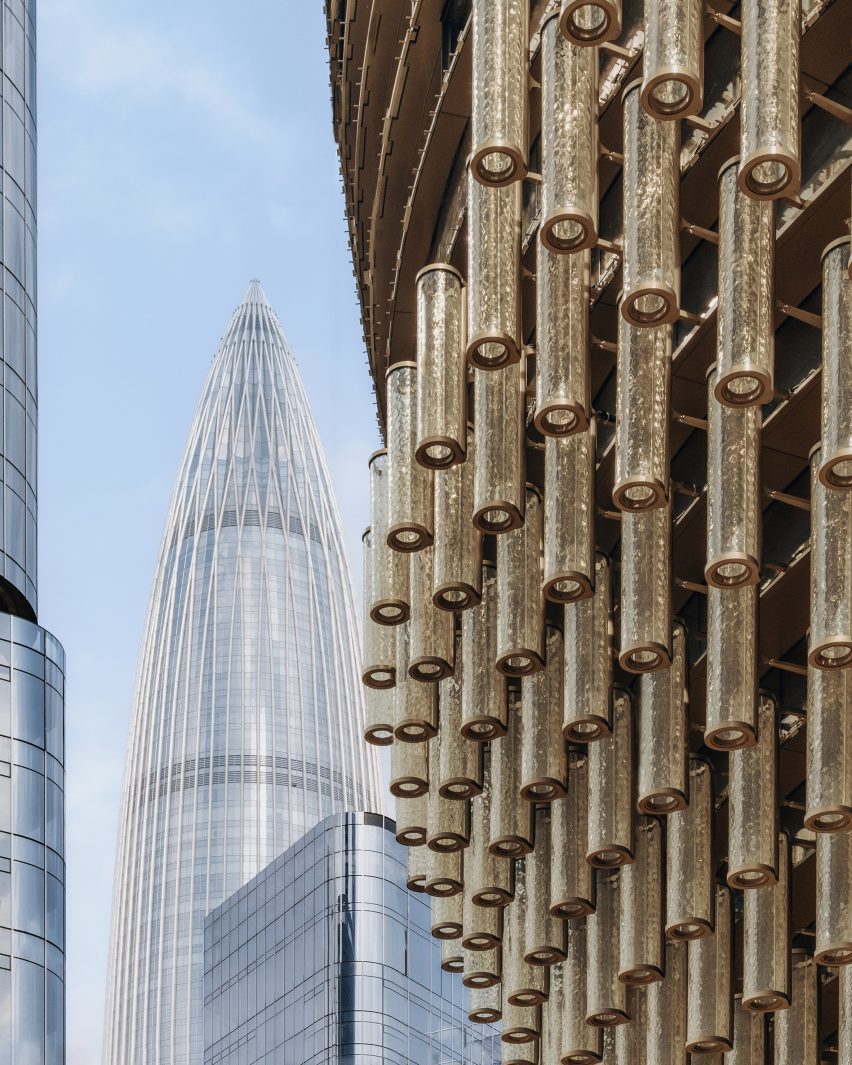 The facades will be covered in hanging glass tubes
The curved facades of the museum will be wrapped in hundreds of hanging, “parametrically-engineered” glass tubes.
According to the studio, these will give the museum a distinctive identity and improve its energy performance by creating shading and helping with ventilation.
Ole Scheeren reveals plans for Shenzhen skyscrapers with “waterfall” facades
“I wanted to give the museum a distinctive and magical appearance that creates a sense of curiosity, especially amongst the younger generation,” said Scheeren.
“The whole project was conceived as a cross‑cultural interactive experience, with a very focused exhibition space and programme at its core, but with many more ways to engage with culture and architecture.”
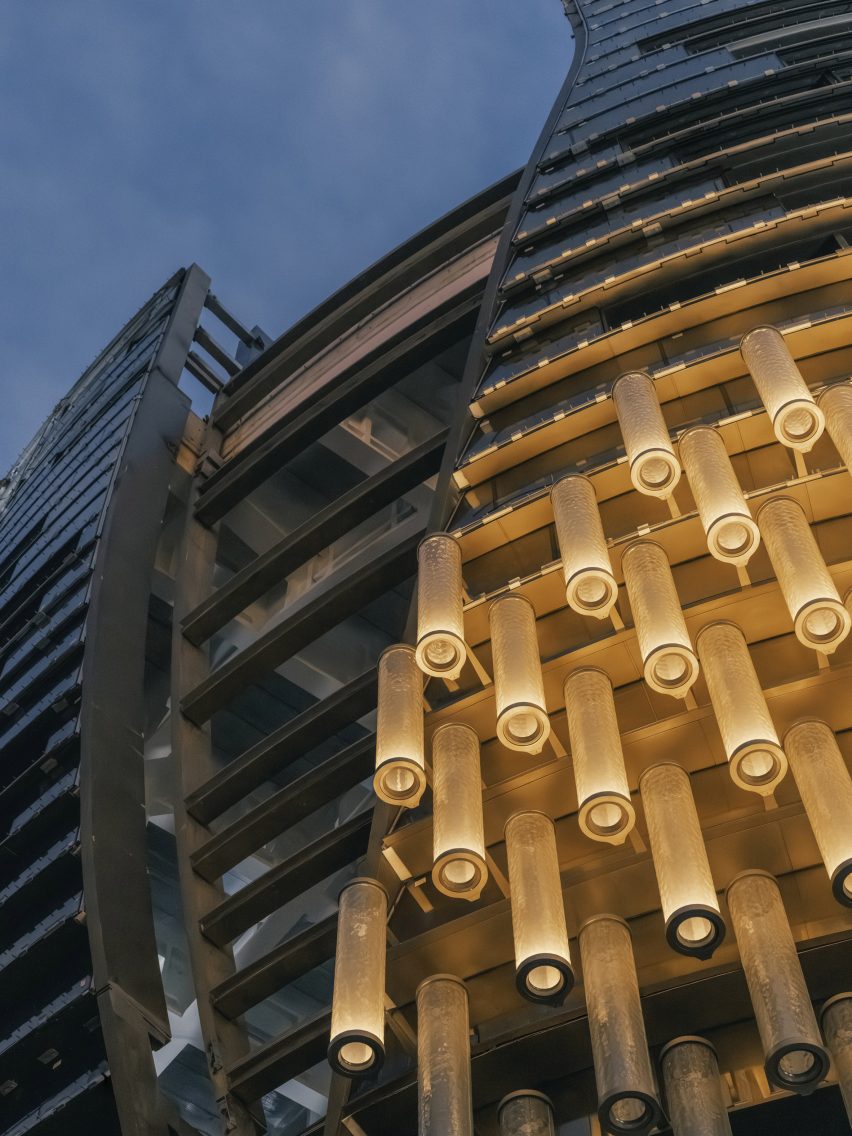 The glass tubes will be illuminated with LEDs
Along with 2,300 square metres of gallery space, the museum will contain a major public library, workshops and spaces for lectures, along with shops, cafes and restaurants.
The building will be topped with an extensive roof garden.
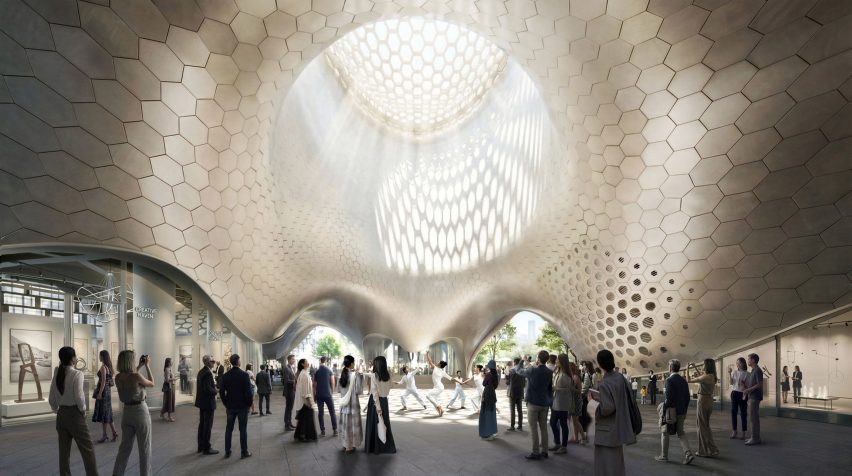 A skylit plaza will be located at the centre of the building
The museum, which is set to open in 2027, forms one city block in the wider Houhai Hybrid Campus, also designed by Büro Ole Scheeren.
Each of the four blocks in the development will be connected by bridges, with office space and a hotel occupying the other buildings.
Elsewhere, Büro Ole Scheeren is also designing a skyscraper for Chinese e-commerce company JD.com with facades intended to resemble waterfalls and developing twisting office towers for the global headquarters of Tencent.
The photography is by Zhu Yumeng and the renders are by Buro Ole Scheeren, TMRW, Atchain, Frontop and Bezier.
Project credits:
Architecture: Büro Ole Scheeren
Structural engineer: ECADI, Shenzhen
Facade consultant: RFR, Shanghai
Sustainability consultants: Arup, Hong Kong and MMoser, Hong Kong
Landscape consultant: PLA, Bangkok