
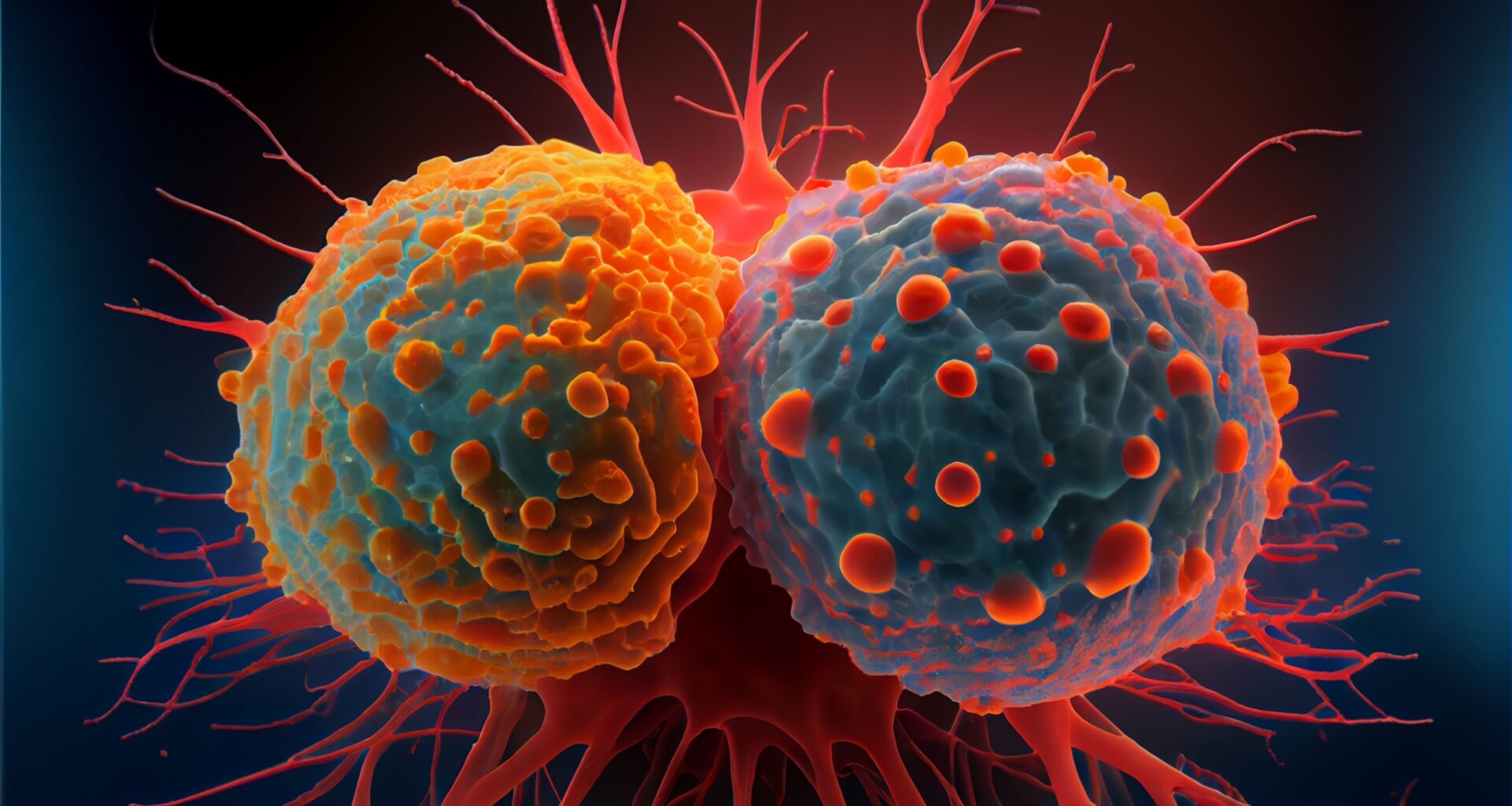
Metastasis is the moment cancer turns especially dangerous. A tumor that stays put can often be treated, removed, and monitored. A tumor that learns how to travel can become a moving target, and that’s when outcomes often worsen.
The frustrating part is that doctors still can’t reliably tell, early on, which tumors are likely to spread and which ones will remain localized.

Researchers at the University of Geneva (UNIGE) say they’ve found a clearer way to read that risk in colon cancer cells – and then translate those signals into an AI tool that can predict metastasis risk across multiple cancer types.
Their study describes both the biological patterns they uncovered and an artificial intelligence model called MangroveGS that converts those patterns into a risk estimate that could eventually guide more personalized care.
Cancer rewrites normal development
One of the study’s core ideas is that cancer isn’t just random cellular rebellion. The scientists frame it more like development gone off course: old biological programs reactivate in the wrong place at the wrong time, causing harmful consequences.
“The origin of cancer is often attributed to ‘anarchic cells,’” said senior author Ariel Ruiz i Altaba, a professor in the Department of Genetic Medicine and Development at UNIGE. “However, cancer should rather be understood as a distorted form of development.”
In this view, genetic and epigenetic changes don’t create pure chaos. They can activate developmental programs that normally shut down after early life.
This pushes cells toward growth, remodeling, and survival strategies that make sense in an embryo but are destructive in an adult body.
Rather than being random, cancer appears to follow structured biological rules. “The challenge is therefore to find the keys to understanding its logic and form,” Altaba said.
“In the case of metastases, the goal is to identify the characteristics of the cells that will separate from the tumor to create another one elsewhere in the body.”
The team set out to solve that exact puzzle: what distinguishes the cells that break away and seed new tumors?
Testing cells destroys them
Metastasis causes most cancer deaths, and colon cancer is a major part of that story. But the reason metastasis is hard to predict is partly technical.
You can sequence a cell to learn its molecular identity, but sequencing destroys the cell. You can also watch a living cell to see what it does, but you can’t get a full molecular readout without sacrificing it.
“The difficulty lies in being able to determine the complete molecular identity of a cell – an analysis that destroys it – while observing its function, which requires it to remain alive,” Altaba explained.
To get around that, the team used a workaround that’s simple in concept but demanding in practice.
They isolated tumor cells from colon cancer, cloned them, and grew them in the lab so they could test what those genetically related “families” of cells actually do.
“These clones were then evaluated in vitro and in a mouse model to observe their ability to migrate through a real biological filter and generate metastases,” noted study co-author Arwen Conod from UNIGE.
This approach allowed the researchers to connect behavior – the ability to move and spread – to gene activity patterns measured from those same clones.
Patterns behind cancer spread
The researchers examined the activity of hundreds of genes across about thirty cell clones taken from two primary colon tumors.
The headline finding shows that clear gene expression patterns connect to metastatic potential – but not in the simplistic “one mutation explains everything” way people often hope for.
Instead, their results suggest that coordinated programs drive metastasis risk, with groups of genes working together and related cells influencing one another.
The study emphasizes that communities of related cancer cells determine metastatic potential through their interactions, rather than a single cell acting alone.
That’s an important shift. It suggests metastasis isn’t just a property of a lone “bad actor” cell. It may also be a property of the micro-ecosystem within the tumor – the way clusters of cells cooperate, compete, and collectively enable escape.
Turning genes into predictions
After identifying those patterns, the researchers built them into an AI system for cancer prediction.
“The great novelty of our tool, called ‘Mangrove Gene Signatures (MangroveGS)’, is that it exploits dozens, even hundreds, of gene signatures. This makes it particularly resistant to individual variations,” said lead author Aravind Srinivasan from UNIGE.
That design choice matters because cancer is messy. Tumors vary between patients, between tumor types, and even within the same tumor.
A tool that relies on one “signature” can be brittle. A tool that looks at many signals at once can sometimes be more robust.
In tests, MangroveGS predicted metastasis and colon cancer recurrence with close to 80% accuracy and performed better than existing approaches.
The experts also report that gene signatures derived from colon cancer were useful for predicting metastatic risk in other cancers too, including stomach, lung, and breast cancer.
If that generalization holds up in broader validation, it could become one of the most valuable aspects of the work. The framework would apply across multiple cancer types.
How AI can change treatment decisions
The team’s vision is practical. Researchers designed MangroveGS to work with tumor samples taken in hospitals.
In their described workflow, researchers analyze cells, sequence RNA, and produce a metastasis risk score that they can share securely with clinicians and patients.
“This information will prevent the overtreatment of low-risk patients, thereby limiting side effects and unnecessary costs, while intensifying the monitoring and treatment of those at high risk,” Altaba said.
That’s the dream scenario for risk prediction: stop blasting low-risk patients with unnecessary aggressive treatment, while focusing resources on the patients most likely to relapse or spread.
“It also offers the possibility of optimizing the selection of participants in clinical trials, increasing the statistical power of studies, and providing therapeutic benefits to the patients who need it most,” Altaba said.
If you can identify high-risk patients earlier and more accurately, trials can become more efficient and potentially more ethical. The people most likely to benefit from an experimental therapy are then more likely to be enrolled.
AI’s fresh insight into cancer spread
This study is doing two things at once. On the biology side, it argues that patterned programs of gene activity and the collective behavior of related tumor cell groups drive metastasis, rather than a single obvious “metastasis gene.”
On the applied side, it packages that complexity into an AI tool that tries to turn messy cancer biology into a usable clinical prediction.
It’s not the final word – tools like this live or die on independent validation, real-world performance, and whether they genuinely improve decisions and outcomes in diverse hospital settings.
But it’s a step toward something cancer care badly needs: a better early warning system for spread, built on more than guesswork and waiting for bad news.
The full study is published in the journal Cell Reports.
—–
Like what you read? Subscribe to our newsletter for engaging articles, exclusive content, and the latest updates.
Check us out on EarthSnap, a free app brought to you by Eric Ralls and Earth.com.
—–