
The French call it une fourchette, a fork. It is an extremely visual word to describe eye gouging, which landed France’s Oscar Jegou in hot water following their dramatic Six Nations defeat to Scotland.
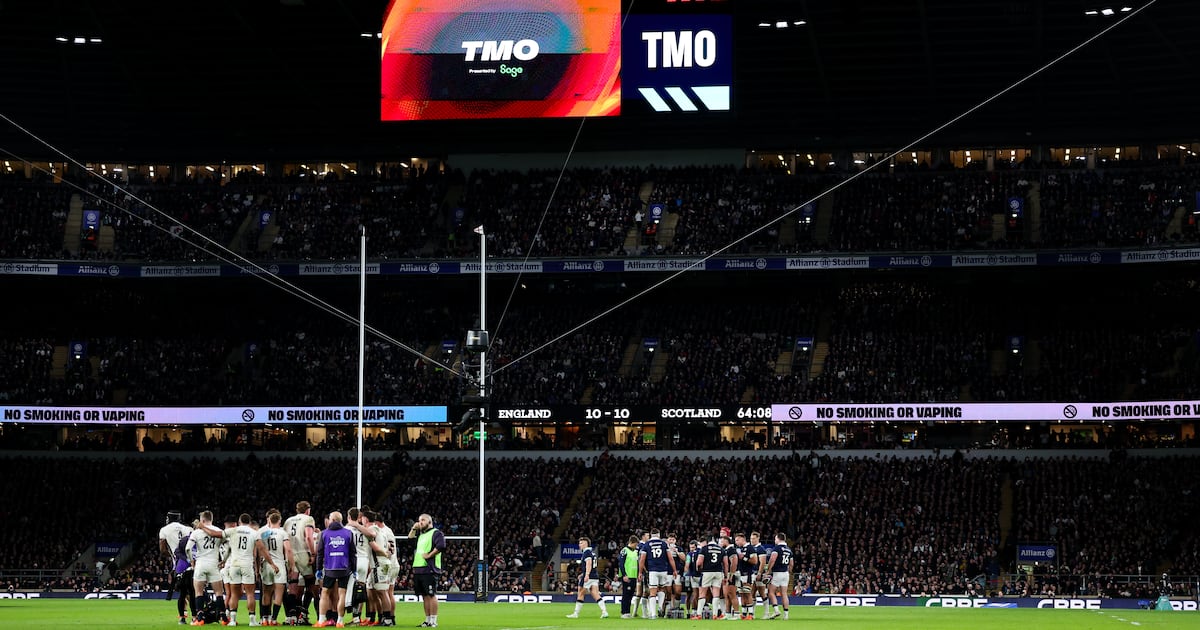
Regrettably, Jegou was not dealt with on the day by the match officials as referee Angus Gardner and TMO Brett Cronan didn’t immediately notice the player’s action. But when Scotland scored soon afterwards, the replay screen showed the incident, clear as day.
Gardner, who appeared to be watching the screen, talked of the off-field process. “If we don’t see it, there’s a citing.” The TMO will also have viewed the replay, but he remained silent. World Rugby must look into why it was not dealt with on the spot, it looked fairly awful.
Of course the citing commissioner, Ireland’s Ed Kenny, sent it to the judiciary, with Jegou eventually facing the music. But it was gentle music, more of a Strauss waltz, rather than Tchaikovsky’s thundering 1812 overture. The tribunal found the offence to be at the low end of the scale, with a starting point of six weeks suspension which was then mitigated to four.
The mitigation – I kid you not – included that the player was polite and behaved appropriately at the Zoom call hearing, Jegou receiving just a four-match suspension. Another element of the reduction was because Scotland’s Ewan Ashman was not injured. The lack of a serious injury was no more than a slice of good luck and it is beyond belief that there can be varying degrees of une fourchette.
The judiciary can claim that they were bound to apply World Rugby’s protocols, otherwise the high-level French defence, inclusive of lawyers, would have been all over them. It confirms absolutely why these protocols need the most urgent revision. All forms of vile, sickening, dangerous play must be dealt with under a separate protocol, inclusive of no mitigation. Meanwhile, the optics of this outcome present the sport in a terribly poor light.
At the time, France were two tries short of a bonus point, which they eventually achieved. If Jegou had been given his just deserts by way of a permanent red card, it’s an easy guess that 14 men wouldn’t have delivered the precious point. In the heel of a terrific Six Nations hunt, it’s fortunate in the extreme that it had no bearing on the destiny of the trophy.
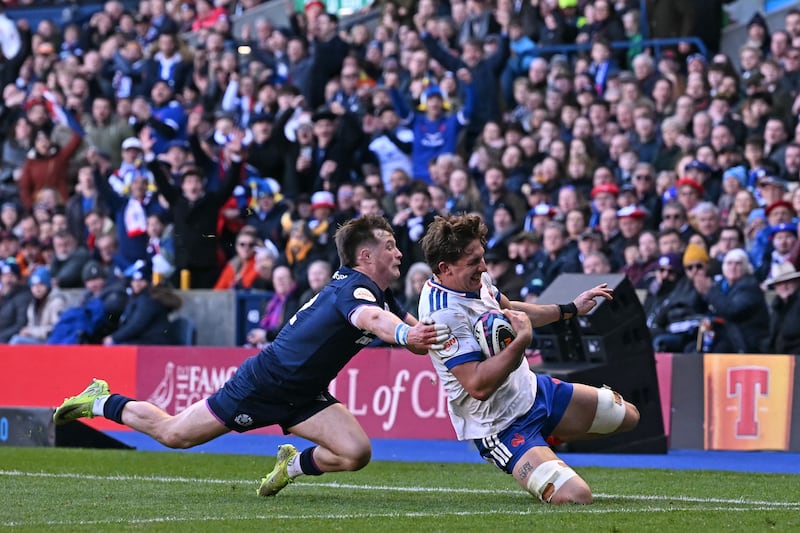 French flanker Oscar Jegou scores a try during the Six Nations match against Scotland at Murrayfield. Photograph: Paul Ellis/AFP via Getty Images
Cronan was on duty again in the France v England finale. When Nika Amashukeli called a “penalty advantage” for England, the TMO promptly overruled the referee, who changed it to “scrum advantage” and called it over. It was open play and, having heard Amashukeli’s decision, Cronan should not have interfered. It brings into sharp focus the TMO’s role, and begs the question, who are they, these TMOs?
At present it is seen as a specialist role, and it seems that anyone can apply. There are plenty of people doing the job who have never refereed at, or even near, elite level. There have been very clear examples which make it impossible to be convinced that these extremely well intentioned TMOs have the expertise, the experience, and the rugby instinct to be completely competent, particularly when the pressure gauge ramps up. There is some talk of trying to involve former elite Test referees, getting them into the role. The same idea came up quite some time ago, informally it must be said, but only disinterest was expressed.
So, what is required? Certainly, TMOs need to be involved in calling out serious foul play, but maybe limit it to actions which merit a card. The three on-field officials should be well able to deal with ‘penalty only’ offences. Involvement is also necessary for clear and obvious infringements in the build up to a try, but, please, no further back than two phases of play.
Over recent seasons we’ve seen the TMO’s input increase inexorably. They’ve become a sort of sweeper for the referee, searching for the slightest peccadillo. In the last World Cup final, New Zealand had a try ruled out when the TMO went back three phases for a knock-on. It was justified by saying that the right decision was arrived at. That’s wrong, the error was breaking the protocol.
Several questions have landed in my inbox concerning additional assistance which the TMO may get unofficially. The home broadcaster controls what is shown on the screen, and the officials will see whatever is put up. So, while the TMO will ask the broadcaster to replay certain things, the latter is obviously not confined to those requests.
However, World Rugby must be somewhat concerned that the broadcaster might, on occasion, try to persuade the officials to call for a review by screening repeated replays of incidents not favourable to the visiting team, which have not yet been addressed by the referee or the TMO. In my view, it’s impossible right now to be definitive on this question. It’s certainly very far from being a pandemic, but it is something World Rugby should monitor carefully, and a chat with the TV companies wouldn’t go astray.
It’s a thorny issue. For example, how many replays of such an incident is too many? That’s a hellishly difficult question, requiring King Solomon’s wisdom. The broadcasters can legitimately say that they’ve shelled out a lot for the match rights, and can put up on the screen whatever they wish. It’s hard to argue against that point of view.
But, here’s the rub. Mistakes made by referees and TMOs are impartial, whereas the input into decision making by any agency outside of the match officials, particularly a home broadcaster, could introduce a bias. That’s a thought which is unthinkable.