
Driving in through the castellated entrance up the long tree-lined avenue to Clongowes Wood College in Co Kildare, one immediately gets the sense of arriving at a prestigious educational establishment.
One of Ireland’s most expensive schools, the Jesuit-ethos college is a seven-day boarding school for boys in Ireland. The 60 hectares incorporate rugby and soccer pitches, tennis courts, cricket crease, gym, 25m indoor swimming pool, nine-hole golf course (and indoor golf simulator), sports hall, classrooms, dormitories and staff residences. An arts block is currently under construction.
There are about 430 boarders, three-quarters of whom are from Ireland, with the other quarter a mix of Irish living abroad and international students from the US, UK, Dubai and China.
Clongowes Wood College doesn’t take day students. Fees for 2025/2026 were €25,000. Ten per cent of the students receive a bursary, which is funded from income from leased land on the estate and a past pupils’ endowment fund. Students are selected for bursaries following interviews, not scholarship examinations.
The first Jesuit-run school in modern times in Ireland, Clongowes Wood College was set up by Jesuit priest Fr Peter Kenny in 1814 to cater for the rising numbers of middle-class Catholics in what was formerly known as Castle Brown. In the early days, boys boarded from the age of seven, getting up at 6am and going to bed at 8.45pm. There were 110 students in the first year. In the early years, students remained on campus for 11 months of the year.
Now the original castle houses the headmaster’s office, a large library, a board room and accommodation for the five remaining members of the Society of Jesus (SJ) who live in the school. The large 19th century purpose-built school extends out from the early 18th century castle with modern replacements housing study areas, a large concourse and modern dormitories. Elements, Rudiments, Grammar, Syntax, Poetry and Rhetoric are the names given to each year, taken from the 1599 Ratio Studiorum, reflecting the classical, humanist curriculum of Jesuit education.
Fr Michael Sheil, Jesuit priest and rector of Clongowes Wood College, is a past pupil of the school. “I came here when I was 11, after the 11+ exams in Belfast. My father had been here. Physically, the place was very different in the 1950s. The dormitories were places of silence. We got up at 6.50am and had Mass at 7.10am before breakfast. From 9pm onwards, there was silence until Mass the next morning. It was very monastic,” says Sheil.
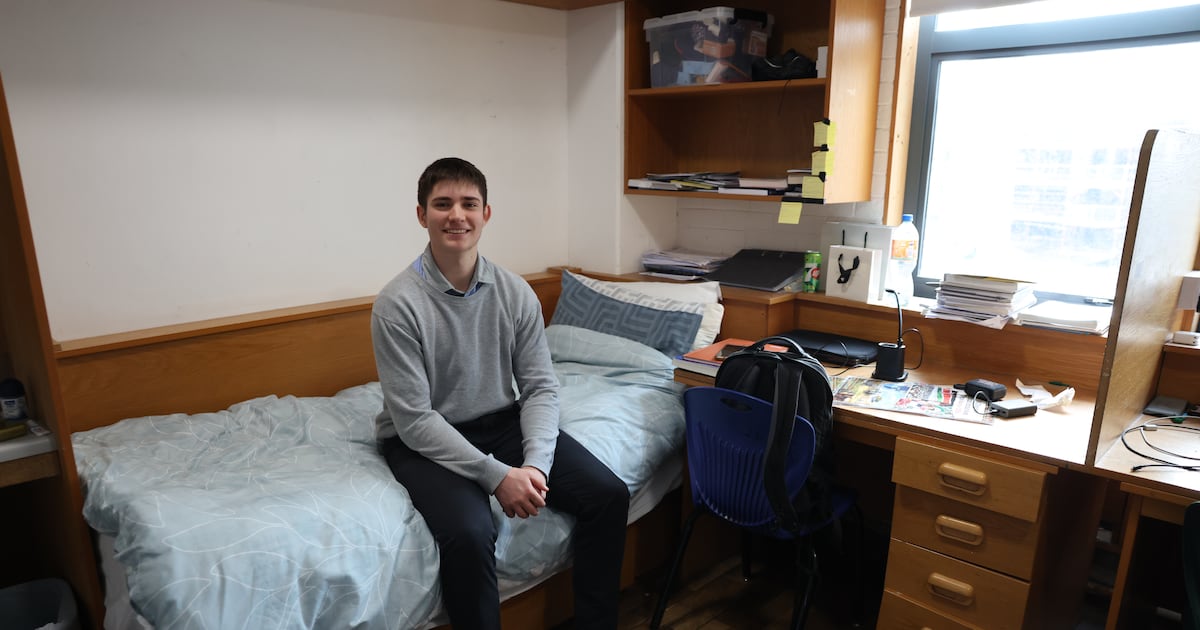
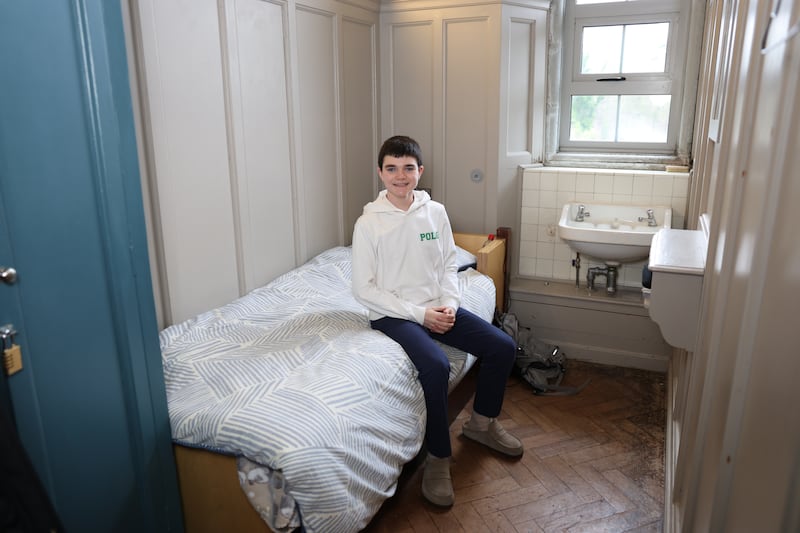 First-year student Jack Kiernan in his dormitory, known as ‘Elements’, at Clongowes Woods College. Photograph: Enda O’Dowd
 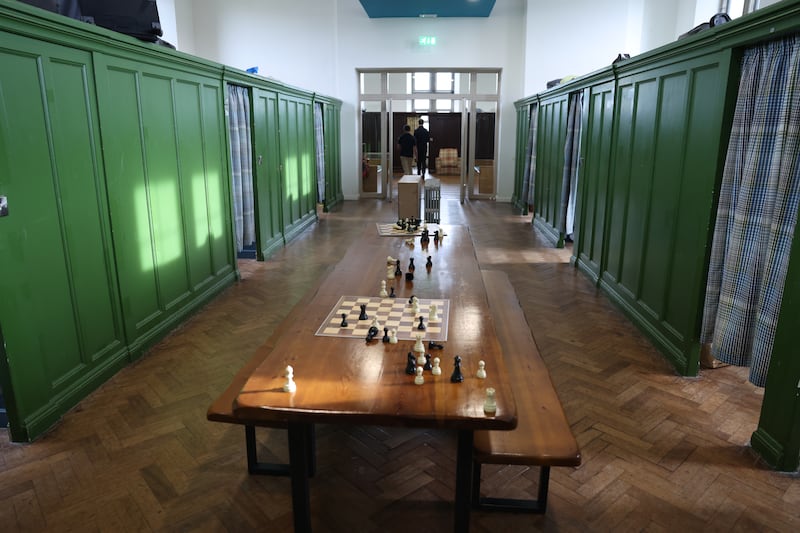 The third-year dormitory at Clongowes Wood College is given the name ‘Grammar’. Photograph: Enda O’Dowd
 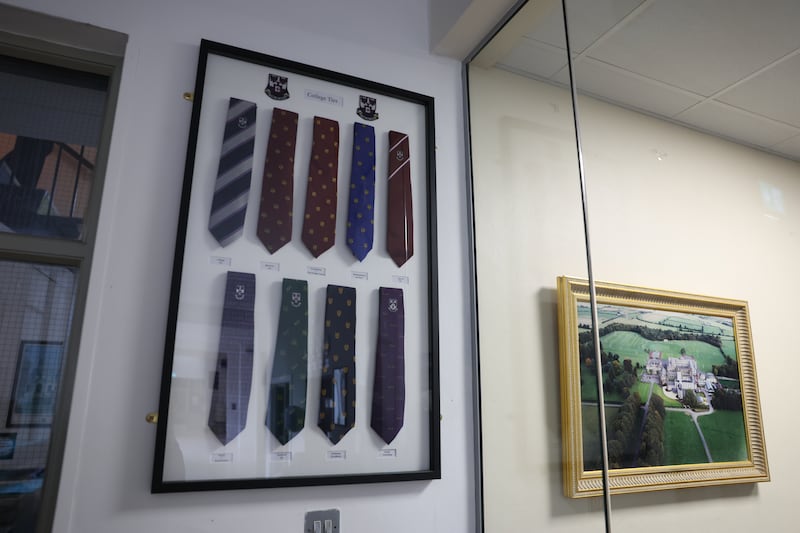 Ceremonial ties from Clongowes Wood College denoting various achievements. Photograph: Enda O’Dowd
The boarders then only went home at the end of each term. There were classes all day on Saturdays, with a half-day on Thursdays and a half-evening on Tuesdays. “We lived in a sort of bubble. Travel was more difficult then and we only had about three visits from family during the year,” says Sheil.
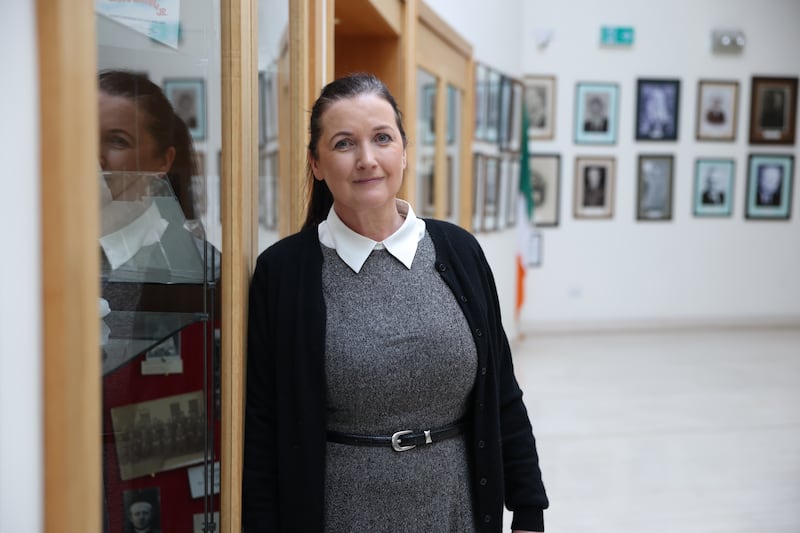 Aine Corcoran, director of admissions at Clongowes Wood College. Photograph: Enda O’Dowd
Nowadays, although the school officially has seven-day boarding, with classes on Saturday mornings and games on Saturday afternoons, boys can avail of optional overnight leave on Saturday nights or leave after Sunday Mass until 8.30pm that evening. They also go home every second or third weekend, from midday on Fridays until Monday evenings, during the months that do not have midterm breaks or other school holidays.
All the teachers at Clongowes are now lay teachers, and the current headmaster Chris Lumb is the first lay principal of the school. The headmaster and some teachers live in the grounds of the college. The boarding housemasters live in apartments next to the dormitories they oversee.
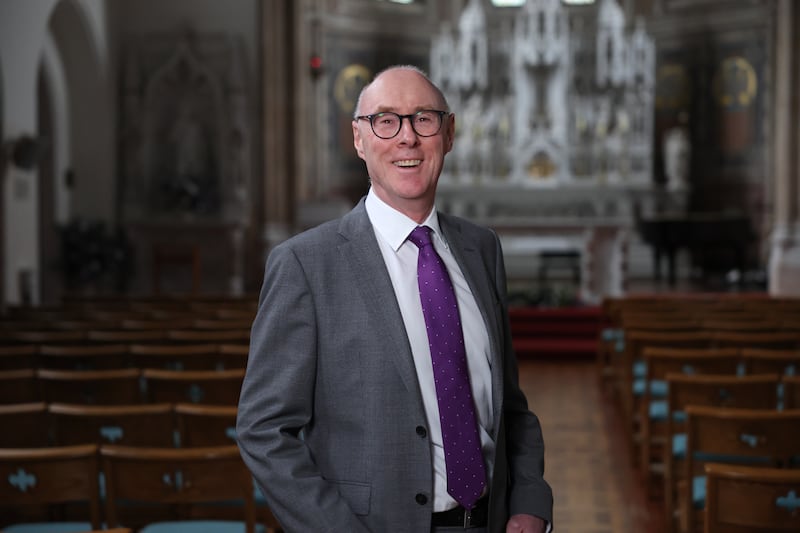 Chris Lumb, headmaster at Clongowes Wood College. Photograph: Enda O’Dowd
Lumb says the Jesuit ethos of serving others runs through school life. “It’s a civilised environment, and there is a sense of humility in the school. The boys have a lot here, but with that comes responsibility to themselves, their friends and others. They take a strong sense of values with them when they leave,” says Lumb.
Although there are some Muslim students, and some with no religious affiliation, the whole school gathers for short morning prayer in the Concourse on Mondays, Wednesdays and Fridays before classes start. On Tuesdays, Thursdays and Saturdays, the students gather in the chapel for “Examen”, a short period of reflection and gratitude led by students or teachers.
Steven Gray, head of boarding at Clongowes, says boarding school is like a large household where boys are learning from their peers. “There are procedures, rules and codes of behaviour, but they fall into the background once they are observed,” says Gray. He references punctuality, the way in which people speak to each other, and keeping respective areas clean and tidy as important features of life in a boarding school.
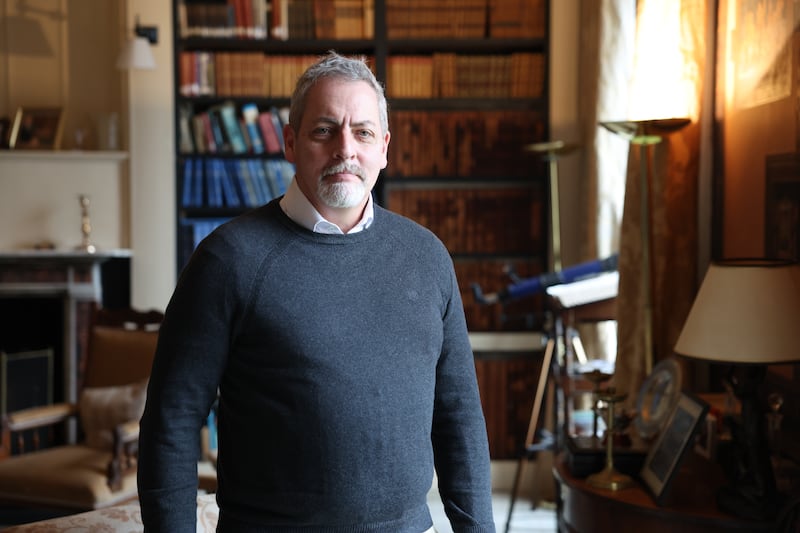 Steven Gray, head of boarding at Clongowes. Photograph: Enda O’Dowd
First- to fourth-year students sleep in one or two bedded cubicles in large dormitories, with tiered seating areas and table tennis and pool tables interspersed throughout the space. Each cubicle includes beds, wardrobes and wash-hand basins. The first-year boys change cubicles every six weeks to give them a chance to mix with different groups.
The fifth- and sixth-year students have single rooms with shared kitchenettes for use outside meal times. Every night before bed, the first- and second-years have a short year-group meeting called “Declamation” to reflect on the day. Third- and fourth-years have weekly meetings, while fifth- and sixth-years only have these meetings on the night after returning to school from a break.
Past pupil Rob Newman now works at the school as a house master. “One of the reasons I returned after I ran my own business was to give something back. You’re privileged to come here but you’ve got to use that privilege,” says Newman. Speaking about the friends he made at the school, he mentions his school WhatsApp group, which almost 20 years after leaving has 73 out of 75 of his classmates in it.
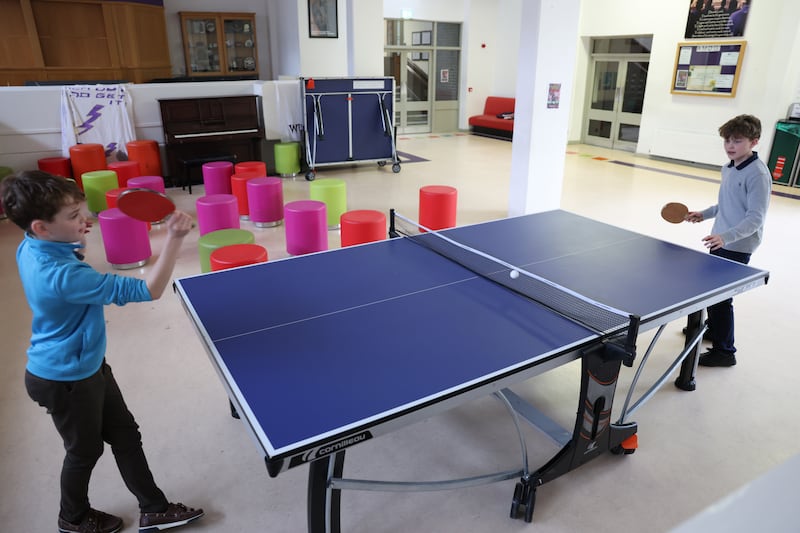 First-year student Henry Griffith plays table tennis with third-year Robert Lowe. Photograph: Enda O’Dowd
 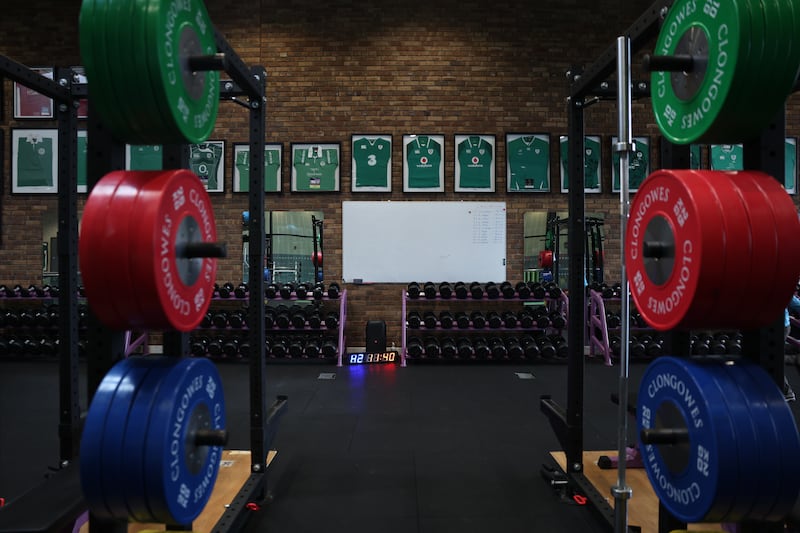 The students’ gym. Photograph: Enda O’Dowd
 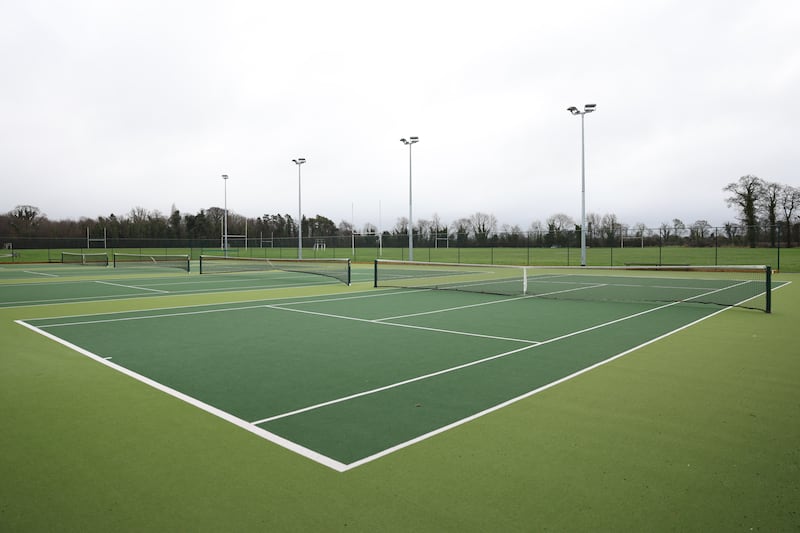 The Clongowes tennis courts. Photograph: Enda O’Dowd
The large refectory is filled with tables seating six to eight people, with one long table at the end where each “house” group sits every 10 days. These “house” groups are made up of students from each year, giving the boys an opportunity to socialise with others outside of their year.
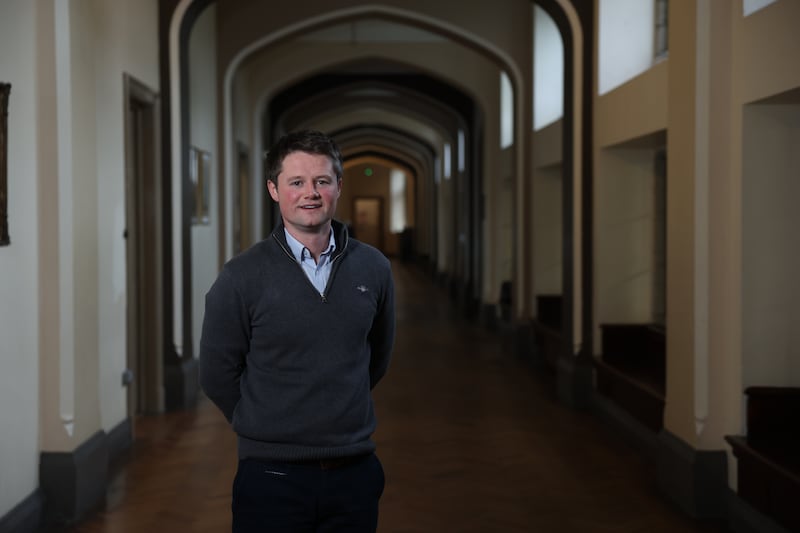 Matthew Wright, assistant head of boarding at Clongowes. Photograph: Enda O’Dowd
Matthew Wright, the assistant head of boarding, says the “stimulating, engaging and packed structure of the timetable” is one of the things that attracts families to the school. “With everything on campus, it means parents don’t have to do the running around with boys to sporting events,” says Wright.
Even after study period ends at 8pm, the boys have supervised night recreation of tip rugby on the artificial pitch, swimming lessons, or use of the gym. First- to fourth-years are only officially allowed to use their mobile phones between 8pm and 9.15pm. The rest of the time, the phones remain locked in boxes in their dormitories. The students have access to laptops before class begins in the mornings.
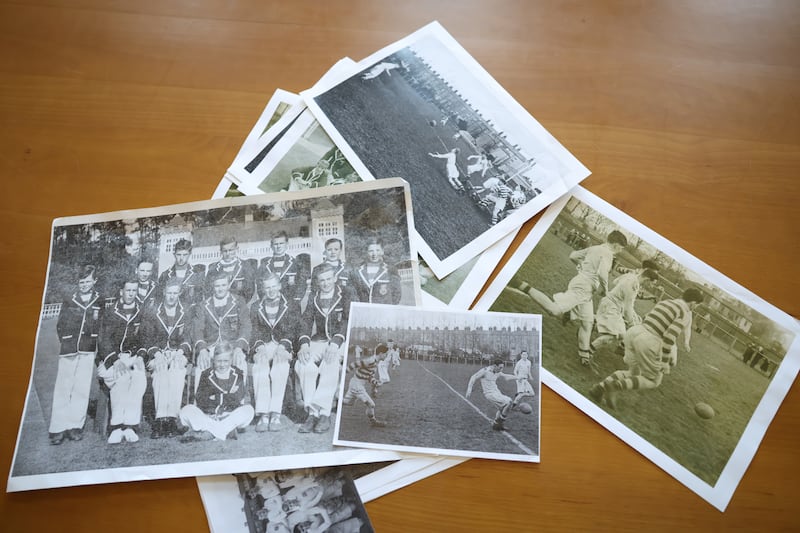 Clongowes Wood College has a long association with rugby. Photograph: Enda O’Dowd
 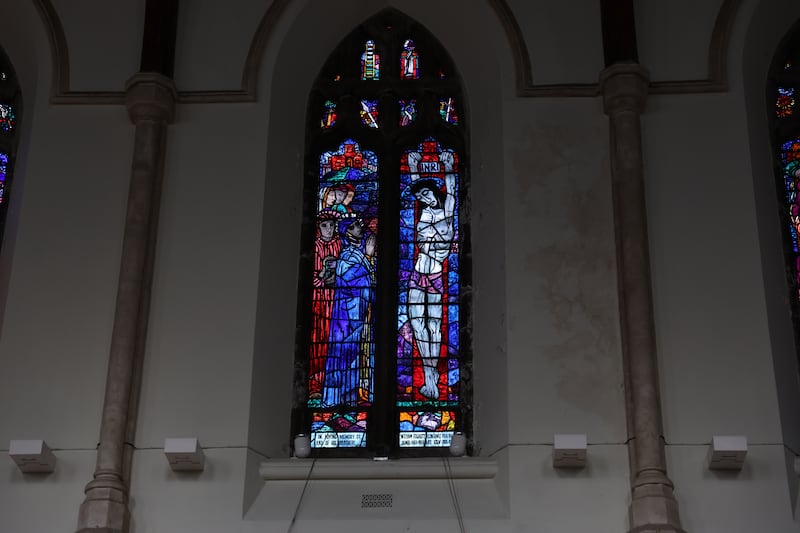 A stained glass window by celebrated Irish artist Evie Hone in the chapel at Clongowes. Photograph: Enda O’Dowd
Gray says the school provides training in social media use for all years. “It’s about learning to use devises in a positive, healthy way. And being able to FaceTime families means homesickness is not such an issue. The students are able to be still part of what is going on at home,” he adds.
Some of the boys also partake in sports clubs in their local areas. “They can still be part of their local community, and we encourage that. Boarding schools have moved with the times. We aren’t disconnected from other parts of society,” says Gray.
Parents too have more access to boarding schools nowadays. At Clongowes, many of them watch matches on Wednesdays and Saturdays, and some attend Sunday Mass.
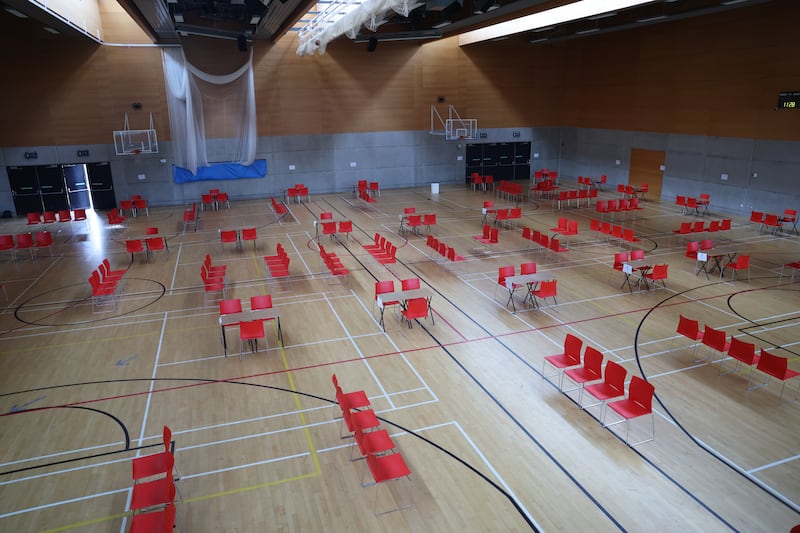 Sports hall at Clongowes. Photograph: Enda O’Dowd
 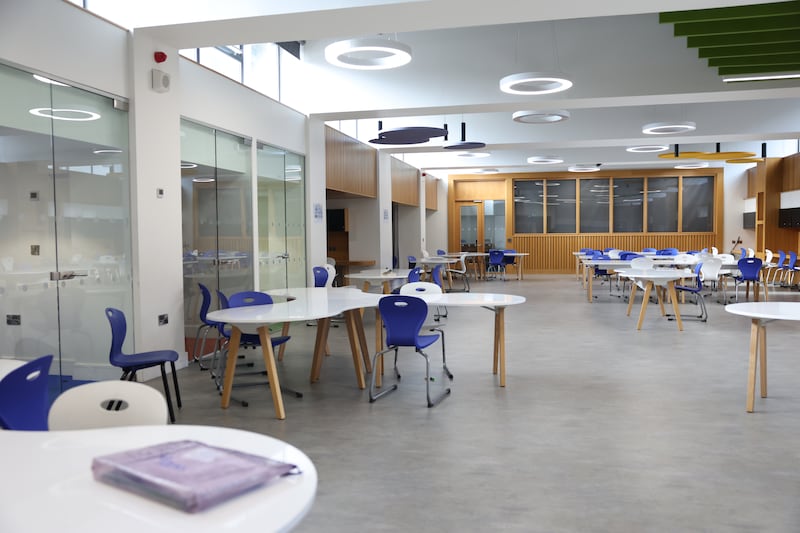 The Bellarmine Learning Centre at Clongowes. Photograph: Enda O’Dowd
Sheil believes that, in spite of changing culture around education, there will always be a place for boarding schools in Ireland. “It suits families who live abroad and from distant parts of the country,” he says. When asked about the legacy of sexual abuse in boys’ boarding schools in Ireland, including Clongowes, he says the Jesuit Provincialate took a “very forward approach, accepting responsibility and inviting those with stories to tell to come forwards”.
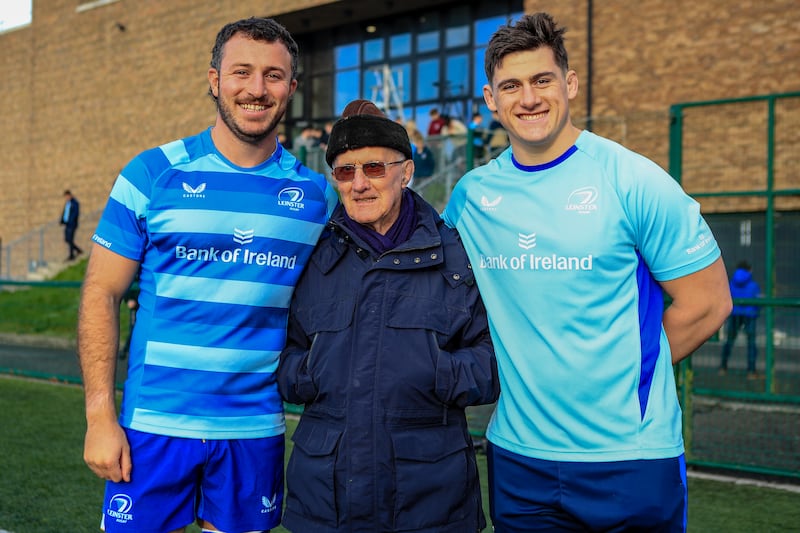 Fr Michael Sheil with former Clongowes pupils, now rugby players, Will Connors (left) and Dan Sheehan.
“These were the days of corporal punishment. It was a very different society and living conditions. But I had no concept of it [the abuse] when I was in school here. The first I heard about it was five or six years ago,” says Sheil. In May 2025, he made a public apology in assembly on behalf of the provincialate and asked for forgiveness for harm caused. “It was difficult to do, but I was glad I did it.”
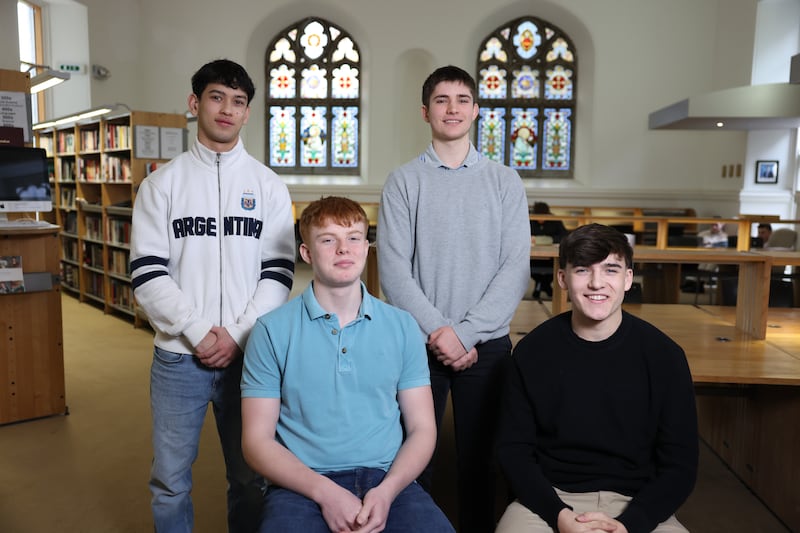 James Lee (sixth year), Simon Ward (fifth year), Nicholas Hunter (fifth year) and Daniel Maguire (fourth year) – all students at Clongowes. Views from the boarders
Jack Kiernan, first year, from Ardee, Co Louth – “I’m the sixth generation of my family to come to Clongowes and I first came to the school when I was five. I had a choice between here and a coeducational boarding school, but I chose here. I’m learning so much and have craic with my friends.”
DJ Leonard, second year, Ardee, Co Louth – “Clongowes allows me to fulfil my potential in sports and academics. We’re kept pretty busy, and the food is very good.”
Robert Lowe, second year, Carrick-on-Shannon, Co Leitrim – “I visited three times before I came. I was homesick in first year, but I made good friendships. I like the co-operative study room where, if you are struggling with a subject, you can get help from someone else in your class.”
Henry Griffith, first year, Co Mayo – “I wasn’t challenged in primary school, and now I’m excelling in academics and sport. There is a great bond between students and a great team spirit. I like that we hear about influential people at Morning Prayer.”
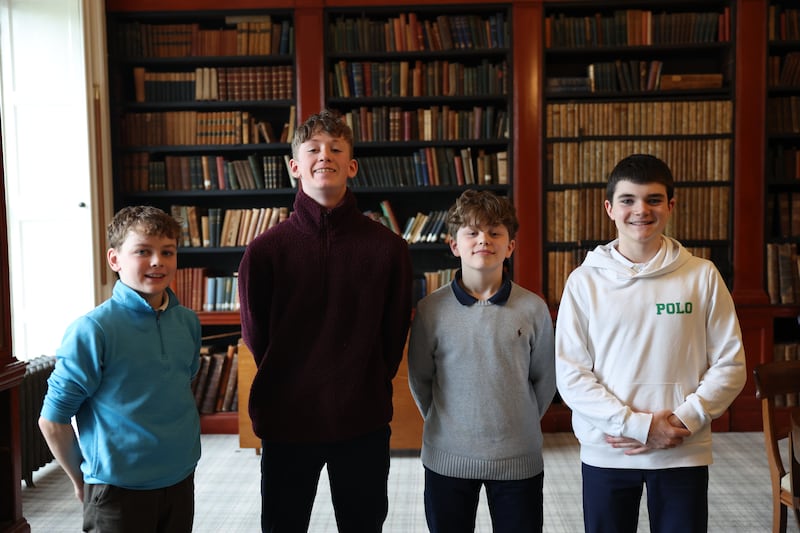 Clongowes students Henry Griffith, DJ Leonard, Robert Lowe and Jack Kiernan. Photograph: Enda O’Dowd
James Lee, sixth year, Bundoran, Co Donegal – “Boarding isn’t for everyone. It has its ups and downs such as being away from home and being here when you don’t always want to be in school. But, there is a lot of emphasis on ‘being a man for others’ here, and we all look out for each other as we are all in the same boat.”
Simon Ward, fifth year, Westport, Co Mayo – “It’s very enjoyable, being surrounded by your friends and supported by staff.”
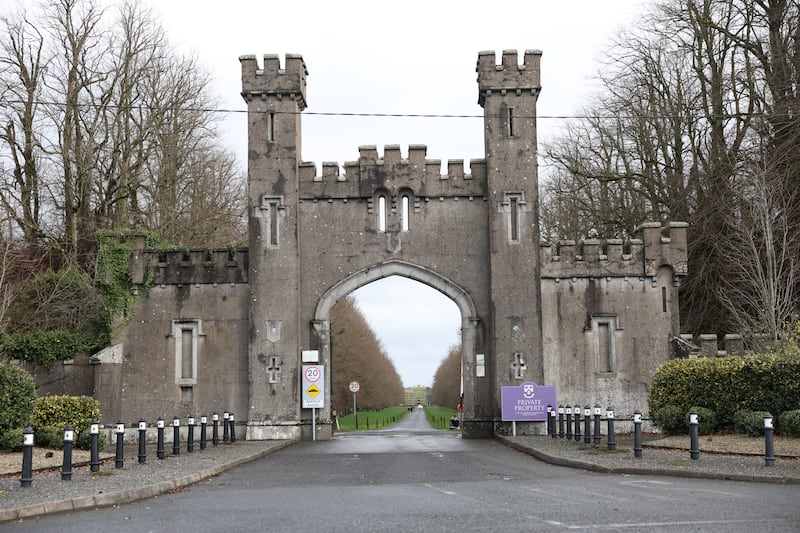 Clongowes Wood College.
Nicholas Hunter, fifth year, from South Africa – “My family moved to Ireland during Covid, and Clongowes was recommended to us by friends. I love the sports and the academics and I found it easy to make friends. Once you are here, it’s more like a community.”
Daniel Maguire, fourth year, Co Meath – “It has been a great opportunity for me to go to a prestigious school. When you are with people who are achieving as high as they can, you are more motivated to do so too. People in mixed schools ask me what it’s like to be surrounded by 70 other guys 24/7, but they underestimate how well we get on. There is no point in fighting with guys that you’ll see later in the day.”