
It was not the warmest or the wettest on record but 2025 was the worst year for climate change, analysis from the World Meteorological Organisation (WMO) shows.
That is because the Earth’s energy imbalance became more extreme with potentially dire consequences for now and far into the future.
The energy imbalance is the gap between the amount of energy in the form of heat that is absorbed by the planet – from the sun and from human activities such as burning fossil fuels – and the amount released by the planet back into space.
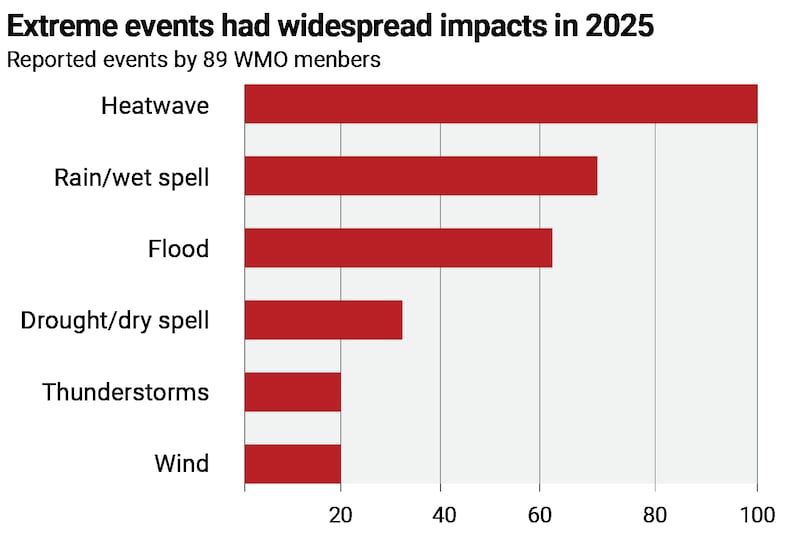 Source: World Meteorological Organization
Burning fossil fuels not only adds to the heat but generates greenhouse gases that trap the heat and slow its escape. All that heat has to go somewhere and the oceans have been the main recipient.
The WMO’s State of the World Climate report states: “The vast majority of the excess energy – around 91 per cent – has been absorbed by the ocean in the form of heat.”
That has provided a huge service to Earth, its habitats and its inhabitants, protecting us from the more rapid and severe impacts of global temperature rise.
But the oceans can only take so much and they are now warming at an increasing pace.
“In 2025 observed global ocean heat content set a record,” the WMO report, published on Monday, states.
“Over the past nine years, each year has set a new record for ocean heat content,” it adds, and the warming over the past two decades was more than twice that in the previous four decades.
[ How climate slid down this Government’s agendaOpens in new window ]
The consequences for ocean habitats and marine life have been devastating but above the sea surface, the impacts are also severe.
As waters warm they expand, increasing sea level. The more they warm, the more ice sheets they melt, increasing sea level further.
Their heat warms the air above, fuelling more rapid air movement, greater evaporation, more dense cloud and more intense storm formation. The combination of higher seas, heavier downpours and stronger winds presents a huge hazard for coastal communities, of which Ireland has many.
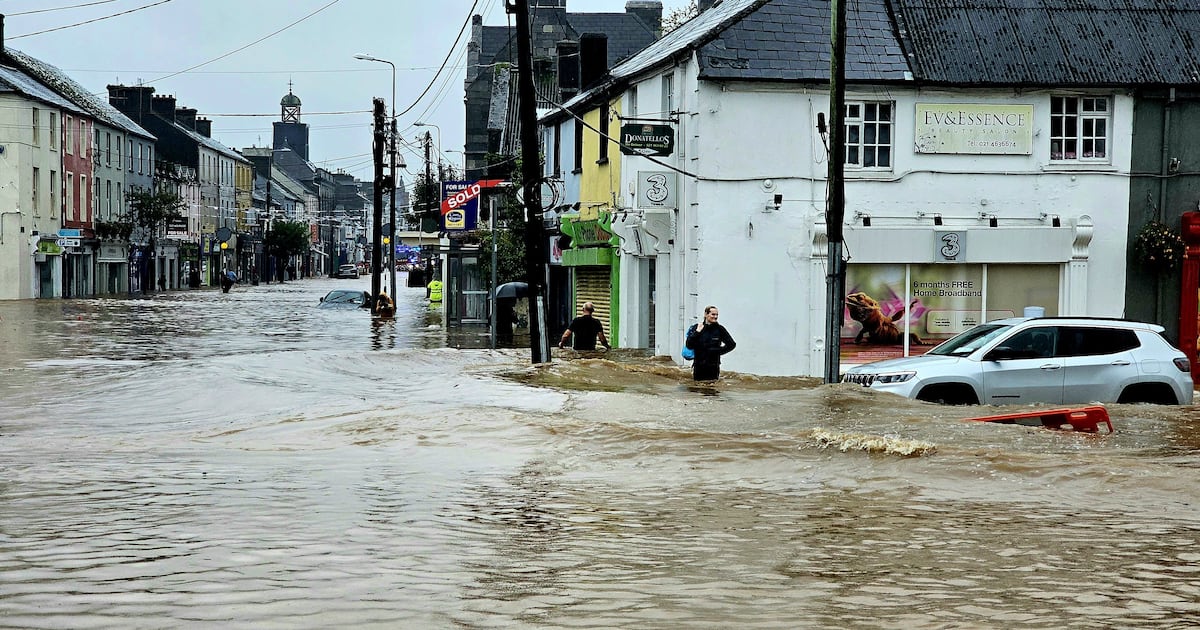
For the fourth time in two and a half years, experts have said only luck of timing saved Irish towns and cities from flooding that would have been unprecedented, massively expensive and possibly lethal.
Midleton in Co Cork suffered severely during Storm Babet in 2023 but the tide was out when the estuary town was deluged by a torrent of flood waters from the Owenacurra river, so it could have been much worse.
[ Why are flood defences taking so long to build? Don’t blame the pearl musselOpens in new window ]
Storm Éowyn in January 2025 and Storm Claudia last November also hit around the twice-monthly “neap” or low tides.
Prof Iris Moller of Trinity College Dublin has pointed to another lucky escape with Storm Chandra.
“If it had occurred during a high spring tide, the situation would have been many times worse in coastal towns and cities, including Dublin,” she said.
As for when that luck will run out, she said: “It is only a matter of time.”