
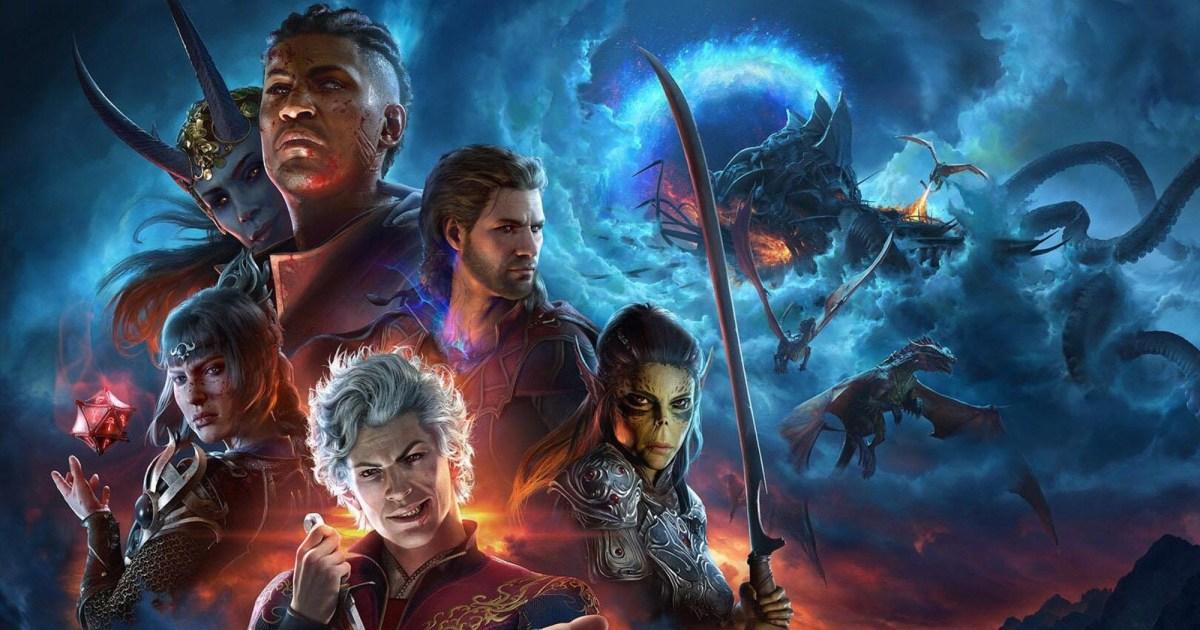
Research says single-player role-playing games are the main cause (Larian Studios)
People have always talked about feeling down after beating an enjoyable video game, but one team of researchers believes there’s more to it than that.
Playing video games can yield a spectrum of emotions, be they elation from mastering the mechanics in something like Street Fighter 6 to frustration over repeatedly failing a difficult challenge in Elden Ring. And sometimes they can make you sad, simply because you’ve beaten a good game and run out of things to do in it.
That concept’s not unique to video games, but while it’s a shared feeling many of us have experienced, one group of researchers believes there is more to it than that.
That’s why a new study has been published that alleges that post-game depression is actually a thing, with role-playing games in particular singled out as a primary instigator.
This comes from a serious medical paper entitled ‘Post-game depression scale – a new measure to capture players’ experiences after finishing video games,’ written by a team of researchers from the Polish SWPS University and the Stefan Batory Academy of Applied Sciences.
It’s available to download via News Medical Life Sciences, so this is an officially reviewed medical paper, not just random musings from a bunch of gamers.
Expert, exclusive gaming analysis
Sign up to the GameCentral newsletter for a unique take on the week in gaming, alongside the latest reviews and more. Delivered to your inbox every Saturday morning.
The paper acknowledges that post-game depression is a complex phenomenon, comprised of ‘various challenging, intercorrelating experiences.’
373 people participated in two studies, which identified four aspects of post-game depression: intrusive thoughts and ruminations on the game, a challenging end of experience, a necessity of replaying the game, and a loss of interest in other media products.
Psychologist Kamil Janowicz points to fans of role-playing games as the ones that are most susceptible to post-game depression, since ‘It is in these games that players have the greatest influence on character development through their decisions and build the strongest bonds with their characters.
‘And the more engaging the game world and the closer the relationship with the character, the more difficult it is to return to reality once the game is over.’
Also, they tend to be really long.
No exact examples are given, but Janowicz’s description points towards role-players with a greater degree of character customisation and player choice, where decisions can have a lasting effect on the story and world. So, more Baldur’s Gate 3 than Pokémon.
It’s noted, though, that those who experience intense sadness from completing a game are more likely to have pessimistic views on real-world events. So, it’s not so much that the act of completing games can trigger depression, but rather post-game depression is itself an extension of it.
‘[Post-game depression] is a specific type of grief after loss, reminiscent of parting with a loved one or the end of an important life stage. Our research shows that for many gamers, the virtual world becomes such a significant source of emotions that returning to everyday life requires time and appropriate psychological tools,’ says Janowicz.
Don’t miss Gaming news! Add us as a Preferred Source
As a loyal GameCentral reader, we want to make sure you never miss our articles when searching for gaming stories. We have all the latest video games news, reviews, previews, and interviews, with a vibrant community of highly engaged readers.
Click the button below and tick Metro.co.uk to ensure you see stories from us first in Google Search.

GameCentral has been delivering unique games news and reviews for over a decade
Video games are certainly a form of escapism, so for anyone using them to temporarily forget about personal issuesor the general state of the world, reaching the end of the game and being forced back into reality can be an uncomfortable experience.
This can be applied to other forms of media, though, like movies and TV shows, which also function as escapism. A few years ago, reports spread of people claiming to suffer from post-Avatar depression syndrome (PADS) brought on after watching James Cameron’s first Avatar movie (per The Guardian).
PADS was never recognised as an actual medical diagnosis and, again, was more an indication that someone was already depressed and reacted poorly to their short reprieve being over.
Janowicz hopes that this research ‘could be useful in the game design process,’ although it’s difficult to imagine the games industry taking any of this on board unless it becomes a truly widespread issue and even then there’s no guarantee it’d do anything about it.
Although you could argue that forever games like Fortnite and Minecraft are immune to these problems and that live service games in general are a good way of avoiding being upset at a game ending, since they have no end.

EA’s sports games have come under fire for years for their use of loot boxes but the company has yet to ditch them (EA)
Email gamecentral@metro.co.uk, leave a comment below, follow us on Twitter.
To submit Inbox letters and Reader’s Features more easily, without the need to send an email, just use our Submit Stuff page here.
For more stories like this, check our Gaming page.
Arrow
MORE: Man creates £4,500 gaming rig in his truck to play driving games when in traffic
Arrow
MORE: Nintendo cuts Switch 2 production by 30% due to low Western demand
Arrow
MORE: Games Inbox: Is Crimson Desert being underrated?
Comments
Add Metro as a Preferred Source on Google
Add as preferred source
GameCentral
Sign up for exclusive analysis, latest releases, and bonus community content.