
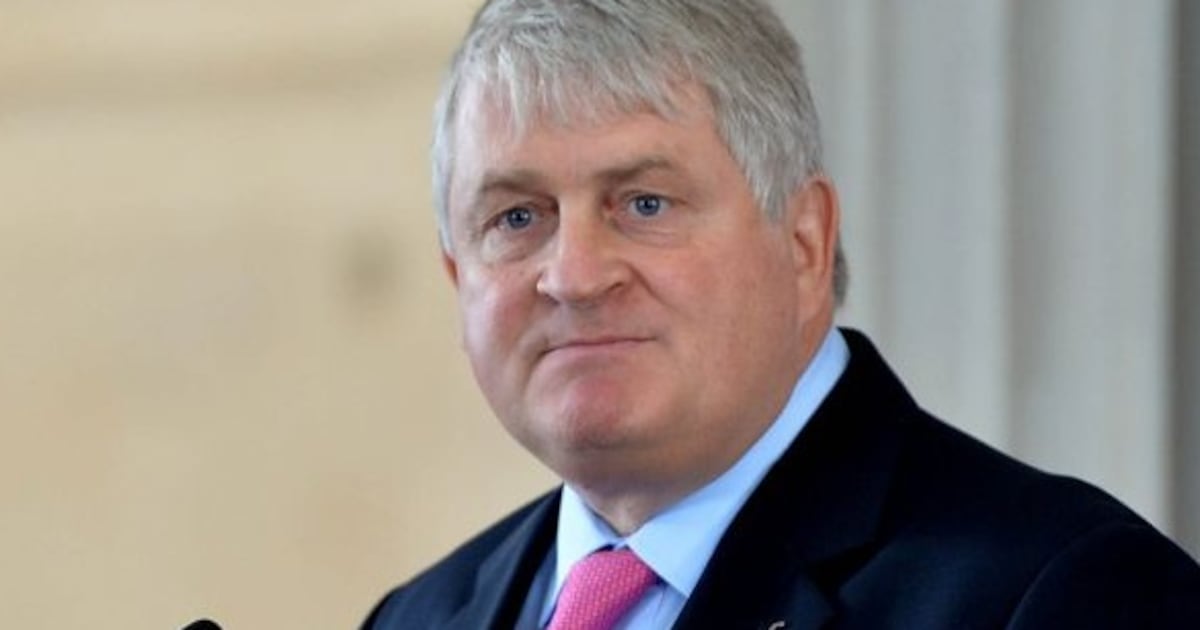
Businessman Denis O’Brien, who lost control of Digicel two years ago, is currently on track to double his stake in the company he founded to 20 per cent, on the back of ongoing improvements in its finances and a pickup in industry valuations, according to sources.
A group of bondholders – led by PGIM, Contrarian Capital Management, and GoldenTree Asset Management – seized control of Digicel in January 2024 on completing a $1.7 billion (€1.47 billion) debt-for-equity swap that saw O’Brien’s stake slashed to 10 per cent.
O’Brien was also given warrants as part of the transaction that allow him to acquire up to a further 10 per cent of Digicel within six years of the restructuring, should its equity value reach $1.1 billion. It would cost the businessman, who remains a company director, $110 million to buy the shares.
A number of investment banks are operating an informal, or so-called over-the-counter (OTC), market for bondholders-turned-shareholders to trade shares. Shares are currently changing hands at about $20 a piece in this market, albeit amid very thin volumes, according to market sources. This puts an equity valuation of about $800 million on the business.
However, the sources say Digicel would now comfortably command an equity valuation of $1.25 billion based on the average enterprise valuation multiples of sector players active in the Caribbean and Latin America. On that basis, O’Brien would be in the money – on paper at least – on the warrants.
A spokeswoman for Digicel and a spokesman for O’Brien did not respond to requests for comment.
Digicel operates in 25 markets across the Caribbean and Central America.
Enterprise values, which include equity and debt, have improved across the sector in recent years to currently stand at an average of more than five times earnings before interest, tax, depreciation and amortisation, according to Bloomberg data for companies including América Móvil, Liberty Latin America and Millicom International Cellular.
Digicel’s net debt stood at $2.75 billion at the end of December, according to sources briefed recently on financial statements relating to the group’s fiscal third quarter. Its debt peaked at $7 billion six years ago.
Recent merger and acquisition (M&A) deals have pointed to higher multiples. French billionaire Xavier Niel’s NJJ and Millicom, in which he has a 42 per cent stake, agreed to buy the Chilean operations of Spain’s Telefonica last month for an enterprise value of seven times earnings before interest, tax, depreciation and amortisation (Ebitda).
Market sources say that a conversion of the warrants into actual shares would most likely take place at the time of a sale of the business.
Digicel’s service revenues came to $448 million in the three months to the end of December, unchanged compared to the same period in 2024, according the sources briefed on the group’s last financial quarter.
Ebitda declined 7 per cent to $192 million, dragged down by the impact of a hurricane that hit Jamaica, its biggest market by revenues, in October, as well as ongoing weakness in the Haitian and El Salvadoran markets, they said. Full-year earnings are expected to amount to about $800 million.
Management, led by chief executive Marcelo Cataldo, is said to be focused on continuing to improve Digicel’s cash flow and lowering its debt burden. The group’s cash position stood at $344 million at the end of December, according to the sources.
Digicel, founded by O’Brien in 2001, spent €5 billion over more than two decades building out mobile and other telecoms networks across the business, funded mainly by junk bond sales. O’Brien also extracted at least $1.9 billion of dividends from the group between 2007 and 2015.
The group’s earnings slumped over the following years amid declining voice sales and currency fluctuations across its markets, compounded by economic and political volatility in one of its key locations, Haiti.