
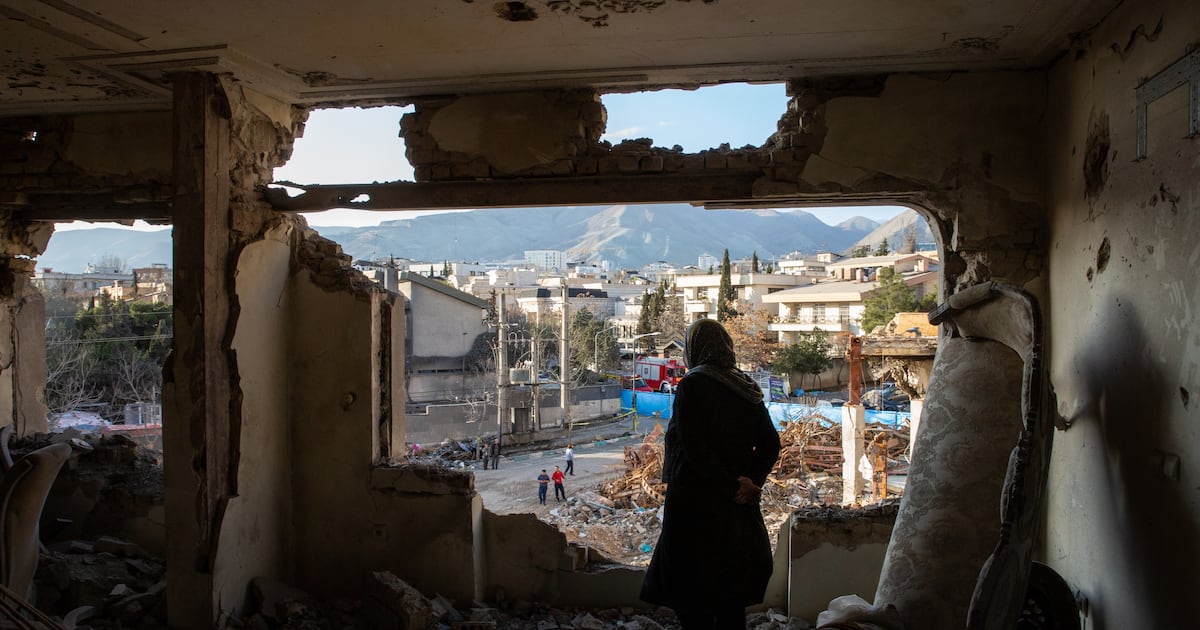
Iran has rejected a 15-point US proposal for ending the war in the Middle East. In doing so, it imposed five conditions of its own, including a conclusion of the war on all fronts, payment of war damages and sovereignty over the Strait of Hormuz.
An Iranian security official said Tehran is determined to continue defending itself and will deliver “severe blows” until its demands are met. He said the conditions presented by Washington are “excessive and detached” from what he described as the US failure on the battlefield.
Iran’s response came after reports Washington had transferred to Iran, via Pakistan, a plan to end the fighting.
Three Israeli cabinet sources said Israeli prime minister Binyamin Netanyahu’s security cabinet had been briefed on the US proposal. They said its terms included removing Iran’s stocks of highly enriched uranium, halting enrichment, curbing its ballistic missile programme and ending funding for regional allies.
Despite Iran’s rejection of the proposal, White House press secretary Karoline Leavitt said that due to what she termed the US “resounding military success” Iran is looking to end the war.
“The president’s preference is always peace. There does not need to be any more death and destruction,” she told a press conference on Wednesday night.
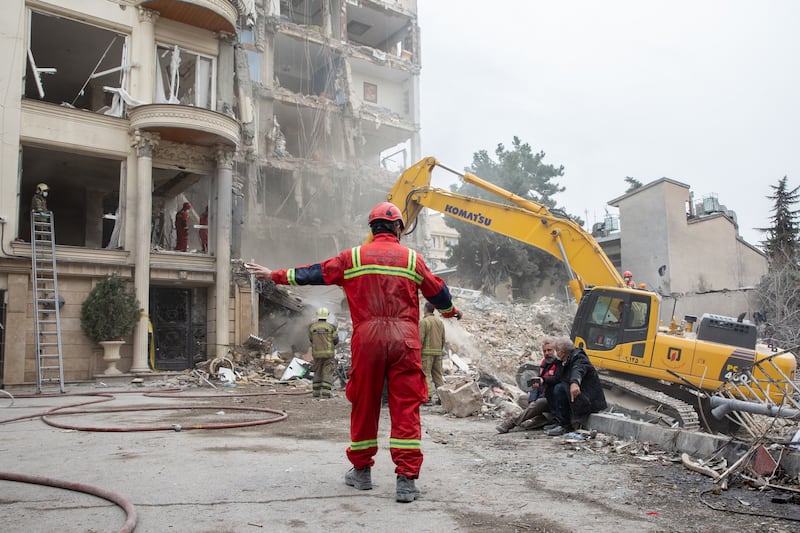 Emergency workers at a residential building that was hit by an air strike in Tehran, on Monday. Photograph: Arash Khamooshi/The New York Times
“But if Iran fails to accept the reality of the current moment, if they fail to understand that they have been defeated militarily and will continue to be, president Trump will ensure they are hit harder than they have ever been hit before.”
She added that Donald Trump is not one to bluff and that he is prepared “to unleash hell”.
Thousands of US troop reinforcements are on their way to the region, giving Trump more options to order a ground assault. The reinforcements are made up of some 1,000 paratroopers from the army’s 82nd Airborne Division and about 4,500 troops from the Tripoli Amphibious Ready Group.
Iran has warned of a further escalation if attacks are carried out on its territory or its islands. According to an unnamed military source, Iran could open a new front in the Bab al-Mandab Strait strategic waterway, where the Iran-backed Houthis have operated in the past.
The fighting continued on Wednesday, the 26th day of the war.
[ Sally Hayden in Lebanon: Amid the rubble, locals count their deadOpens in new window ]
The Israel Defense Forces (IDF) said planes targeted several sites that manufactured weapons for Iran’s proxies in the region, including Hizbullah and Hamas.
The New York Times said Netanyahu, fearing the war may end soon, has instructed the IDF to destroy as many targets in Iran’s arms industry as possible in the next 48 hours.
Israeli defence minister Israel Katz said the IDF has deployed more than 15,000 munitions in Iran, mor than four times the total used in the 12-day war in June last year. An Iranian rocket hit Israel’s Hadera power plant on Wednesday.
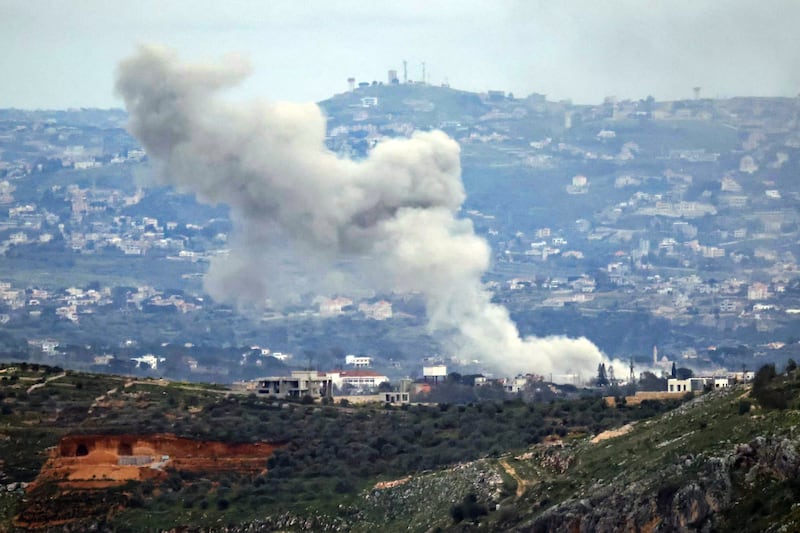 Smoke rises from the site of an Israeli air strike on the southern Lebanese village of Dayr Seryan on March 25th. Photograph: AFP via Getty
Netanyahu urged municipality leaders along Israel’s border with Lebanon to do “everything possible” to discourage residents from leaving to escape Hizbullah fire.
Israel is seeking to expand a security buffer zone in the south of Lebanon as part of its campaign against Hizbullah, Netanyahu said.
“The issue of dismantling Hizbullah is now before us. This is connected to the overall campaign against Iran, which is still in full swing despite media reports,” he said in a statement on Wednesday night.
“We are determined to fundamentally change the situation in Lebanon.”
Israel launched a fresh campaign against the Iran-backed militia on March 2nd after Hizbullah launched retaliatory rocket attacks in the on-set of the US-Israel war on Iran.
Netanyahu said: “Iran is weaker than ever. It is still trying various means, as you can see, but we have changed how we are perceived.”
The prime minister’s latest statement that Israel is “simply creating a larger buffer zone” at its northern border come amid a report from Human Rights Watch that it is using white phosphorous in its attacks on southern Lebanon.
Hizbullah secretary general Naim Qassem said negotiating with Israel under fire amounts to imposed surrender and called for unity against Israel. He said Hizbullah fighters were prepared to continue “without limits”.
Iran told intermediaries on Wedsnesday night that Lebanon must be included in any ceasefire agreement with the United States and Israel, six regional sources familiar with Iran’s position said, linking an end of the war to a halt to Israel’s offensive against Hizbullah.
According to US-based rights group HRANA, 3,291 people have been killed in Iran since the war began at the end of February. It said 1,455 of those were civilians, including at least 217 children.
In Lebanon, 1,094 people have died, according to the health ministry, while 18 people have died in Israel, according to health services. – Additional reporting: Reuters