
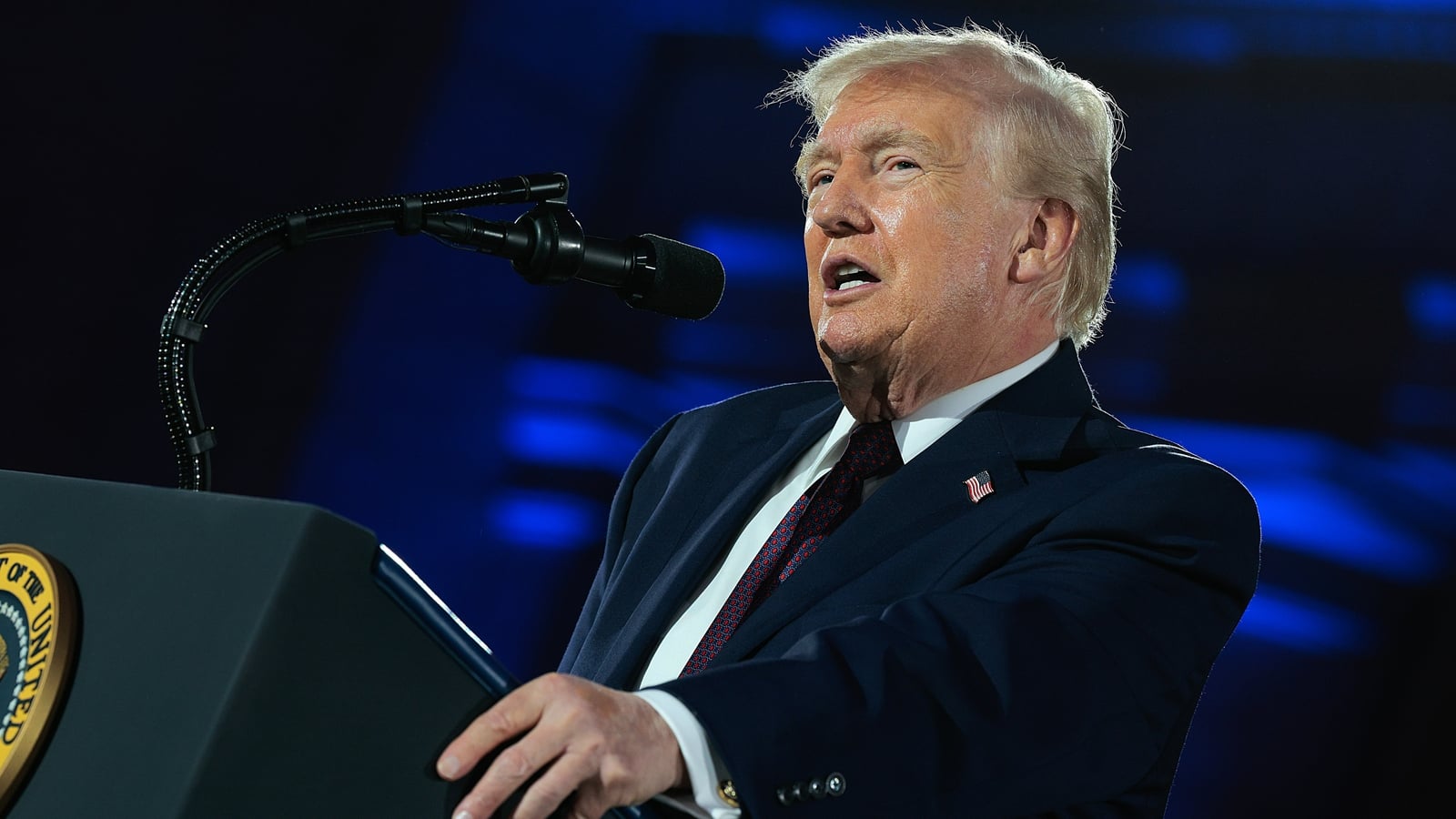
US President Donald Trump has insisted that Iran was taking part in peace talks, suggesting Tehran’s denials were because Iranian negotiators fear being killed by their own side.
“They are negotiating, by the way, and they want to make a deal so badly. But they’re afraid to say it, because they figure they’ll be killed by their own people,” Mr Trump told a dinner for Republican members of Congress.
“They’re also afraid they’ll be killed by us.”
The US leader’s comments came after Iranian Foreign Minister Abbas Araghchi said that “we do not intend to negotiate”.
Mr Trump repeated his assertion that Iran was being “decimated” in the conflict now in its fourth week, even though Tehran still maintains an effective stranglehold over the crucial Strait of Hormuz oil route.
Lashing out at his domestic opponents, Mr Trump also claimed Democrats were trying to “deflect from all of the tremendous success that we’re having in this military operation”.
Watch: Donald Trump claims Iran is ‘afraid’ to make a deal
In a mocking reference to calls from Democrats for him to seek the approval of Congress for the conflict, Mr Trump added: “They don’t like the word ‘war,’ because you’re supposed to get approval, so I’ll use the word military operation.”
The White House said earlier that Mr Trump was ready to “unleash hell” if Iran did not admit defeat, while also insisting that Tehran is still taking part in talks.
Iranian state media had earlier cited an unidentified official as saying that the Islamic Republic had responded “negatively” to a reported 15-point plan from Washington.
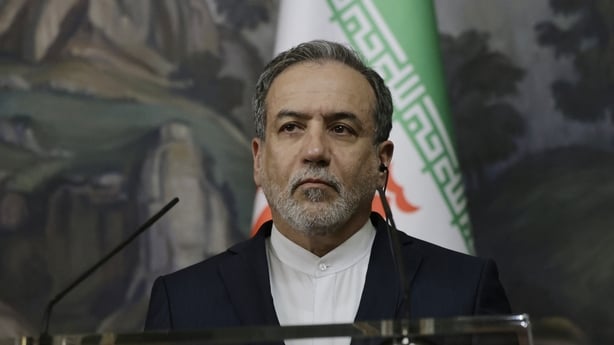
Abbas Araghchi said Iran is committed to continue resistance against the US and Israel
‘Talks continue’
“If Iran fails to accept the reality of the current moment, if they fail to understand that they have been defeated militarily and will continue to be, President Trump will ensure they are hit harder than they have ever been hit before,” Press Secretary Karoline Leavitt told reporters.
“President Trump does not bluff and he is prepared to unleash hell. Iran should not miscalculate again.”
Asked if negotiations with Iran had stalled, Ms Leavitt replied: “Talks continue. They are productive.”
Ms Leavitt declined to say whom the US was dealing with in Tehran following the assassination of supreme leader Ali Khamenei, whose son and successor Mojtaba Khamenei has not been seen in public.
Reports have suggested the Trump administration’s interlocutor is Mohammad Bagher Ghalibaf, Iran’s speaker of parliament and one of its most prominent non-clerical figures.
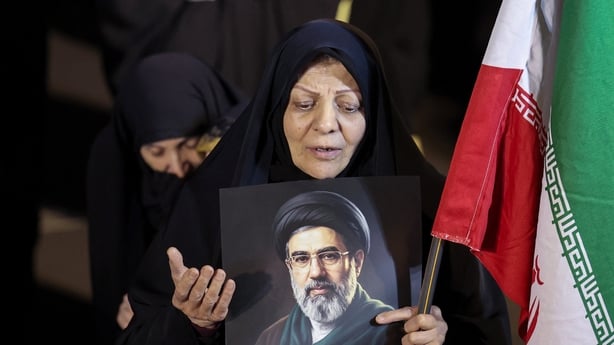
A woman holds a portrait of Iran’s supreme leader Mojtaba Khamenei as people march in central Tehran
The spokeswoman also declined to confirm reports that top US officials, including Vice President JD Vance, were set to hold talks with the Iranians in Pakistan, which has emerged as a key mediator.
Mr Trump is moving thousands of airborne troops and extra marines to the Gulf amid speculation that he might order a ground invasion to either seize Iranian oil assets in the Gulf or secure the Strait of Hormuz.
The White House meanwhile appeared to stick to the four to six-week timeline it had previously given for the war.
Mr Trump announced yesterday that his visit to China to meet Xi Jinping had now been rescheduled for mid-May, having postponed it by six weeks to deal with the conflict.
“We’ve always estimated approximately four to six weeks (for the length of military operations against Iran), so you could do the math on that,” Ms Leavitt added.
Impacts of conflict spread far and wide
The fallout from the conflict, which has caused the worst energy shock in history, has spread far beyond the region.
With the Strait of Hormuz, a conduit for a fifth of the world’s oil and liquefied natural gas, effectively closed, fuel shortages are occurring around the globe.
Some governments are weighing support measures last used during the Covid pandemic.
Farmers are struggling to source diesel for their tractors and tens of millions more people will face acute hunger if the war continues into June, the World Food Programme estimates.
The 15-point US proposal to end the conflict, sent through Pakistan to Iran, calls for removing Iran’s stocks of highly enriched uranium, halting enrichment, curbing its ballistic missile programme and cutting off funding for regional allies, according to three Israeli cabinet sources familiar with the plan.
The White House declined to disclose specifics of its proposal and threatened to escalate its strikes.
“If they fail to understand that they have been defeated militarily, and will continue to be, President Trump will ensure they are hit harder than they have ever been hit before,” Ms Leavitt told reporters.
Meanwhile, missiles and drones kept striking targets across the Gulf.
The Israeli military said it had completed a wide-scale wave of strikes targeting infrastructure in several areas across Iran, after another wave of attacks.
Read more:
ESRI warns higher energy prices due to Iran war will push up inflation
Bahá’í community calls for support for man held in Iran
Iran war energy shock may lead to 4% inflation – Central Bank
Admiral Brad Cooper, the Central Command chief leading US forces in the Middle East, said the US had hit over 10,000 targets inside Iran and was on track to limit Iran’s ability to project power outside its borders.
He said in a video briefing that 92% of Iran’s largest naval vessels had been destroyed and that its drone and missile launch rates were down by more than 90%.
The US and Israel have damaged or destroyed two-thirds of Iran’s missile, drone and naval production facilities and shipyards, Admiral Cooper said.
The Pentagon is meanwhile planning to send thousands of airborne troops to the Gulf to give Mr Trump more options to order a ground assault, sources have told journalists, adding to two contingents of Marines already on their way.
The first Marine unit, on board a huge amphibious assault ship, could arrive around the end of the month UN Secretary General Antonio Guterres warned the “world is staring down the barrel of a wider war” in the region.
“It is time to stop climbing the escalation ladder – and start climbing the diplomatic ladder,” he said at the UN headquarters in New York.