
Birutė Galdikas established one of the longest-running field studies of any wild mammal, helping to transform scientific understanding of orangutans and their behavior.Her work combined research with hands-on rehabilitation, returning hundreds of orangutans to the wild while navigating debates over the role of intervention in field science.As Borneo’s forests declined, she expanded her efforts into conservation, founding an organization and working with local communities to protect habitat under growing economic pressure.As part of the “Trimates”, a group of female researchers recruited by Louis Leakey, she helped bring great apes into public view and frame orangutans as emblematic of broader environmental loss.
See All Key Ideas

In the early 1970s, orangutans occupied an ambiguous place in science. They were known to exist, of course, but remained poorly understood, rarely observed, and difficult to study in the wild. Their forest habitat in Borneo and Sumatra was still vast, though already beginning to change. Logging roads were extending into areas that had long resisted access. The outlines of a larger problem were visible, even if its scale was not yet clear.
At the same time, a small group of researchers was beginning to reshape how great apes were studied. Fieldwork, rather than captivity, became the preferred approach. Long-term observation replaced short expeditions. The premise was simple but demanding: to understand animals that were hard to find, one had to remain in place long enough for them to become familiar with human presence.
Into this setting came a young graduate student with an interest in human evolution and a determination to study orangutans in their natural habitat, despite doubts that such work was feasible. With limited funding and little infrastructure, she established a research station in a remote peat swamp in Indonesian Borneo in 1971. Over time, that station would become one of the longest-running field sites for any wild mammal.
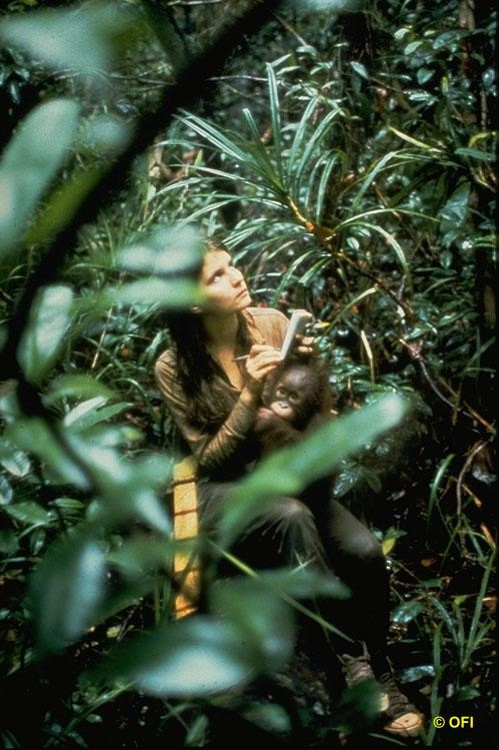 Galdikas in the field. Photo courtesy of Orangutan Foundation International (OFI).
Birutė Galdikas spent the next five decades working from that base. Her early years were marked less by discovery than by persistence. Finding orangutans could take weeks. Observing them required learning to move through dense forest and flooded swamps with minimal disturbance, to listen for signs rather than rely on sight. Gradually, individuals were identified and followed. Patterns began to emerge: feeding habits, reproductive cycles, and a social system that differed from the more visibly group-oriented lives of African apes.
Her work helped establish orangutans as a distinct case within primatology. They were largely solitary, with loose social connections rather than stable groups. Their slow reproduction made them especially vulnerable to disruption. Females produced few offspring over a lifetime. Losses were not easily replaced. These characteristics would later shape how scientists and conservationists understood the species’ decline.
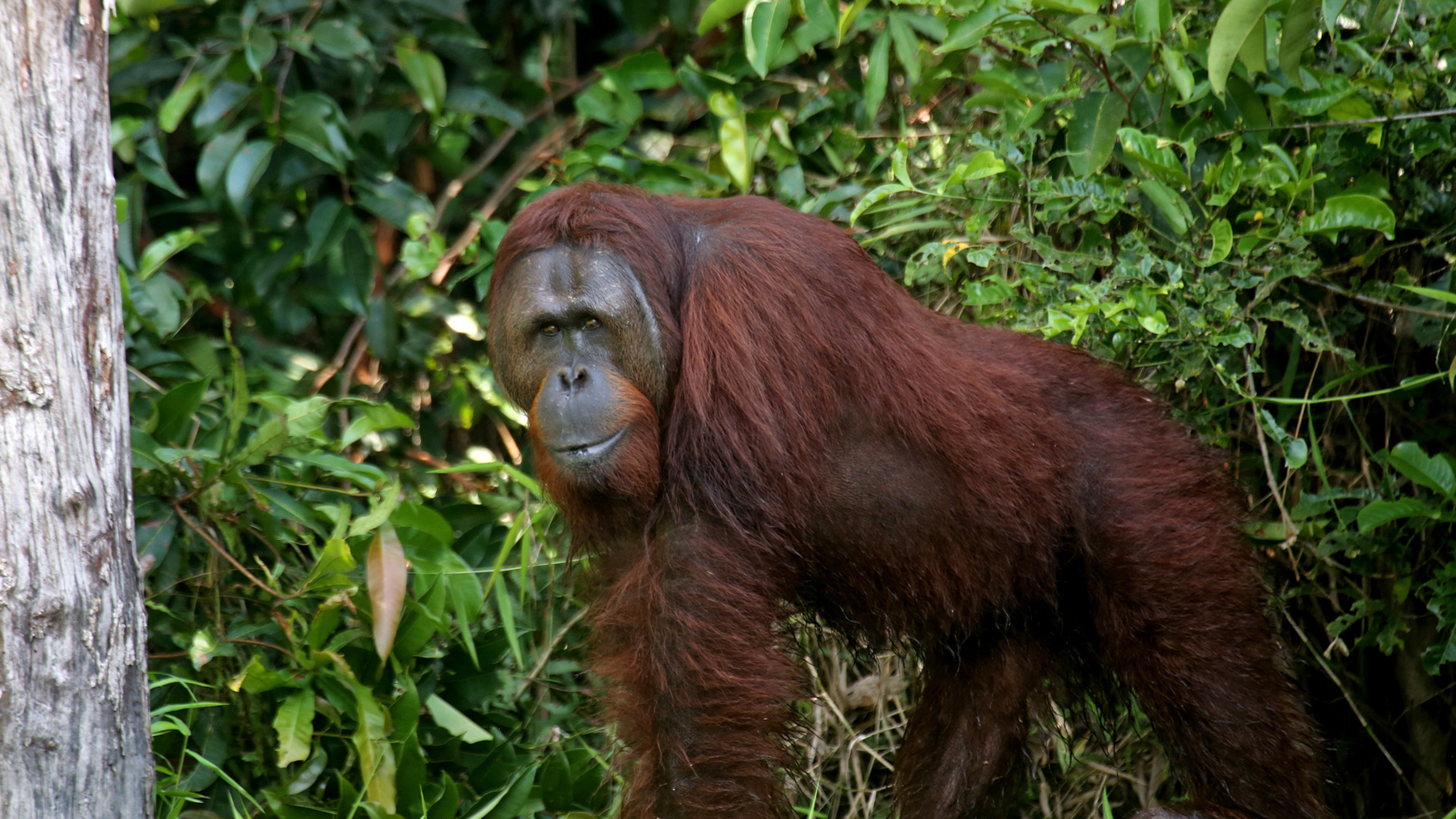 A Bornean orangutan in Indonesia. Image by Rhett A. Butler/Mongabay.
From the outset, research and conservation were intertwined. Even in the early years, forest clearing was evident. Orangutans displaced by habitat loss or captured for the pet trade began to appear in increasing numbers. Galdikas became involved in their care, initially out of necessity rather than design. Over time, these efforts developed into a structured rehabilitation program. Her hands-on approach, particularly in the handling of young orangutans, drew some criticism for blurring the boundary between observation and intervention.
Orphaned and confiscated animals were treated, trained, and eventually returned to the forest. The process was gradual. Young orangutans learned to climb, forage, and navigate the canopy before release. Some depended on supplemental feeding at first, returning to platforms where fruit and milk were provided, before becoming more independent. The program would reintroduce more than 450 individuals over the years.
 National Geographic Magazine, October 1975
In 1986 she founded Orangutan Foundation International, formalizing a broader set of activities that included research, habitat protection, and community engagement. By then, the pressures on Borneo’s forests had intensified. Large areas were logged or converted to agriculture. Fires and drainage transformed peatlands. The remaining forests became fragmented, and orangutan populations declined.
Her role expanded accordingly. She moved beyond observation to advocacy, working with local communities and authorities to limit encroachment and protect remaining habitat. Conservation, in this context, was not an abstract goal but a series of negotiations over land, resources, and livelihoods. Her organization employed local staff, supported patrols, and participated in reforestation efforts.
The work was not straightforward. Periods of weak governance, particularly in the late 1990s, led to increased illegal logging within protected areas. Large volumes of valuable timber were removed, often in full view. At times, Galdikas and her colleagues found themselves operating in conditions where formal protections existed on paper but were not enforced in practice.
Her approach was shaped by these realities. She argued that conservation had to align, at least in part, with local economic interests. Ecotourism became one avenue. Camp Leakey evolved into a site visited by both international travelers and local residents, offering a way to link forest protection with income. Educational outreach was another, aimed at building local support for conservation.
Galdikas was part of a generation that brought great apes into public consciousness. As one of the researchers recruited by Louis Leakey—alongside Jane Goodall (chimpanzees) and Dian Fossey (mountain gorillas)—she contributed to a broader understanding of primates as behaviorally complex and evolutionarily significant. Orangutans, once obscure, became emblematic of the risks facing tropical forests.
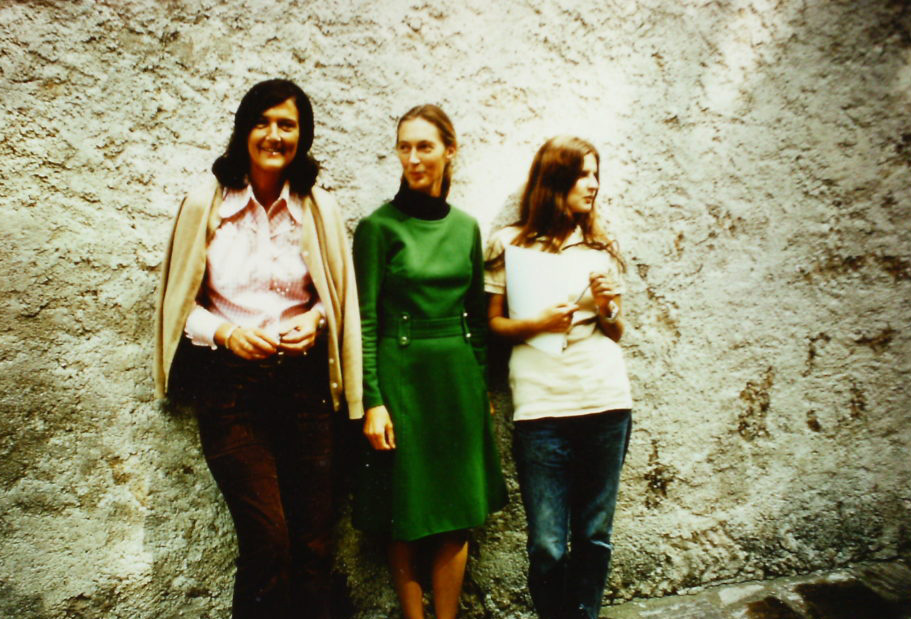 The “Trimates”, sometimes called Leakey’s Angels, is a name given to three women — Dian Fossey, Jane Goodall, and Biruté Galdikas (left to right). Galdikas was the last living member of the trio. Photo courtesy of Orangutan Foundation International (OFI).
Recognition followed, including the Tyler Prize for Environmental Achievement in 1997. Yet her work remained anchored in the same landscape where it had begun. Over decades, she documented not only the behavior of orangutans but also the transformation of their habitat. Forests that had once seemed extensive became fragmented. Pressures that had been emerging became established.
Her career did not produce a single defining theory or moment. Instead, it accumulated into a long record of observation and intervention. The continuity of her presence in the field allowed her to trace changes that were otherwise difficult to capture. It also tied her work to the outcomes she was documenting.
By the end of her life, the status of orangutans was no longer uncertain. Their decline was widely recognized, as were its causes. Habitat loss, driven by logging and agricultural expansion, remained the central pressure. The question was no longer whether these forces mattered, but how they might be addressed.
Galdikas spent much of her career working within that question, where scientific understanding and practical action converge, and where gains for orangutans and forests were often uncertain and incomplete.
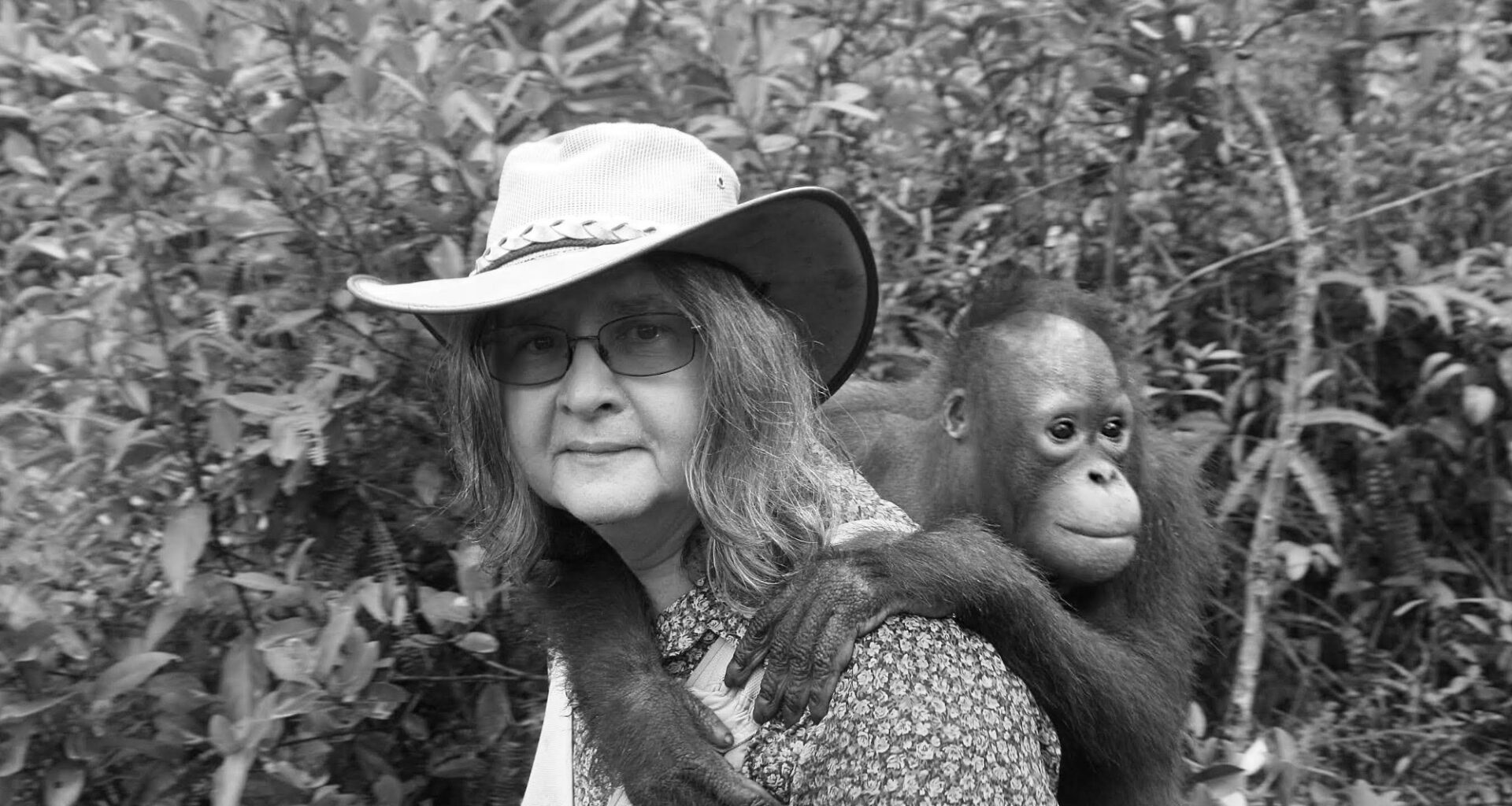
Banner image: Biruté Mary Galdikas. Photo courtesy of Orangutan Foundation International
