
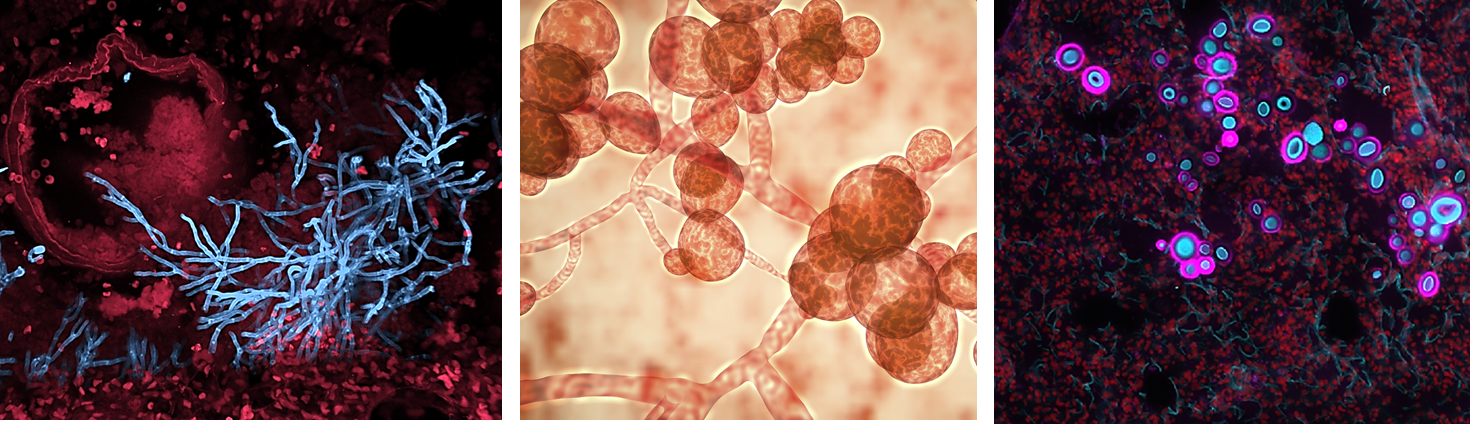
Professors Elaine Bignell and Neil A.R. Gow address the growing threat of fungal infections, highlighting the sharp rise in drug-resistant cases, and the required efforts to better understand and mitigate fAMR
Fungi are agents of mass crop destruction, but also cause around 2.5 million human deaths annually. (1) The vulnerable population is rapidly growing, driven by cancer treatment, chronic respiratory disease, emerging new pathogens and increasing disease caused by fungi resistant to the few available classes of antifungal drugs. In December 2025, the UK Chief Medical Officer’s report highlighted the fungal threat, estimating nearly 200,000 life-threatening fungal cases per year.
The UK has seen a 42% increase in invasive fungal infections since 2014, including a 23% increase in fungal sepsis. Drug-resistant disease has increased sharply, up to 40-fold, with the arrival and spread of new drug- resistant variants. The post-COVID resurgence of the multidrug-resistant pathogen Candida auris led to a national incident and the UK’s first-ever notifiable fungal disease.
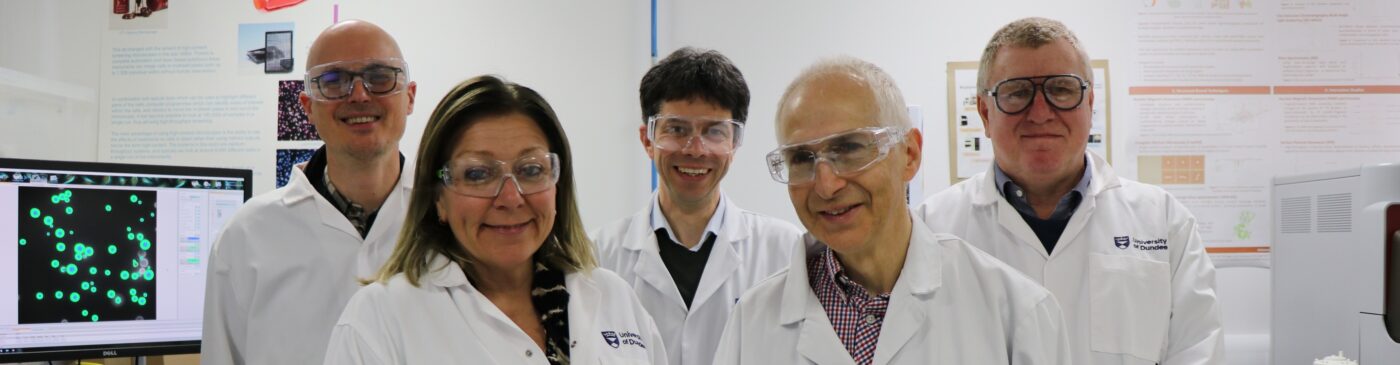 Wellcome funded drug discovery consortium (left to right): Tim Milne, Elaine Bignell, Manu De Rycker, Ian Gilbert, Gordon Brown.
Antifungal drug resistance
While antimicrobial resistance (AMR) in bacteria has long-dominated public attention, deadly drug-resistant fungal diseases have lacked R&D investment. Medical mycology drew less than 1% of the G20 $105 billion invested into infectious disease research between 2000 and 2017, whilst the UK, Europe and the U.S. invested ~2-3%. Fungal AMR is a global problem fuelled by the widespread use of antifungal drugs in medicine and agriculture, driving fungal populations to evolve drug resistance. When resistant strains infect patients, standard treatments may already be ineffective, and without treatment, most invasive fungal diseases would be fatal. This unthinkable scenario draws closer as the antifungal pipeline stagnates, and climate change and global travel expand fungal spread.
The World Health Organization has highlighted fungal diseases as a critical threat to human health, recognising that the growing problem lies not only in the diseases themselves, but also in their increasing resistance to antifungal drugs. The urgent need to combat fAMR is not solely a scientific challenge; it will also be a critical test of global preparedness, innovation, and public health coordination.
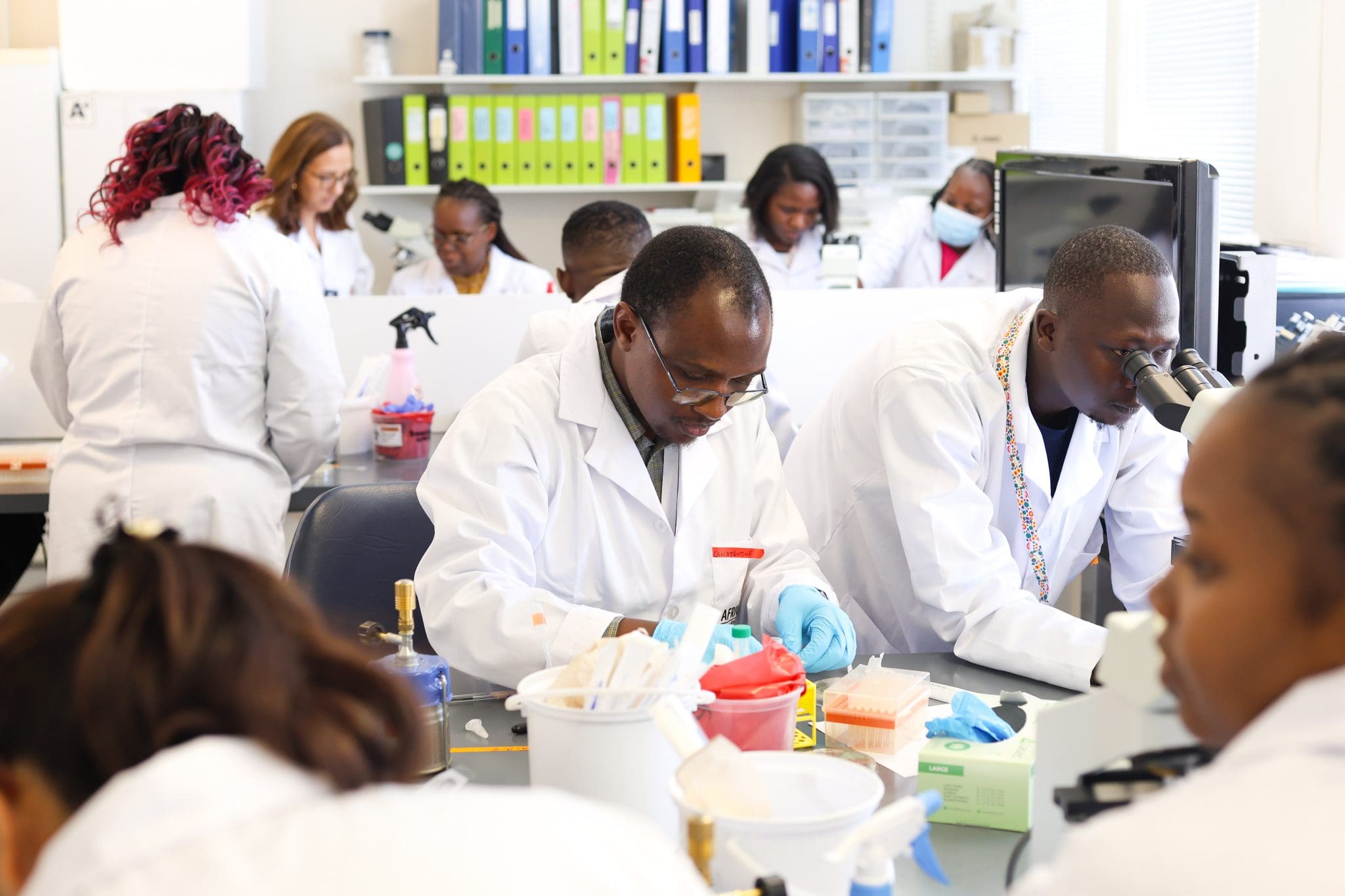 FAILSAFE-funded Training Workshop in Medical Mycology, December 2025 at the CMM AFRICA Unit, University of Cape Town, South Africa.
Working against the clock
In response to the growing fAMR threat, scientists, pharmaceutical companies, and the UK government are working against the clock to develop new solutions. At the forefront of these efforts, the UKRI-funded MRC Centre for Medical Mycology (MRC CMM) in Exeter – globally one of the largest centres for fungal research – is driving advances in diagnostics and therapeutics. Understanding and mitigating increases in fungal AMR
The FAILSAFE project, funded by the UK Department of Health and Social Care’s Global AMR Innovation Fund, is remarkable for being the first and only government-funded consortium globally to address fAMR. From an initial investment of just £2.8 million in 2024, FAILSAFE funding is now supporting 135 researchers across more than 30 countries developing molecular and AI-assisted diagnostics, therapeutics and global surveillance programmes. The CMM-FAILSAFE network convenes a global cohort of >1000 researchers in 93 countries for collaborative knowledge exchange to advance research and improve patient outcomes. The FAILSAFE global training program, which reached 296 FAILSAFE members last year, provides fully funded online and in-person training in clinical mycology, drug discovery, bioimaging, project management, and grant writing.
Resolving the critical lack of antifungal drugs
For half a century, treatment of invasive fungal diseases has relied upon just three classes of antifungal medication: azoles, echinocandins, and polyenes. Resistance to a single drug class significantly limits treatment options, while resistance to multiple classes can render infections untreatable. Despite a global antifungal market valued at >$16bn in 2024, pharmaceutical companies have refrained from developing antifungal drugs due to lower financial returns compared to those for chronic conditions. The requisite sustained investment lies well beyond what is feasible through conventional public funding mechanisms. A way forward is the formation of disruptive public-private consortia that can underpin preclinical drug discovery and the progression of novel drugs into clinical trials. A recent example is the Wellcome-funded tripartite drug discovery catalyst (comprising the Dundee Discovery Unit, GSK and MRC CMM), awarded £17 million to develop pre-clinical drug candidates for cryptococcal meningitis, which kills around 180,000 people annually – most of them living with HIV.
Developing novel combination therapies
Combination therapies (cocktails of existing antifungal agents) may reduce the chance that fungi can survive and adapt, thereby preserving the utility of drugs. Pursuing this strategy, the MRC-funded interdisciplinary research consortium Fungi-CARE (Combinations Against Resistance Emergence), comprising scientists, clinicians, and pharmacologists based at MRC CMM, Liverpool, and City St. George’s Universities, is harnessing systematic, high-throughput analyses of drug-drug interactions. The goal here is to leverage sufficient data to enable informed decision-making in the clinic.
Winning the race
As fungi continue to evolve and exploit weaknesses in medical and environmental systems, we must respond with urgent, bespoke research initiatives. Ultimately, the race to beat deadly, drug-resistant fungal diseases will require investment and a comprehensive approach, founded upon sustained scientific innovation, coordinated public health action, and recognition that fungal pathogens are a major element of global infectious disease threats.
References
Denning DW. Global incidence and mortality of severe fungal disease. Lancet Infect Dis. 2024 Jul;24(7):e428-e438. doi: https://doi.org/10.1016/S1473-3099(23)00692-8. Epub 2024 Jan 12. PMID: 38224705