
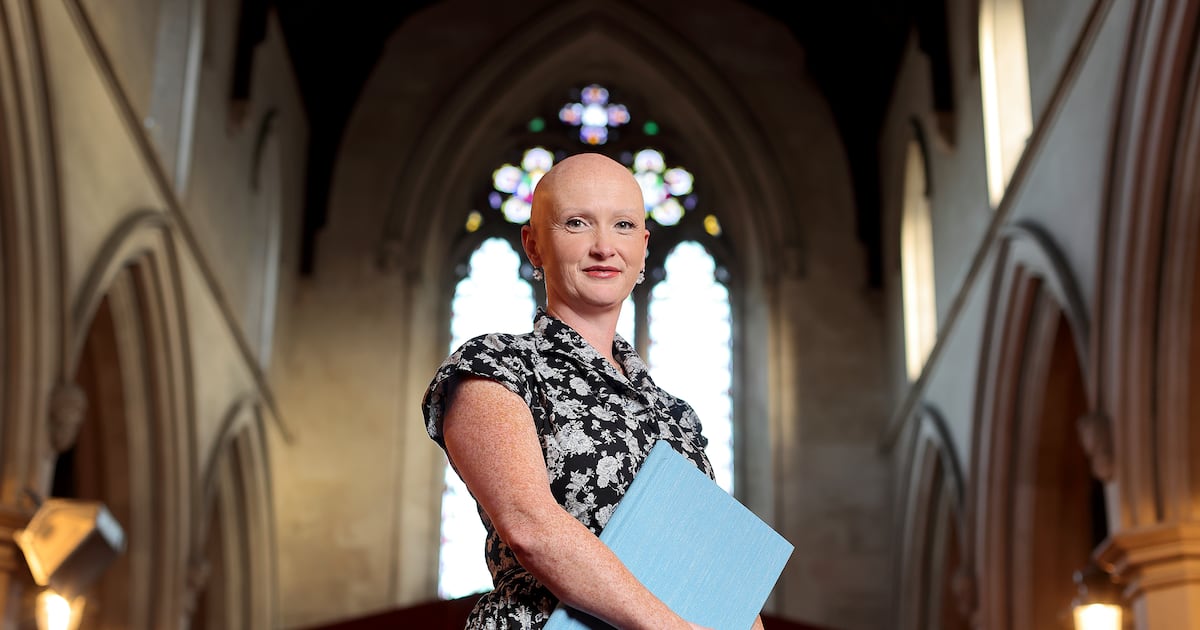
At age 20, Karen Dempsey would finish a nursing shift at 11pm, go home, work a flight with Aer Lingus, and be done by midday.
“It sounds mad now, but at the time it just felt like living,” she says. “I never made a conscious decision to change careers. I was already halfway into the next step before I realised it.”
In Dempsey’s case, that next step would be followed by another, and another – nursing giving way to cabin crew, then night nursing, then an arts degree, then pharma, then psychotherapy, then ministry, and ultimately the founding of Entheos. Few people, it turns out, travel in a straight line.
Career psychologist Sinéad Brady has spent years working with people at this kind of crossroads. “Your identity does not begin to settle into something you truly understand until around the age of 26,” she says. “That is when you start to develop a deeper sense of self, and it is also when your relationship with your career can fundamentally shift. What suited you at 17 or 18 may simply not suit you at 25 or 26.”
Brady, whose Courageous Career programme works with adults navigating professional transitions, sees this pattern constantly. A death, a redundancy, a relationship break-up – any significant transition can prompt a fundamental reassessment. “People often sense they need a change, but when they examine it closely, it is frequently not as dramatic a shift as they initially thought.”
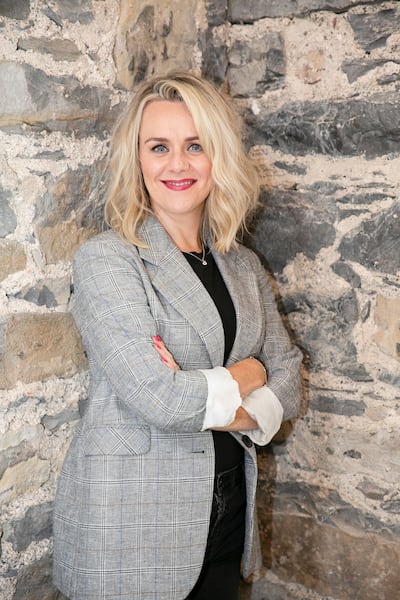 Career psychologist Sinéad Brady: ‘There are more routes than people realise’
“School is ultimately about preparing us for work,” she says, “yet nobody gives you a map for how to get there, how to change direction, or how to feel that you can have a life as well as a living”.
Moment of reckoning
For Rozelle Owens, now a dentist and owner of D4Dentist.ie on Dublin’s Baggot Street, the reckoning came at 26 or 27, studying for accounting exams she had no interest in. “If I’m honest, I was only doing them because work paid for them.”
A life coach proved transformative. “She stopped me and said, ‘Should? What is should? Should for who?’ That really landed. It forced me to examine whose expectations I was living by.”
Lavina Byrne’s moment of clarity came while she was travelling. Having qualified as a vet at UCD in 2010 and after spending six years in clinical practice in Scotland and Northern Ireland, she took a year out and wasn’t sure, coming back, that she wanted to return to practice.
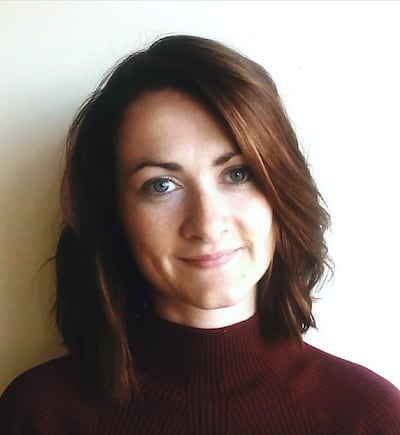 Lavina Byrne: ‘I liked the idea of keeping learning and challenging myself’
“Veterinary work can be demanding and stressful, and I was at that age, late 20s, early 30s, where I knew more commitments were coming down the line. But a full-time course would be harder to do later. I had always been interested in science and engineering; I liked the idea of keeping learning and challenging myself.”
Dempsey’s journey illustrates Brady’s point about environment versus function perfectly. Having qualified as a nurse in 1998, she knew by the time of her final exams that she would not stay as a traditional nurse.
“The learning curve felt completed. Looking back, I think it was the beginning of my ADHD coming to life.”
She went straight to Aer Lingus, worked nights at the Rotunda Hospital, then started an arts degree in UCD. “Nursing had taught me so much, but I was seeing patterns emerging around mind, body and spirit. I was still so young, yet already working intimately with birth, death and dying.”
What will people think?
Changing career direction is rarely a private decision. Byrne found that reactions depended largely on who was asking.
“The ones who knew me less well couldn’t understand why I would give up what they saw as a relatively lucrative career. There was always that idea that you qualify as a nurse or a vet or a teacher and that is your life. But I think there is a generational gap in how people view these decisions. Younger people are much less fazed by the idea of changing direction.”
A biomedical science master’s at the University of Galway caught her eye. “We had speakers come in from different companies,” she says. “We did projects that brought you from the inception of an idea all the way through R&D. I wasn’t pigeonholing myself. As I moved through the programme, industry began to feel like the natural destination.”
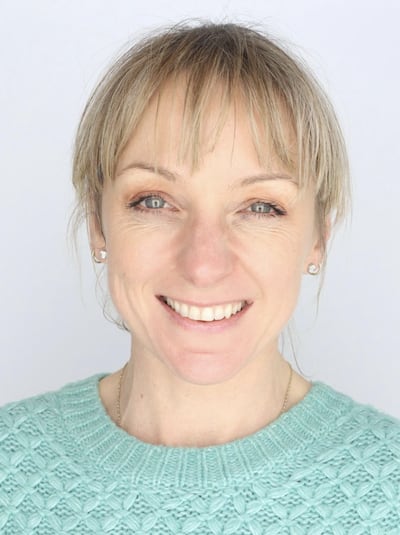 Rozelle Owens: ‘I used to get up at 5am to write my thesis before work. I got a distinction’
Owens sat her Leaving Certificate chemistry and physics exams – suited and booted from work – alongside a hall full of teenage boys, got a place at University College Cork and was 29 when she started dentistry. From the moment she decided to change direction to the day she qualified was about seven years. “But I had the end goal in sight,” she says.
The sacrifices
None of this comes without cost. Owens finished her dentistry degree with around €40,000 in loans, having worked throughout college as a physical carer for people with disabilities. “The debt is paid off now, and I’ve never regretted it,” she says.
In 2017 she enrolled in a three-year, part-time master’s in aesthetic and restorative dentistry at King’s College London (ranked consistently in the top five in the world) at a cost of around €50,000. In her second year she was pregnant and running a practice. “I used to get up at 5am to write my thesis before work. I got a distinction, and I don’t think I’ve ever been as proud of myself.”
Byrne also had to be careful with money. “I had some savings, lived frugally, and my partner picked up work to help support us,” she says. “Then part-time days at Medtronic helped bridge the gap. It was tough going, and it would be tougher now with accommodation costs as they are.”
Paul Smith, solutions sales senior manager at Vodafone Ireland, discovered the demands of returning to education differently. Two evenings a week, after a full day leading a sales team, he sat in class until 9.45pm – before homework, revision and continuous assessment projects even began.
“Nobody told me it would be this demanding,” he says. “And honestly, I wouldn’t have it any other way.”
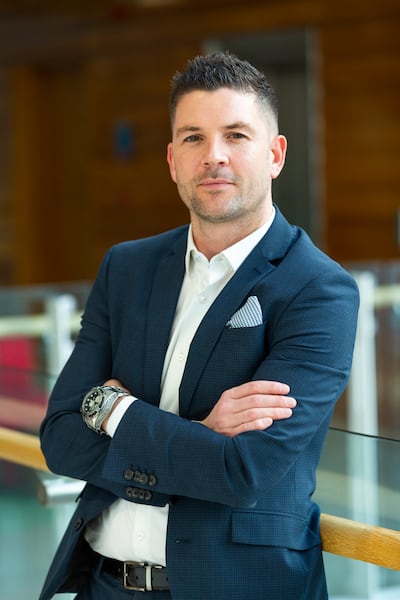 Paul Smith: ‘The experience has felt far more intentional. I am very clear on what I want to achieve’
Smith is completing CCT’s AI and Working into the Future diploma, a QQI Level 7 qualification supported through Springboard+. “What I significantly underestimated was the time commitment and the impact on family life.” But returning as an experienced professional felt different from his undergraduate years.
“The experience has felt far more intentional. I am very clear on what I want to achieve, and the learning has reinforced my confidence by equipping me with tools and insights I can apply immediately.”
The programme’s emphasis on AI ethics proved particularly valuable, he says. “The course has strengthened my ability to assess AI solutions critically and advocate for responsible, customer-centric outcomes.”
Brady is direct about the wider difficulty. “The timing is genuinely hard for some people, particularly those with multiple care responsibilities,” she says. “Sometimes we have a harsh internal dialogue that expects us to do everything without help or support. If you can open that conversation with your wider circle, you would be surprised what people are willing to do to help.”
Routes available
Brady is keen to demystify the practical pathways available. “There are more routes than people realise. Microcredentials, modular qualifications and recognition of prior learning (RPL) all allow people to build on existing knowledge rather than starting from scratch. The role and the title belong to the organisation, but the skills you have and perform belong to you, and they travel with you.”
Byrne applied for a role at Medtronic while finishing her thesis. “They mentioned they were open to people with medical backgrounds, brought me in for a few days a week, and it grew organically from there,” she says.
Now a senior MDR vigilance specialist at Medtronic, her veterinary background – including radiology and anatomical knowledge – was directly relevant.
“Transferable skills matter more than people think,” says Byrne. Problem solving, attention to detail, the ability to work on your own initiative are skills that travel across any industry. You don’t want a room full of people with exactly the same experience.”
For Dempsey, every apparent detour turned out to be preparation. A master’s in psychotherapy at DCU was followed by two years of interfaith ministry training in London. The insight that attitudes to ceremonies in Ireland were polarised – “either completely atheist or completely religious, but there was fertile middle ground between the two” – combined with her nursing background and ability to solemnise marriages, led directly to Entheos.
“Every strand of my journey – nursing, humanities, psychotherapy, ministry – turned out to be preparation for it,” Dempsey says. “None of it was wasted.”
Was it worth it?
Almost universally, those who made the leap say yes. Smith describes his postgraduate as giving him “fresh perspectives and practical insights I can apply directly every day”.
Owens, loans paid off and master’s distinction earned, has never looked back. Byrne found a career that draws on everything she thought she had left behind. Dempsey built an organisation from the sum of everything she had ever learned.
Brady’s advice to anyone hovering on the edge is simple. “Be honest with yourself about why you are doing it. Make sure it fits your stage of life and your career ambitions. Talk to people who have done it.”
Owens has the last word: “If you really want to do something, do it. You only have one life.”