
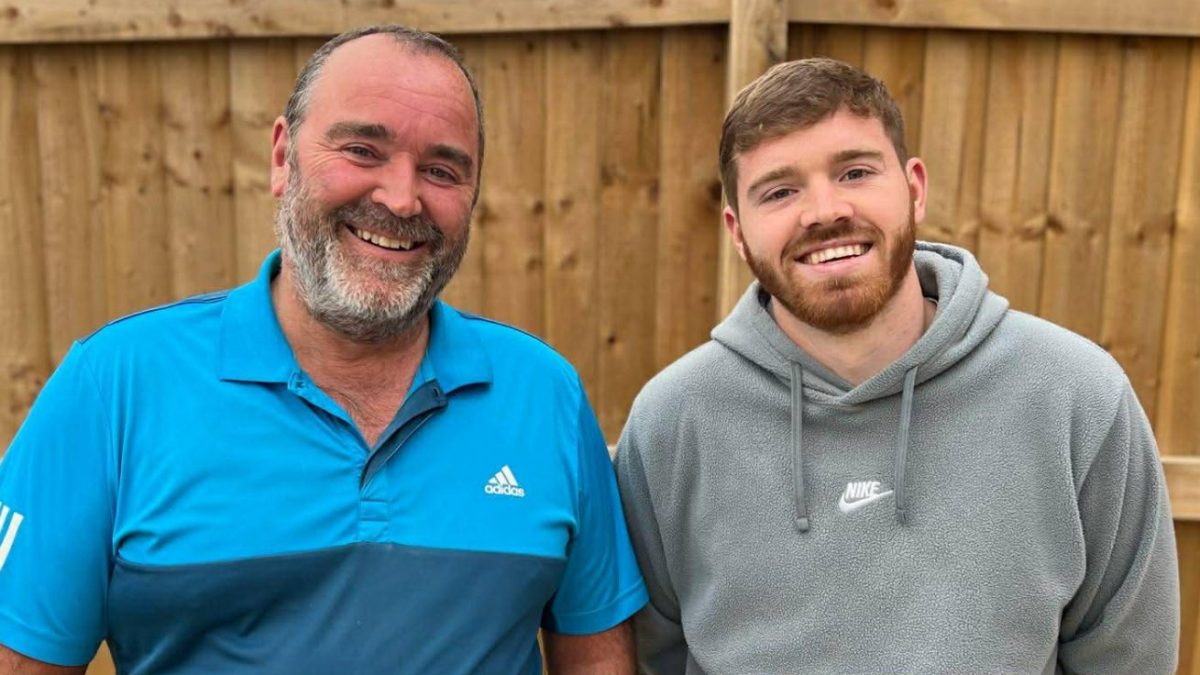
Parents, including Sean Graham, are dipping into the pensions they’ve spent decades building to help their children take their first step onto the property ladder.
The 57-year-old, from Derbyshire, originally planned to retire from his work as a sales executive selling meats and deli products to independent shops at 60 but retired at 55 after the loneliness of the pandemic made him rethink his priorities and direction.
When he retired, his personal pension was worth around £130,000 and his company pension was approaching £160,000.
He had also recently downsized moving to a “significantly smaller” four-bed property, which created around £100,000 in cash reserves. He also got rid of one of his cars to save money.
New FeatureIn ShortQuick Stories. Same trusted journalism.
Sean said: “I wanted to help my son and his partner get onto the property ladder, as I knew how difficult it would be for them otherwise.”
Sean used his 25 per cent tax-free lump sum to give his son £40,000 to put towards the three-bed semi-detached house – worth £225,000 – just a few streets away from the home he shares with his wife, Clare, 56, who works as a planner for a flooring company.
He said: “We gave them £15,000 towards the deposit, £10,000 for furnishings and another £15,000 to help with a new vehicle. That all came from my tax-free lump sum and savings.
“It would have been very difficult for my son to ever leave home and buy his own property without help.
“He and his partner both work in retail and hospitality on relatively low wages. He’s always been fiscally aware, had some savings and no debts, but a full house deposit was simply out of reach for them. Without support, I think they would have struggled to get onto the property ladder at all.”
His son, Joshua, 26, and his partner Georgia, 25, work as managers at Pizza Hut and Home Bargains, respectively.
It comes as new research from Standard Life shows that the Bank of Mum and Dad comes at a cost, with three in five parents of adult children providing financial support.
One in seven parents say helping their children with money will mean they retire later or have a more modest retirement as a result, while over a quarter say they have dipped into savings to support their children.
That said, the research highlights how parents are largely happy to make this sacrifice with over half of parents expecting nothing in return and two-fifths, like Sean, happy with their decision.
 Joshua and his partner Georgia bought a house and are expecting a baby this summer
Retiring early – the current retirement age in the UK is 66 – and helping his son and his partner financially means he doesn’t have a big tax-free buffer now.
So, he takes around £1,000 per month from his personal pension to cover bills, which he believes will take him through to state pension age which will then be 67. At this point, he will take money from his company pension.
From age 55 in the UK, rising to 57 in 2028, you can typically take up to 25 per cent of your pension pot as a tax-free lump sum, capped at £268,275. The remaining 75 per cent is taxable as income. Total tax-free lump sums are limited to £1,073,100 over a lifetime, including death benefits.
Mike Ambery, retirement savings director at Standard Life, said student loan repayments, higher housing costs, rising living expenses and job market pressures are all affecting younger generations today.
He said: “Life is rarely linear, and like many other milestones, it’s completely normal for pension savings to take a back seat when focusing on supporting children.
“However, at the same time, parents mustn’t lose sight of their own financial goals.
“Everyone’s journey to and through retirement can be better and understanding where you are in terms of your own long-term finances is important, to ensure you are heading towards the retirement you envisage.”
This means setting clear expectations with your children about the level of support you can provide, he said, making sure you’re still contributing what you can afford into your pension.
Ensuring you’re thinking about how much money you will realistically need for retirement is also important – “striking the right balance between supporting children today and staying engaged with your own financial future”.
Before he retired, Sean was earning around £70,000 per year and since gifting his son the cash, he and his wife have made lifestyle changes.
He said: “We used to have four holidays a year, but we’ve cut back on that. We live a non-extravagant life off my wife’s salary, and that was something we thought through carefully.
“The hardest conversation was explaining to my son and his partner that I couldn’t be their financial safety net forever after retirement.
“It was about finding a balance between helping them and protecting our own future.”
His son and his partner are now settled into their new home and are expecting a baby in the summer, which is “the icing on the cake for us”, he said.
“We have absolutely no regrets. Knowing we’ve been able to help them at such an important stage in their lives means everything, and we’ll still be leaving everything to them in the future anyway.”
Ambery said Junior ISAs (JISAs) and even child pensions are a good way to help support children, providing a tax-efficient way to give children a head start and potentially benefit from compound interest or investment growth from the earliest moment possible.