
 Credit: Unsplash/Nikolett Emmert.
A common science fiction trope is infinite cloning. In such a scenario, we could perfectly copy our best livestock, our beloved pets, or even ourselves, forever.
But apparently biology doesn’t work like that at all.
In January 2005, researchers at the University of Yamanashi in Japan took a single female laboratory mouse with a brown agouti coat and cloned her. When that clone matured, they harvested her cells and cloned her again. And again and again.
After two decades, 58 generations, and more than 30,000 cloning attempts on this specific lineage of mice, scientists have hit a hard biological wall. They proved that serial cloning in mammals ultimately triggers a fatal cascade of genetic mutations. It turns out that mammals cannot survive as a species without the genetic mixing that comes from sexual reproduction.
“No one has ever continued re-cloning for this long before. As a result, this is the first time we’ve discovered that repeated re-cloning eventually reaches its limits,” said developmental biologist Teruhiko Wakayama to Reuters, who used a technique called somatic cell nuclear transfer. This is the exact same technology that gave us the famous Dolly the sheep back in 1996, the first mammal clone.
Infinite Copies, Infinite Mutations
The Japanese researchers wanted to see if a mammalian lineage could persist solely through asexual reproduction. Plants and some lower animals, like flatworms, clone themselves effortlessly in nature.
The experiment initially looked like a massive success. Around the 25th generation, the cloning success rate actually improved. The researchers published a paper in 2013 announcing these early victories. The mice looked entirely healthy, they lived normal lifespans, and they showed no physical abnormalities.
“At that time, we concluded that re-cloning could likely continue indefinitely,” Wakayama said. “However, in that study, we did not examine the genetic sequences. We continued our research for 13 more years, and as a result, we discovered that our previous conclusion was incorrect — that is, there is a limit to re-cloning.”
×
Thank you! One more thing…
Please check your inbox and confirm your subscription.
The Photocopy Problem

As the generations dragged on past the 27th iteration, the birth rate began to silently collapse. By the 57th generation, a mere 0.6 percent of the cloned embryos survived. The 58th generation represented the absolute end of the line. Every single clone died within a day of birth.
What exactly went wrong? You can think of serial cloning like making a photocopy of a photocopy. With the first copy, the image deteriorates slightly. If you run that new copy back through the machine, the quality drops again. Repeat this 58 times, and the final image is completely unrecognizable.
“It was once believed that clones were identical to the original, but it has become clear through this study that mutations occur at a rate three times higher than in offspring born through natural mating,” Wakayama explained to Reuters.
When the researchers sequenced the genomes of the cloned mice, the data revealed catastrophic genetic damage. Every generation acquired roughly 70 new mutations. Worse, massive chunks of DNA began to break. Chromosomes were inverted or attached themselves to the wrong places. In some of the later generations, the mice literally lost an entire X chromosome.
Through The Looking Glass
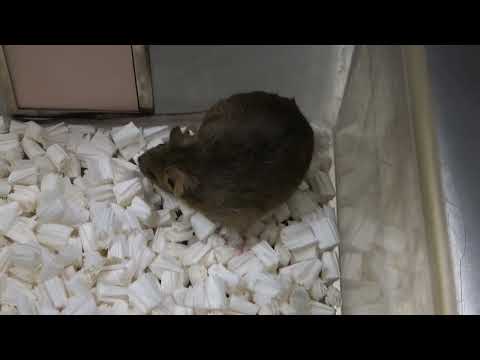
Clone mice of the 56th generation. Credit: Nature Communications.
This brings us to one of the greatest mysteries in evolutionary biology: Why do we need sex at all?
From a purely mechanical standpoint, sexual reproduction is wildly inefficient. You have to expend energy finding a mate, and in the end, you only pass on half of your genes. You can say there’s quite a lot of friction. Some biologists have turned to the Red Queen hypothesis to explain why sex is actually worth the trouble.
Named after the character in Lewis Carroll’s Through the Looking-Glass, and What Alice Found There, who must constantly run just to stay in the exact same place, the Red Queen hypothesis describes an endless evolutionary arms race between hosts and their parasites. If you clone yourself, your identical offspring are sitting ducks for viruses that have already learned how to hack your immune system. Sexual reproduction, however, constantly shuffles the genetic deck. This constant mixing creates a moving target, making it much harder for pathogens to wipe out an entire population.
But here is the catch: the Red Queen doesn’t explain what happened to our cloned mice. These laboratory animals lived in a highly controlled, specific-pathogen-free environment. Because they enjoyed minimal environmental pressure, they weren’t fighting off novel viruses or dodging hungry parasites.
Instead, this massive 20-year experiment provided the first physical proof in mammals of a much more mechanical evolutionary threat known as Muller’s ratchet.
Muller’s Ratchet and the Power of Sex
Imagine a physical ratchet — a gear designed to only click forward, never backward. Geneticist Hermann Joseph Muller proposed that asexual reproduction acts exactly like this gear. Every time a lineage acquires a slightly harmful, random DNA mutation, the ratchet clicks forward. Because a clone is an exact copy of its parent, it inherits every single genetic error, and then inevitably adds a few of its own.
“Once the mutation is in the lineage, it’s there forever,” evolutionary biologist Michael Lynch told Nature. “There’s no way back”.
Without fresh DNA, the genetic load simply gets heavier and heavier. The gear clicks so many times that the species eventually experiences a mutational meltdown, reaching a threshold where the organism can no longer survive. Across more than 30,000 nuclear transfer attempts spanning 58 generations, the Yamanashi researchers proved that this meltdown, as predicted by Muller’s ratchet, absolutely occurs in mammals.
“In cloning, all genes are passed on to the next generation, meaning that all defective genes are also passed on,” Wakayama noted.
This is exactly why sexual reproduction is so vital to our survival. When ordinary animals mate, their genetic material recombines. This genetic mixing acts like a biological spellchecker, weeding out fatal errors and allowing offspring a chance to inherit healthy, unbroken genes from either parent.
But how do natural cloners—like those flatworms and potatoes—escape the ratchet? Simple organisms rely on a brutal, microscopic sorting process called somatic selection. Because they regenerate from massive pools of generic stem cells, any cell that acquires a harmful mutation is quickly outcompeted and starved out by healthy, vigorous cells. The trash takes itself out before the organism even splits to form a new generation. Other successful asexuals, like bdelloid rotifers, use extreme DNA repair systems, keeping multiple backup copies of their genome to patch over broken genes without needing a sexual partner.
The Future of Cloning
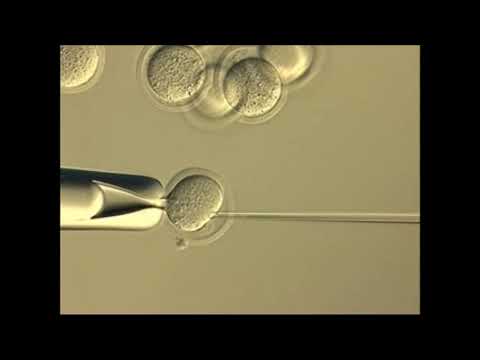
Cloning made by Wakayama using nuclear transfer. Credit: Nature Communications.
Now that we know you can’t clone a mammal indefinitely, at least not with our current technology, scientists must change how they approach agricultural and conservation cloning. We can no longer assume that creating a clone is a perfect, consequence-free backup of an animal.
“If the goal is to preserve superior livestock through cloning, it would be advisable to store a large number of somatic cells for cloning in advance,” reproductive biologist Atsuo Ogura told Nature, “and avoid repeated serial cloning over generations.”
Scientists still view cloning as a vital tool. Teruhiko Wakayama famously pushes the boundaries of this field. It was Wakayama’s team that cloned the first mouse in 1997, a year after the famous Dolly the Sheep became the first-ever mammal clone. He even worked to clone mice from freeze-dried cells that spent years aboard the International Space Station. But the technology currently has a hard ceiling.
“We had believed that we could create an infinite number of clones. That is why these results are so disappointing,” Wakayama said. “At this point, we have no idea for overcoming this limitation. I believe we need to develop a new method that fundamentally improves nuclear transfer technology.”
For now, the collapse of the 58th generation leaves us with a profound lesson. We cannot cheat millions of years of mammalian evolution.
The findings appeared in the journal Nature Communications.