
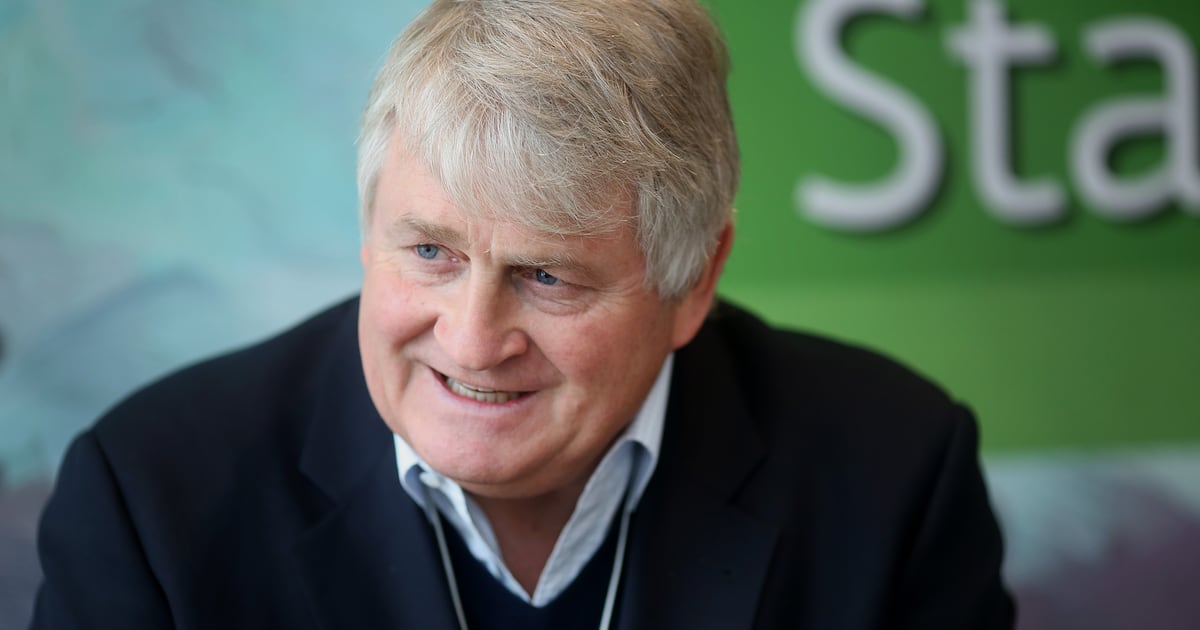
Denis O’Brien, relieved by news earlier this month that neither he nor anyone else will face criminal charges arising from the Moriarty tribunal, has another reason to be cheerful in advance of his 68th birthday next month.
Three years after agreeing to surrender 90 per cent of his Digicel empire to a bunch of bondholders to avoid the telecoms group collapsing under a mountain of debt, something is stirring that is likely to secure the businessman a handsome pay-day.
If Digicel made widgets – or, indeed, glass bottles like Ardagh Group, the other Irish-led group to succumb to a big bondholder coup in recent years – O’Brien would likely have been out the door as debt investors converted $1.7 billion (€1.47 billion) of its then $4.4 billion of bonds and loans into equity after the group found itself insolvent.
But the bondholders turned shareholders – led by PGIM, Contrarian Capital Management, and Goldentree Asset Management – knew they needed to keep O’Brien on board as a director and shareholder, given the complex nature of Digicel’s operations in 25 markets across the Caribbean and Central America. His relationships with regulators and politicians in the emerging and some frontier markets were seen as exceptionally important.
When the restructuring – Digicel’s third in five years – was completed in January 2024, O’Brien was given a 10 per cent stake and warrants that will allow him to purchase a further 10 per cent within six years.
The price at which the warrants could be converted into shares was set at Digicel reaching an equity value of $1.1 billion. It was a stretching target and a multiple of what it was worth at the end of the debt overhaul.
By contrast, Ardagh’s driving force, Paul Coulson, and other long-standing shareholders in the packaging group were given $300 million by bondholders in walkaway money last year under a restructuring of its $12.5 billion debt pile. That settlement prevented a potential legal challenge over a corporate structure that could have otherwise enabled Coulson to retain control of Ardagh’s valuable beverage can business.
O’Brien remains a director of Digicel, a company he founded 25 years ago after netting more than €200 million from the sale of Esat Telecom to BT Group the previous year.
 Are Government’s fuel measures betting on a quick resolution to the conflict in Iran?
The Irish Times reported this week that Digicel shares are trading at about $20 apiece in an informal, so-called over-the-counter market run by several investment banks to allow some accidental shareholders to sell stock. This puts an equity valuation of about $800 million on the business – albeit based on thin trading volumes.
However, the sources say Digicel would now comfortably command an equity valuation of $1.25 billion, based on a pickup over the past two years in average enterprise valuation multiples of sector players active in the Caribbean and Latin America. On that basis, O’Brien would be in the money – on paper at least – on the warrants.
Enterprise values, which include equity and debt, currently stand at an average of more than five times earnings before interest, tax, depreciation and amortisation (ebitda), according to Bloomberg data, for listed companies including América Móvil, Liberty Latin America and Millicom International Cellular.
Over the past year alone, shares in Liberty Latin America, which competes directly with Digicel in a number of markets, including Jamaica, have risen 30 per cent in the past 12 months amid signs that business is turning a corner. América Móvil, owned by Mexican billionaire Carlos Slim, has seen its stock jump 55 per cent over the same period, while Millicom, which is 42 per cent owned by Eir’s controlling shareholder Xavier Niel, has surged 160 per cent.
Deal making has ratcheted up, too. Millicom, often acting with Niel’s NJJ vehicle, has been the most active buyer, while Spain’s Telefónica has been the main seller as it looks to focus on the UK, Germany, Spain and Brazil.
América Móvil came up against Millicom and NJJ for Telefóonica’s Chilean business, before Niel won out in a $1.2-billion deal last month – valuing the business at seven times ebitda.
Digicel managed to refinance its post-restructuring debt stack last summer after delivering two years of underlying earnings growth following years of decline. Its net debt stood at $2.75 billion – or 3.4 times ebitda – at the end of December, according to sources.
The most obvious trigger for a conversion of the warrants would be a sale of Digicel. O’Brien would have to stump up $110 million to double his stake.
A deal at a not-too-taxing six times ebitda, for example, would put an equity value of about $2 billion on the business – or $400 million on a 20 per cent stake. At that valuation, O’Brien would be $290 million ahead on the stake.
But while a few recent boardroom appointments – notably British finance executive Tony Bates, who previously worked with Digicel’s current chairman Rajeev Suri at UK satellite group Inmarsat on a sale of that business three years ago – have prompted speculation that the bondholders are eyeing an exit, sources say it may take a few more years as management focus on improving earnings and cash flow and further reducing the debt burden.
Some four-player markets where Digicel is active are ripe for consolidation – such as in the French West Indies and El Salvador. There is obvious potential for Digicel to exit some of these or engage in asset swaps, according to market sources.
Niel and Slim would be expected to be among those having a look when the group is eventually put on the market.
But shrewd observers say Digicel may also attract interest from the US by using a playbook that got the best price for its Digicel Pacific assets in late 2021.
Australia’s Telstra Corp, mainly funded by the country’s government, agreed to pay €1.6 billion in a deal fuelled by geopolitical motivations as Canberra was determined to keep telecoms networks in its own backyard out of Chinese hands.
After pulling at least $1.9 billion of dividends from Digicel between 2007 and 2015 – along with advisory and service fees directed to other parts of his empire – O’Brien may yet squeeze out a bit more.